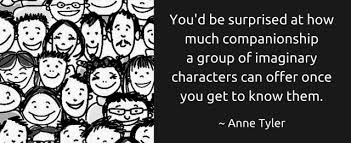
 It’s hard to overstate the importance of strong characters in a narrative. Think of all of the characters from your favorite novels (Scarlett O’Hara-Gone With the Wind, Sherlock Holmes, Robin Hood, King Arthur, Dorothy-Wizard of Oz).
Your goal as a writer should be to have your characters stay with the reader long after they finish the story. The reader should connect with them, see them as real people, and feel as if they know them…or wish they did.
You have to know your characters before you introduce them in your story. J K Rowling spent 5 years doing complete biographies on all of the characters in her Harry Potter series before she even started writing the novels. It’s that important.
- What does your character look like?
- What are your characters’ thoughts?
- What actions and deeds are typical of your character?
- How does your character talk?
- What is your character’s name?
Love your characters, but don’t be afraid to let one go if he or she isn’t working for you. When you lovingly create a character, warts and all, it shows. Take your time and be thorough. Chances are, if you fall in love with your character, the reader will too.
Make every character unique. This may seem like an obvious thing to do, but it’s important that even minor characters have something that distinguishes them from everyone else in the story-something to make them more than a name on a page. This distinguishing trait or tag could be anything, and as insignificant as chewing a toothpick or always saying, “exactly!” Perhaps the character has flaming red hair or walks with a limp.
Your minor characters only need one distinguishing trait/tag but your main characters need to be more complex. They should have 4-5 distinguishing traits and at least one on the negative side. Nobody’s perfect. You want your characters to be believable and relatable. The negative trait doesn’t have to be a serious flaw, just one that makes the character real.
Writing a novel can take a long time, and it is important to be able to quickly remind yourself what traits a particular character has without having to thumb through pages of work. Creating character profiles can save time, prevent inconsistencies, and help you build upon individual journeys. I remember thumbing through pages of my manuscript looking for character information, then I got smart and started cheat sheets/ profiles for each character.
-Jan R
 During the editing process, take a closer look at the wording of your sentences. Are all of those words really necessary, or are they just adding fluff to increase your word count? This is what we refer to as overwriting. Overwriting can result from several fundamental errors:
 We all need motivation and encouragement to write sometimes. Especially when it feels like we’re spinning our wheels and not getting anywhere. Are you worried about taking too long? I’ve been at this for seven years. I feel like a pro but I still don’t have a published novel to show for it. I recently ran across an article that made me feel a little better about my situation. Thought it might offer some encouragement to my readers as well. It listed best selling Authors who took more than five years to publish their work.
 What is on-the-nose writing? It’s prose that mirrors real life without advancing your story. No one chooses to write this way. It has nothing to do with your ability to put together a sentence, paragraph, or scene. Even pros have a hard time with it.
 If all you want to do is write, go for it. You don’t have to get permission or a license. All you need is a pencil and paper or maybe a computer depending on how serious you take your endeavor.
 So you’ve spent the last year or so writing your first novel. It may be a great story, but it won’t make the cut if it’s poorly written. Great stories with a significant number of structural and grammatical errors get tossed to the side every day. How’s your dialogue? Does it move your story forward or just sit like a rock slowing things down and encouraging the reader to skip it completely. What about the pace? Do you have the right POV? Have you considered your platform?
 You ever wonder how many words you need to have an acceptable novel? Well, it varies depending on the genre. I pulled the following list from Writer’s Digest and The Manuscript Appraisal Agency. There are slight differences in their numbers, but they are within the following range.
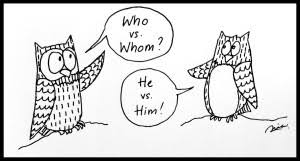 Am I the only person who has a problem with who versus whom? Fortunately, I don’t use sentences requiring these words that often, but when I do, I become paralyzed. I’m not sure. I usually read through the sentence a few times using both words and pick the one that sounds better to me. There is nothing scientific about that. It simply boils down to preference.
 You’re coming to a close on your manuscript and have started thinking about agents. If you go the traditional route, you are going to want one. Where are they? How do you find one that would be a perfect fit for your work?
