Calming Your Inner Critic (Revisited)

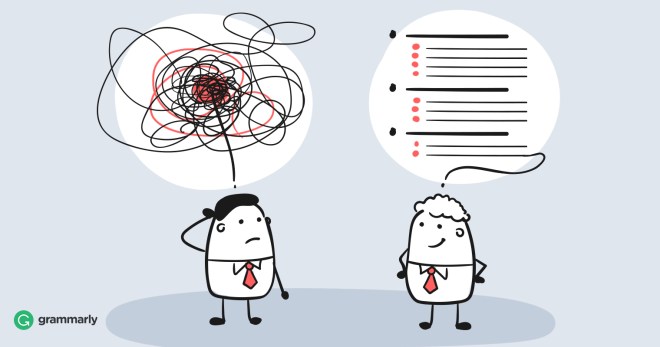
47010682-businessman-get-confused-flat-design.jpgIf you are constantly looking over your shoulder, you may not finish your novel. You will be too busy battling the thoughts of it not being good enough. No one wants to be humiliated or rejected. Your inner critic will paralyze you by telling you just how bad your writing is (even if it’s not).  This is another obstacle that I have had to overcome. It hasn’t gone away, I’ve just learned to deal with it.

I did a Bible study a while back on the battlefield of the mind. Though it’s primary purpose was dealing with spiritual warfare, it also pertained to many of the issues that we deal with in our everyday lives. Our mind is a battlefield. In writing, for example, all of us worry about looking dumb and never getting published. Fiction writers make a business out of being scared, and not just looking dumb.

It took me six months from the time I started writing my novel, to tell my husband what I was doing. When I finally told him, I was a mess. I knew he would be excited for me and encourage me in my endeavor, and I didn’t want to let him down.

For the longest time, I’ve treated my novel as a hobby. That’s not a mindset that will get you published. When I finished and sent it out to the first few agents, I was more than a little anxious. The first few rejections confirmed my beliefs. I just wasn’t good enough.

Note that I said I wasn’t good enough. Well, that’s not exactly true. The truth is the novel wasn’t good enough. The fact is, it was filled with grammatical and structural errors, there was some serious head hopping going on, and my on-the-nose dialogue was all but bringing the story to a complete halt. If you are not familiar with these terms you should be. Go back and read the posts I have written addressing them.

I don’t know that the inner critic will ever go away. So how do you combat it? You keep moving forward and growing in your craft. Don’t stop writing. I still question my novel, but I know that I know that I know, that it’s a lot better than it was after the first draft. I’ve learned the hard way and hope to help you avoid some of my pitfalls.

Some professionals recommend the following exercises to help you move forward when the inner critic tries to stop you.  I do my own variation but never really thought about it.

  1. The five-minute nonstop-Write for five minutes nonstop without thinking about what you’re writing.
  2. The page-long sentence-Choose something to describe and write a page long sentence about it.
  3. The list maker-Whenever you’re stuck for an idea make a list. Brainstorm the ideas and use the best.

I just pound away at the keyboard and concentrate on what I’m writing about until inspiration kicks in, and it will. Just don’t quit.

-Jan R

Calming Your Inner Critic (Revisited)

2-Sentence Hook?

Can you actually hook a reader in two sentences? I have problems with my elevator speech and that’s a lot longer than two sentences. However, the answer is yes, and I know from experience, you had better hook your reader, or literary agent, right away if you want to make a sell.

The next question for me, is how do I write a 2-sentence hook? My story is complicated, and I don’t even know where to begin.

A 2-story hook has three components. These not only provide the gist of your story, but also an abbreviated outline of what you are trying to accomplish.

  1. Character –  Who is your hero or heroine? You don’t want to give that character a name in your 2-sentence write up. Give them an identity.                     Not Anne, but a young orphan girl.                                                                                Not James, but a young boy born into slavery.
  2. Core Desire – What does your character really want? To be loved, respected? To become famous or rich? What is motivating your characters actions? This is something I’ve discussed in previous blogs. It has to be relatable.
  3. Obstacle – The inciting incident threatening the core identity of your hero/heroine. It doesn’t have to be a big problem, but it does have to be big in your character’s mind.

You can embellish your hook by adding more description or upping the stakes (the clock is ticking).

A young corpsman involved in an IED explosion in Afghanistan loses his memory and struggles to regain his identity.  He is misidentified and placed in the home of total strangers.

My first attempt at a 2-sentence hook. It leaves a lot of questions, but I guess that is the hook. Hopefully your reader will want to know more.

Something to think about.

-Jan R


2-Sentence Hook?

Avoid Speed Bumps

Some content on this page was disabled on June 13, 2025 as a result of a DMCA takedown notice from Jerry Jenkins. You can learn more about the DMCA here:

https://wordpress.com/support/copyright-and-the-dmca/

Avoid Speed Bumps

Overwriting?

Overwriting is a result of our own effort to figure out what’s happening in any given scene. Only after we have discovered that core truth can we know what truly belongs and what doesn’t, based on a clearer knowledge of what we’re trying to say and what the scene requires. – David Corbett

So why do we overwrite? Insecurity? Annie Dillard describes one type of insecurity as “the old one-two.” You write your thoughts, feel like you have to explain yourself, and repeat what you just said using different words. Remember, you want to say it once, say it well, and move on.

Another reason for overwriting is the anxiety of feeling you didn’t give your reader a clear, concise picture of what’s going on. I’ll raise my hand here 🙂 The reader needs to know, right? Give your reader some credit. Maybe they already know what’s going on based on everything they’ve read so far, or maybe they don’t need to know everything. Leave a little mystery and give yourself fodder for upcoming chapters.

The good news is that overwriting is one of the best problems to have. You just have to find that sweet spot where you give your readers just enough to let their imagination take over. Take out the scissors, or hedge trimmers, depending on how much you have to trim 🙂

Don’t bog your reader down with needless words. Keep them engaged and moving forward with the thrill of finding out what lies just around the corner.

Something to think about.

-Jan R

Overwriting?

What’s Deep POV

If you’ve been writing for a while, you probably know what POV is. You also know what head-hopping is. Something I did regularly when I first started writing. I’ll give you a brief summary anyway. Bear with me. There may be newbies reading this blog.

POV (Point of view) is the perspective from which a story is told. You have three choices.

First Person – From the “I” perspective. I enjoy this POV, but it limits the information you get, since the entire novel is from one person’s perspective. It is actually narrated by a character within the story using “I” or “we”.

Second Person – From the “You” perspective. The narrator is speaking directly to the reader, using pronouns such as “you” and “your”. This point of view is less common. I must admit, I’ve never read a novel from this perspective, so I can’t comment on its effectiveness.

Third Person – From the he/she/they perspective. My preferred and easiest to manage, at least from my point of view:-) This one can be broken down further to limited or omniscient. I choose to work with limited. This perspective focuses on one character’s perspective at a time. It will jump back and forth between characters throughout the story. Just remember you can be in only one head per scene. If you start jumping back and forth in the same scene, you’re head hopping, a sure sign that you are a beginner and have no idea what you’re doing. I’m guilty of this one 🙂

Now that we’re caught up, let’s look at Deep POV. Why? Because I recently got dinged for my POV, and I’m having to do a little research to understand what I can do to get even deeper into my character’s head.

Editor’s comment to me-

“You’re a talented writer, and you’ve created a strong connection between the reader and Ariel. When you learn and employ the elements of Deep POV. This is a real winner.’

For Deep POV, you want the reader to experience each situation through the character’s POV, not just read about them, but take every step, see every object or obstacle, feel every emotion, smell every flower.

Key Techniques to remember to stay in Deep POV:

Eliminate Filter Words: Remove words that distance the reader from the character’s experience. Saw, heard, felt, thought, believed, knew.

Show Don’t Tell: Present the character’s physical reactions and internal monologue.

Use Character Voice and Language: You are creating this character, and you know them better than anyone. Just remember to stay within your creation’s specific vocabulary, slang, opinions, and worldview.

Interact with the Setting: Have the character engage with their environment rather than just describe it objectively.

Balance internal and external responses: While focusing inward, you still have to show your character reacting to external events and people.

Hope this helped you with the Deep POV. I got most of my information from Writer and YouTuber Brandon McNutty: How to Use Deep POV in Your Writing. If you’re having the same problems I am, you may want to check him out.

Thanks for stopping by.

-Jan R

What’s Deep POV

Are You Saying What You Think You’re Saying?

If you find yourself reading a sentence more than once, or adding information for clarification, that’s a red flag.

Your reader has less information than you. If you are confused by your work, you can only imagine what your reader is going through. I love a great mystery, but my writing shouldn’t be one.

It’s not the reader’s job to interpret your work. You should be clear and concise.  If your writing causes a pause something isn’t working.

I have to admit I love dangling modifiers though. They are some of my favorite mess-ups. I even wrote a blog entitled ‘just for laughs’. They are funny, but not in the middle of a serious scene. You don’t have to try to hard to imagine how quickly they can pull your reader out of their suspension of disbelief.

Dangling modifiers occur when the modifier has no clear referent and twist the meaning of your sentence in an unintended fashion.

  • I saw a tree walking down the street. Who knew a tree could walk? 🙂
  • I fed the children sandwiches in Ziplock bags. How did those children get in the bags?:-)

Misplaced modifiers are similar but not nearly as fun to read. As with dangling modifiers, there is no clear referent, which can lead to a clumsy and confusing sentence.

  • Lucy carefully studied the situation.                                                                                                   Lucy studied the situation carefully.

Another mistake new writers make that isn’t always as obvious but makes for a clumsy sentence that will cause a pause is comma splicing.

Comma splicing is when two sentences are linked by a comma, but they don’t really work because they’re two separate ideas.

  • John saw the rabid fox and ran to the house to get his gun, and he forgot to eat lunch and his tummy rumbled.

What about ambiguous sentences? The sentence is grammatically and structurally sound, but the reader has no idea what you are talking about.

  • My older students know I’m extremely careful with my language. Is the teacher referring to age or length of time the students have been in his/her class?

Be clear and concise! Say What You Mean!

Something else to think about.

-Jan R

Are You Saying What You Think You’re Saying?

Books – What’s the Draw!

Why do you choose one book over another? What’s the determining factor? They’re both romances, and historical novels at that, but you can only afford one. Which novel will you purchase?

Most likely the first thing that catches your attention is the cover. At least that’s the first thing I notice. I do look at the title and the author, but they’re not the main determining factors. They cause me to take a second look, but the front cover photo and back-cover blurb are what seal the deal.

I remember standing in a discount store looking at books when I first started this journey. An employee put the price tag over the face of the heroine on the book that I was interested in purchasing. I couldn’t believe it. I wanted so bad to yank that tag off.

The cover matters, and yes, that tag could have been a deal breaker. I saw enough of the cover to know that it was an inspirational romance set in the civil war era. That was a plus and enough to encourage me to read the back cover to determine the premise of the story.

I know some people read the first couple of pages, but that is not something I do when determining my selection. Maybe I’m shallow. I have no doubt I have missed out on a lot of great books because the cover failed to get my attention.

I can tell you this, the process of determination I use to choose a book appears to be the norm based on my observations of others in bookstores. The author’s name may catch a customer’s attention, but when they pull that book off the shelf, they look at the cover photo and then read the summary on the back before deciding to purchase.

What’s important to you? What compels you to choose one book over another?

Just something else to think about as you prepare to publish your work.

-Jan R

Books – What’s the Draw!