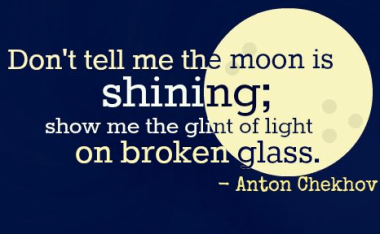
Where Do Your Ideas Come From?

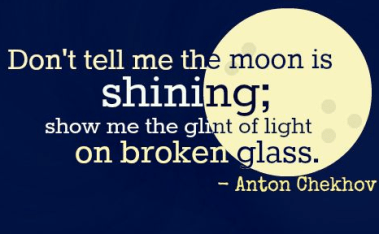
d843805eede6d7643cb4e63abccb92f6--funny-writing-quotes-funny-sayingsI was lying in bed last night thinking about what I would write about today. I’ve been writing this blog for two years, and I have to admit, there are times when I’m at a loss. I want to share useful information, but I don’t want to sound like a broken record, and I don’t want to duplicate what someone else is writing.
How do you come up with ideas? I’m not just talking about blogs, I’m talking about with your novels. I’ve completed one story-minus a few revisions, and I’ve started another.

Both of my novels where the products of dreams. Maybe the info was hiding in my subconscious somewhere, from a movie or novel that I read in the past, and it manifested itself during my sleeping hours with a slight twist. Sounds like a good explanation to me 🙂

I base my blogs on my own experiences. I knew nothing about writing a novel when I started this adventure. I had written reports, habilitation plans, policies etc., but in case you didn’t know, they are totally different. That was one of the reasons I wrote a blog on English teacher writing versus novel writer writing. (That was a mouthful. Probably could have worded better. 🙂 ) Grammar Is A Must-But Lose That English Teacher Writing!

As I said, I use my experiences as the basis of this blog. There is so much new writers don’t know, and I’m hoping I provide enough useful info, that people that have been around a while, benefit from it as well.

So the question again, where do you get your ideas from? A few that I know and can relate too:

  • Dreams
  • Personal experience
  • Watching others
  • Current events (read the newspaper or watch the news)
  • Reading novels
  • Watching movies
  • Taglines

There are so many places to get ideas, you just have to look. You ever read a book and wondered why the author did what they did? Or thought, I would have gone in a totally different direction?

There are no new ideas out there. As a writer you want your work to sound original, but what you are doing, is taking an idea that exists and making it your own. Be Original!

-Something to think about. And yes, I am interested in where your ideas come from 🙂

-Jan R


Where Do Your Ideas Come From?

Show Don’t Tell!

screen-shot-2013-11-20-at-3-24-03-pmI can’t count how many times I’ve heard this phrase. You probably saw the title and questioned reading it. Everybody knows you are suppose to show and not tell. You want the reader to experience the scene as if they are one of the characters walking through the story beside the hero/heroine.

If you’re like me, you know what you’re suppose to do, but you don’t really understand what to do to make it happen. How do I show and not tell? It’s a lot harder than it seems. Once you start writing that novel, you’ll understand what I’m talking about.

There are 5 tools for showing

  • Dialogue
  • Action
  • Interior dialogue
  • Interior emotion
  • Description-Sensory

If you’re doing anything that’s not one of these 5 things, you’re not showing.

Why is it so important to show versus tell? Showing provides your reader with a powerful emotional experience. If you want to be a best selling author, that’s what you have to do.

It doesn’t matter how great you do everything else in that novel, if you’re missing that emotional experience, you lose. If everything you did is bad, but you have a great emotional experience, you may still win.

It all comes down to the take away. Every great novelist will tell you, you have to give your reader that powerful emotional experience, or they wont be coming back.

-Something to think about 🙂

-Jan R

Show Don’t Tell!

Be Original!

clicheIf you’ve been around the writing world long enough, you know there are no new ideas. Kidnaps, robberies, invisible men, aliens, robots, espionage, vampires, zombies, invasions, war, love…they’ve all been conquered again and again and again.

What’s a writer to do? You have to keep that story about love and war originally you. Use your voice, your words, and your unique spin, to make it sound new.

Novice writers and wannabe authors bend to the ebb and flow of what’s selling. They attempt to emulate other writers and copy their ideas. Well theirs nothing original about that. The agent that’s looking for that fresh new idea, is going to throw the manuscript to the side along with the other copycats in the pile.

Originality doesn’t mean something has never been written about. We have common linguistics, and resources. We are exposed to many of the same things. Writing is not without influence.

Originality is based more so on frequency. How often has an idea been used? What about your spin on the idea? Is your spin used often or infrequently? Hopefully infrequently to  not at all.

Now that you have the actual idea as original as possible, look at the words you are using. Stay away from clichés.

It’s easy to borrow language known as cliché. What makes the words or phrases cliché? Overuse. You need to recognize these clichés and get them out of your writing. Too many will cause your readers to tune out.

Avoid words like dude, totally awesome, or bling. They are not unique because of overuse.

I bet you can complete the following sentences:

  • An apple a __________
  • Once in a blue __________
  • It was a dark and stormy __________
  • She was the apple of his ____________
  • A bed of __________
  • They lived happily ever ____________

I don’t think it’s a good idea for your reader to be able to complete a sentence without looking at the words.

If you’re not sure a phrase you are about to write is cliché, go to google and type in ‘cliché sites’. You will be provided with a list of different sites to assist in this area.

Writing cliché is the easy way out. It’s challenging to be original. Be original!

Something to think about.

-Jan R


Be Original!

Strong Nouns?

scan0006We’ve talked about weak and strong verbs, but did you know the same holds true for nouns? I never really thought about it, until I took an online class that talked about strong and weak nouns. My first thought on weak nouns; the instructor has to be referring to pronouns. Well he wasn’t and that is a subject for another day.

Strong nouns can help us picture what/who the writer is talking about immediately. He doesn’t have to describe the person, place, or thing. We get it. The more specific the noun, the clearer the picture.

If I wrote city, dog, or car in a sentence, you would picture your version of a city, dog, or car in your mind. While these nouns aren’t bad they could be made stronger. An upgrade would be; New York City, German Shepherd, or Ford Mustang. While you may want to make that mustang candy apple red, it doesn’t need much more detail to get a clear picture of the author’s intent.

Names are also strong nouns. Cinderella, Clark Kent, and Harry Potter, all conjure up strong images in your mind.

Weak nouns require additional information to create a clear image in your mind.  The weaker the noun, the more information you will need to provide.

Most weak or dead nouns end in ‘tion’. Examples would be publication, devotion, recitation, adaptation.

These nouns tend to way your sentences down and as stated above, require more detail to produce a clear image. The best way to address these weak nouns, is to change them back into verbs, and rework the sentence.

The couple’s separation occurred at the end of the year.

The couple separated at the end of the year.

Just something else to think about while you’re writing that best selling novel 🙂

-Jan R


Strong Nouns?

Active Voice Vs. Passive Voice

active-passive.jpgWhen you write, you want to use the active voice. It’s clean, concise, and simple. The active voice is easy to read and understand.

Subject + Verb

  • Susie sang.
  • Michael ate.
  • Jeffery kicked.

Subject + Verb + Direct Object

  • Susie sang songs.
  • Michael ate soup.
  • Jeffery kicked cans.

These examples are basic, and can be embellished with adjectives, adverbs, modifiers, etc. to dress them up, but the Subject/Verb order should remain the same.

95% of your sentences should be written in the active voice. You want the doer/subject at the beginning of the sentence.

When you use the passive voice in writing, you have to introduce new parts of speech just to make the sentence mean the same as it would in active voice. The result is a wordy sentence that makes you wait to find out who the subject is.

Direct Object + Dead Verb + Participle form of Verb + optional Preposition + optional Subject.

The winner was written on the community board by Carol. (Passive)

Carol wrote the winner on the community board. (Active)

As you can see, passive voice is not simply a reversal of active voice. It has additions, and I haven’t discussed the fact that many passive sentences are incomplete.

The message was sent.

So the above sentence is grammatically correct, but it’s missing information. Who sent the message, and to whom was it sent?

Why would anybody use the passive voice? Well it comes in handy if you’re a businessman or politician. It allows you to avoid responsibility.

  • Your position has been eliminated. vs. I eliminated your position.
  • Your taxes will be raised. vs. I will raise your taxes.

When you’re writing a novel, you’re not trying to avoid responsibility. You’re trying to draw your reader into an exciting adventure that keeps them turning pages until the very end.

Keep your sentences active. Something to think about 🙂

-Jan R


Active Voice Vs. Passive Voice

Dead Verbs Don’t Move

imagesWhen you are writing a novel, you want to use concrete, everyday verbs. Examples of these are jump, smile, run, look, show, and eat. You can picture the actions in your head and there is no ambiguity.

He ran down the street and jumped over the fence.

Replace weak or dead verbs with concrete verbs as often as possible. I say as often as possible, because there will be rare occasions when the weak or dead verbs are necessary.

Weak verbs usually end in ‘ate’ or ‘ize’. You know the ones. Some examples are finalize, incorporate, anticipate, categorize. They leave a vague sense of action without spelling it out. As a reader you have to reach for it, and these verbs can really way down your sentence.

The bookkeeper utilized her expertise to manipulate the numbers.

Dead verbs don’t evoke movement or images. They stop the action. They allow us to generalize instead of provide the details necessary to picture what is going on. They tell us what’s happening when we want to see. Examples of dead verbs are was, is, were, are, could, had. I think you get the picture.

Cassandra was angry.

Cassandra picked up the flower vase and threw it into the wall. She stomped across the room, slamming the door as she left.

Something to think about. I hope this helped.

-Jan R


Dead Verbs Don’t Move

The Hemingway Editor App-What do you think?

hemingwayappHave you heard of the Hemingway Editor App? If you’ve been writing for a while, you know about  grammarly and autocrit.  Both of these Apps focus on grammar and spelling. Hemingway takes it a step further. The App highlights lengthy, complex sentences and common errors; if you see a yellow sentence, shorten or split it. If you see a red highlight, your sentence is so dense and complicated that your readers will get lost trying to follow its meandering, splitting logic — try editing this sentence to remove the red.
You can utilize a shorter word in place of a purple one. Mouse over them for hints.
Adverbs and weakening phrases are helpfully shown in blue. Get rid of them and pick words with force, perhaps.
Phrases in green have been marked to show passive voice.
The Hemingway Editor App is like having your own personal editor on call.
Many of you may be familiar with this App, and if you are, I apologize, but I get excited when I run into something new that actually helps me with my writing, and I like to share tips that could be helpful to my readers.
The App isn’t free. It costs $19.99, but I think it’s worth it.
I’ve written numerous blogs on writing clear, concise sentences, and making every word count, but this is the first tool I’ve found that helps identify problem sentences.
When using Hemingway, don’t check your brain in at the door. The program will help improve your writing, but you are ultimately responsible for how your work turns out.
So what do you think? Have you tried the App?
-Jan R
The Hemingway Editor App-What do you think?

Write What You Mean

DanglingModifier.jpgAre you writing what you meant to write? Is your prose concise, and easy to understand? You may have one thing in mind when you write that sentence, only to discover it’s ambiguous, misleading, and sometimes quite humorous.

Dangling modifier- When a sentence  isn’t clear about what’s being modified it dangles. Keep in mind modifiers should be near what they modify. These are probably my favorite messed up sentences. While I hope I haven’t written or submitted any for publishing, I’m sure I’ve dangled a few in my time. They are confusing, but on the bright side, very funny.

The company’s refrigerator held microwavable lunches for 18 employees frozen in the top compartment.

Misplaced modifier- A phrase or clause placed awkwardly in a sentence so that it appears to modify or refer to an unintended word.

Lex called to talk about the meeting yesterday. Did Lex call yesterday or was the meeting yesterday? I’m confused.

 Ambiguous writing– It’s not spelled out. You didn’t provide enough information for your reader to understand what you’re trying to say. Ambiguous writing can leave your reader more confused than a misplaced modifier .

My older students know I say what I mean.

Are the student’s older in age or have they just been in his class a lot longer? It could mean either of the two.

Make sure you are saying what you mean. Be concise. Just something to think about.

-Jan R


Write What You Mean

So You’re Afraid of Failure-Deal With It!

courage-quoteSo you’re afraid you might fail. Truth is, you might stumble the first try, the second try, and maybe even the third try, but that’s part of the learning process. If you’re constantly looking over your shoulder, you may not finish your novel. You’ll be too busy battling the thoughts of it not being good enough.

No one wants to be humiliated or rejected. Your inner critic will paralyze you by telling you just how bad your manuscript really is (even if it’s not) .  This is an obstacle that I’ve had to overcome. It hasn’t gone away, I’ve just learned to deal with it.

I remember doing a Bible study on the battlefield of the mind. Though it’s primary purpose was dealing with spiritual warfare, it also related to many of the issues that we deal with in our everyday lives. Our mind is a battlefield. In writing for example, all of us worry about looking dumb and never getting published. Fiction writers make a business out of being scared, and not just looking dumb.

It took me six months from the time I started writing my novel, to tell my husband what I was doing. When I finally told him, I was a mess. I knew he would be excited for me and encourage me in my endeavor, and I didn’t want to let him down.

For the longest time I treated my novel as a hobby. That’s not a mindset that will get you published. When I finished and sent it out to the first few agents, I was more than a little anxious. The first few rejections confirmed my beliefs. I just wasn’t good enough.

Note that I said I wasn’t good enough. Well that’s not exactly true. The truth is the novel wasn’t good enough. The fact is, it was filled with grammatical and structural errors, there was some serious head hopping going on, and my dragging dialogue was all but bringing the story to a complete halt. If you are not familiar with these terms, you should be. Go back and read the posts I have written addressing them, or do a google search.

I don’t know that the inner critic will ever go away. So how do you combat it? You keep moving forward and growing in your craft. Don’t stop writing. I still question my novel, but I know, that I know, that I know, that it’s a lot better than it was after the first draft. I’ve learned the hard way and hope to help you avoid some of my pit falls.

-Jan R

So You’re Afraid of Failure-Deal With It!

Do Your Homework!

imagesDoes your manuscript have to be perfect?  If you’ve already written a best seller, your agent and editor may cut you some slack. If not, yes, that book better be pretty darn near  perfect, or nobody is going to look at it.  Agents receive hundreds of queries a week. They don’t have time to read everyone.  If your work is full of grammatical and structural errors, that’s all the excuse they need to toss it to the side and move on to the next one.

I sent my first manuscript out to five different agents.  I was very excited and a little anxious to hear what they had to say.  I expected some rejections but not all.  I had put  over a year into that novel.  It was my baby.

Well, two didn’t respond at all, one said no thanks, and another said it wasn’t what they were looking for. The fifth one responded with a rejection, but also included a why. There were numerous grammatical and structural errors, I was head hopping, and the dialogue dragged.

While I was disappointed, I did take her advice to heart and began the process of editing and correcting structural and grammatical errors.  I was one of those people that fell for the myth that it didn’t have to be perfect, they have editors to clean that up for you.

I also took on-line courses on writing dialogue that moves your story forward. I had never really thought about dialogue moving a story forward, but I see it now, and have a pretty good understanding of what the on-line instructors were trying to get across.

As far as the POV goes, I never heard  of ‘head hopping’.  I went to google and typed it in. It’s not a hard concept to grasp, but it can be tricky at times and sneak in when you least expect it 🙂

Truth be known, I was ashamed of myself for sending such poor work to an agent.  I never realized how bad it was until I began the arduous process of editing and revising. I definitely didn’t make a good first impression.

Do your homework. When you’re writing your first novel, there is so much you don’t know. You’ll figure that out along the way. It’s a lot more complicated than just putting pen to paper. And you probably thought anybody could do it. 

I hope my blogs help you to avoid some of the mistakes that I have made.

-Jan R

Do Your Homework!