 If your hero is drinking sake in Tokyo you better know which hand he should use to hold the cup; and when he is sunning on the beach at Cape Cod, remember that there won’t be any palm trees-Dean R. Koontz
You can’t get away with faking background information. If you fabricate a lot of facts on a wide variety of subjects, your readers will catch on. I know it’s your story, and it’s fiction, but unless you are writing science fiction that involves creating your own world, you better stick to the facts when it comes to background.
Every time a reader knows that you are faking a bit of background information, your credibility slips a notch. When your credibility slips two, three, or four notches, you will lose that reader.
No one is saying that you have to limit your story to places/things that you know, but if you are going to step into unfamiliar territory, you had better do your homework.
There is so much information available, that there is no reason why you can’t write about any country you never visited, canoe making, basket weaving, the inner workings of an assault rifle, the floor pan for Biltmore house-I think you get the gist of where I’m going with this, but keep in mind that very few reference books are perfect. If you do have to research certain topics, cross-check every piece of information, using two and preferably three sources.
Firsthand knowledge of background information is always more desirable than second hand. There is no better way to learn the sound, texture, smell, and look of a place or thing than when you experience it firsthand, but if you are diligent in your research, you can make your background come alive.
-Jan R

 This past weekend I picked up a copy of “The Elements Of Style” at a library book sale for a dollar. If you’ve never heard of the book, I would highly recommend it. It’s one of those books that every writer should own.
 After writing Tuesday’s blog, I got to thinking about all of the words we misuse. The one that I misuse the most is to instead of too. I know the correct one to use, but because I’m on a roll with the words flowing, I’m not always as careful as I would normally be. I have also mixed up it’s/its and pique/peak/peek.
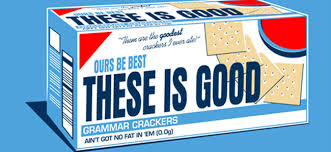 I recently started a revision on what I thought was a very good first draft of my novel. I was totally flabbergasted at what I found. While I guess I should have been grateful that the errors were leaping off of the page at me, I was very disappointed and frustrated at the number I was finding. How could I have made so many mistakes?
 If you want to be an author, you had better develop a thick skin or at least pretend to. You will be rejected, and you will receive critiques that can be discouraging, but this is part of the process. Being a novice to writing, I probably got a double portion of both. I’m glad people were honest with me. I am a much better writer because my critique partners told me the truth.
 I have been accused and rightly so of on-the-nose-writing, over writing, redundancies, and throat-clearing. I’ve also had a close relationship with the words “that” and “had”. I blame it on inexperience and just not knowing any better.
 After I completed the first very rough draft of my manuscript, I couldn’t wait to send it out to literary agents. It was a great story and I was soooo excited. What if I got more than one offer. I am a realist but a very positive one and I new that story was great.
 I’m in the revision process with my novel and one of the areas I am focusing on is character development. When you hear character development, you usually think of main characters or supporting characters. Well my main characters do need some work, but for this particular blog I was talking about those ‘fly by’ characters that step into your novel, do what you want them to do, and then disappear never to be heard of again.
 Anybody that has read my work, knows that most of my blogs spin off of my own weaknesses. And there are many. I figure if I’m having problems with a certain aspect of writing, there are probably many others who are too.
 Hope this helped. I pulled most of my information off of the ‘advancedfictionwriting’ web site. That’s hosted by Randy Ingermanson-“the snowflake Guy”. He provides some great information for writers of all levels. You should check him out.
 Writing your first novel-Things you should know