 I’m a little over half way through the revision process of the book I’m working on and dreading the next few weeks.
The first half of my novel flows. I love what’s happening and I love my characters. They all work together to accomplish what I need them to, but then it starts to get ugly.
I’m sure you have heard that once you start writing, your story can take on a life of it’s own. Well that happened to me with the introduction of a new character. She took on a life of her own, stole the plot, and didn’t stop until almost the end of the story.
She did help in one area. She filled in the middle and carried me to the end, but I’ve never really liked the character, and I question where she went. She was nice, smart, and likeable, but she totally disrupted the flow, and I allowed her to. I had lost sight of the ending I had planned.
I have read through my manuscript many times. I hesitate and play with this character and the events perpetuated by her existence, every single pass through.
I’ve finally accepted the fact that she needs to go. If I’m not comfortable with the character and her role in my story, It’s bound to come across to my readers. It’s time to cut my losses and move on.
This of course means a lot of work for me. I can salvage some of scenes she is involved in by replacing her with existing characters that can fill the role, but I am still cutting about 25,000 words and reworking the latter part of my book to follow the path that I originally outlined.
I’m sure I’ve made a million novice mistakes that brought me to this point, one of the major ones was to give an unplanned character free reign over my manuscript. I allowed her to walk in the door and take my story to places it should have never gone.
I was amazed and thought, how great is this, my story is writing itself. Well in some instances that might have been a good thing, but in my story, it definitely was not. Some may consider it a great exercise in creativity to let a rogue character take off with your story. I would say as long as it’s controlled and she/he isn’t in a free fall. You have to maintain control.
What do you think?
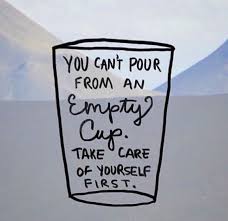 Who wouldn’t want more hours in the day? I’ve said on numerous occasions, “If I only had more time.” Well we all have the same 24 hours, but we don’t all have the same energy level or focus. Some days I surpass my expectations, and some days I find myself struggling. I can’t concentrate on what my husband is saying, much less writing or editing my work.
 About six months ago, I wrote this blog as a thank you for all the hard work you do as a writer. I wanted to make sure that you understood just how important your job is. You may be locked away in a room by yourself, but your work touches a multitude of people from all walks of life.
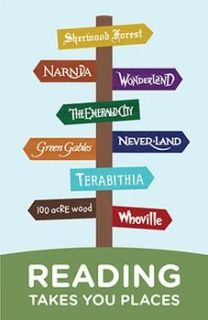 When I was growing up we were very poor. My father was killed in an accident when I was 12, leaving my mom with 6 children to raise on her own. Needless to say, we were not going to Disney World any time soon. As a matter of fact, my world would have been pretty bleak, if it hadn’t been for my love of reading and the numerous novels that took me on adventures far and beyond anything I could have ever imagined. I remember my first novel was ‘King Arthur’, pretty heavy for a kid, but I loved it.
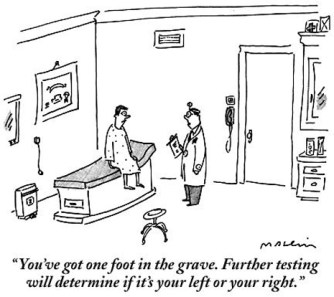 As a writer, you know one of the cardinal rules is to avoid clichés like the plague. Yes, I just used a cliché 🙂 See how easy it is. So what exactly is a cliché. It is a phrase or idea that is overused and portrays no original thought; a stereotype. There is nothing worse than being accused of lack of originality.
 Common phrases that you may not have realized were clichés are as follows:
 Have you noticed some of the books you pick up, you can’t put down. I have stayed up until 3:00-4:00 in the morning finishing a book, because I had to know how it ended. I’ve changed my plans for the day, because I couldn’t stop reading. That’s the kind of book I want to write.
 Today as I revised my novel, I noticed something that should have leaped off the page during past reviews, but didn’t. I am having a love affair with ‘ing’. These ‘ing’ words are all over the place.
 When you are ready to submit your work, who are you going to send it to? Have you done your research? Do you know which literary agents are accepting manuscripts? Do you know which agents work within your genre? How long have they been agents? Who are their clients? Are there any outstanding complaints about them? Are they legitimate, or are they scammers that reel you in and try to take your money?
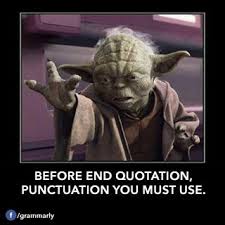 What’s the deal with direct quotes? Why can’t I get the punctuation right? You would think after five years, I would know what I was doing.
 I’m almost finished with revising my manuscript and plan to get a few well qualified friends to give it a final read through. Their job will be to make sure it is believable, there are no plot holes, and of course, it’s an interesting-grab you by the seat of your pants-type of book.
 I was reading a book on ‘How to Write Best-Selling Fiction’ this past week when a chapter jumped out at me, and I couldn’t help but smile. It was totally me. I’m ashamed to admit my naivety, but it was like I was reading my story.
 Writing your first novel-Things you should know