 What makes a blog post great? I wish I had the answer. I know some of the recommendations that professional writers and bloggers give. I try to abide by those rules and will share them with you today, but that still doesn’t cover why some blog posts do so much better than others.
Just recently I wrote a blog titled ‘Edit, Edit or Edit’. I thought it was a good post and offered some information that I didn’t know and never really thought about during the revision process, but there were some issues with the formatting.
When you pulled it up, the first paragraph was missing. Once I realized it, I tried to fix the issue but just couldn’t figure out what was going on. Where is a teenager when you need one 🙂
At any rate it has been my best blog so far. I totally don’t understand why. I’m happy that it got so much attention and attracted people to my site, I’m just puzzled. Because of the missing paragraph, it’s confusing at first. There are no visuals, as I deleted them trying to correct the formatting. It was embarrassing really-not up to my usual standard, but I didn’t have time to replace it.
The body of the blog itself was a copy and paste from an old blog-from back when I was writing to the air. I made some revisions but didn’t really put a lot of time into it. What was the draw this time? I still haven’t figured it out.
I have posted other blogs that I took my time and did a lot of research before writing, and I thought were great. They offered a lot of useful information, especially for beginner writers, but they were all but passed on. What’s the deal?
Some rules that I try to follow when writing blogs:
- Be consistent-I post every Tuesday and Thursday no exceptions.
- Keep my blogs short and concise-Usually between 300-400 words.
- Offer useful information that I hope helps my readers.
- Add graphics or a picture or two-more so for the appearance.
- Make sure my posts are grammatically and structurally sound.
- Try to be myself and not sound like a do-it-yourself manual.-One I’m working on :-).
- I use the tags feature on my blog site to attract readers.
Do you have tips or tricks? I would love to hear from you 🙂
-Jan R
 I read a quote the other day and thought I would share it on my blog. I don’t know who wrote it, as a name wasn’t provided. It reads as follows:
 I hope you all had a great New Year and are preparing yourselves for what awaits you in the upcoming year. Like many of you, I have a book I hope to have completely finished and submitted this year, but keep in mind it will take more than hope to get that book published.
 About a week ago I wrote a blog on tools I use to help with writing. I included the usual suspects-dictionary and thesaurus, but also included a few that I thought many of my readers probably did not know existed. These included the ’emotion thesaurus’ -yes there is such a thing and it is great to help you get the creative juices flowing when describing your character’s reaction to what is going on in a particular scene.
 I contemplated what to write about today. If you’re a blogger you know the routine. You want to share something meaningful that will be helpful and not sound stupid. You also want to be yourself and not sound like a reference book-something I’m working on 🙂
 So as a writer I find myself relying on numerous sources for information. I need to know how to write a cohesive, well written sentence, but I also need facts, and I need to know what to look out for. We all make errors when writing and goodness knows I will never be perfect, but I do have some reference sites I use to make my writing better.
 Do you ever want to just stop writing for a while? I’m at that point right now. I’m not working on my book, as I just finished what I consider to be a really good first draft, and I’ve stepped away from it until the beginning of the year.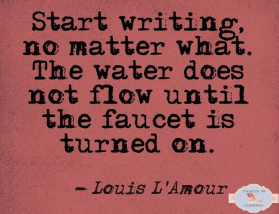
 At this point in the game, you probably know what a dialogue tag is. It is a phrase placed at the end of a quote to identify the speaker. It should mimic speech’s natural rhythm and make long dialogue-runs digestible.
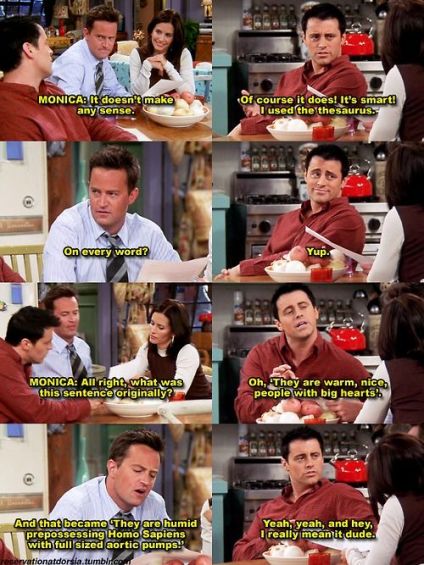 I’ve read over and over that the thesaurus is a ferocious enemy of the novice writer. As a new writer, we want to impress others with our command of the English language. Often times to the detriment of ourselves.
 Writing your first novel-Things you should know