I Don’t Feel Like Writing

writingDo you ever want to just stop writing for a while? I’m at that point right now. I’m not working on my book, as I just finished what I consider to be a really good first draft, and I’ve stepped away from it until the beginning of the year.

What I am doing is my blog. It only requires me to write a couple pages twice a week, which isn’t that much writing, but I’m still struggling.

Maybe it’s the season and all of the distractions that are going on around me. Maybe it was a mistake to pull away so drastically from my writing regime. It seems like the longer I put off writing, the harder it’s becoming. Truth be known I wrote almost daily over the last year and did countless critiques of other peoples work. Once I finished my draft, I almost completely shut down that part of my life to take a breath.

Maybe all those tips about writing everyday and setting quotas was right. Not to say that you can’t take time off to enjoy a special evening or life, but you have to stay motivated or you will lose the desire, momentum, will to write.untitled
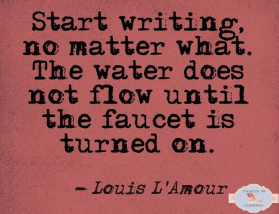
So I find myself going through articles on how to motivate yourself to write. Not sure why, I already know most of the tips by heart. Hoping to find something new, a magic pill maybe.  Well If there is one, I haven’t found it. So I guess I just have to fall back on the tried and true.

  • Make a date with yourself to show up and write on a regular basis. It doesn’t have to be great-you just need to write.
  • Choose the time of day that works best for you. In the morning after that first cup of coffee works best for me.
  • Share your goals and dreams with family and friends. They will ask how it’s going and keep you in line.
  • Cut off all electronics. This one is a given and to be honest, I have allowed myself to get sucked back into Facebook and other social media outlets over the last month. They are mind numbing and can take precious time away from what is important. If you use them to communicate with family in other states, like myself, you need to schedule in time and watch the clock.
  • Set a daily quota. To be honest I’ve never done that one. I do set a weekly quota. It allows me time for life to happen and is more realistic. Point is you need a goal, something to work towards to keep you moving.
  • Record and keep up with your word count. It will serve as a timesheet and a reward system to praise yourself.
  • Allow yourself to write badly. At least for early drafts be gentle on yourself. If you stop to judge, edit, delete and rewrite, you will be spending all your time playing reader or critic, not writer.

Have a great weekend and don’t stop writing 🙂

-Jan R

I Don’t Feel Like Writing

They Are Only Tags-Really?

dialoguetagtotalsAt this point in the game, you probably know what a dialogue tag is. It is a phrase placed at the end of a quote to identify the speaker. It should mimic speech’s natural rhythm and make long dialogue-runs digestible.
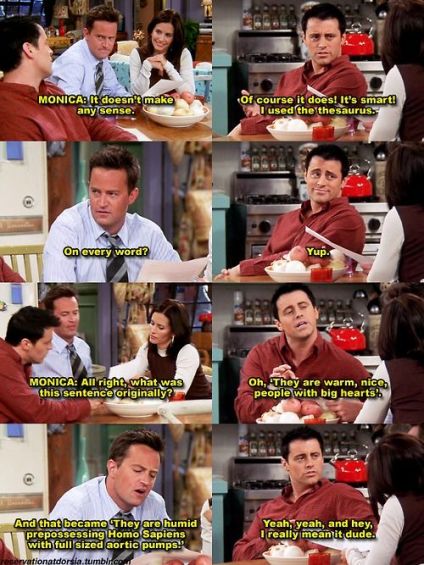
When using dialogue tags, it is  recommended that you keep it simple. There is nothing wrong with the word ‘said’.  Don’t give in to the urge to use every big word you know. If you do, you will end up with a big clunky mess. The wrong tag can overshadow the words spoken and draw your reader out of the story.

Example:

  • “You hit my car!” she screamed.
  • “It wasn’t my fault!” he groaned.
  • “But you ran the red light!” She expostulated.
  • “I know-I’m sorry,” he stammered.

Sorry about the bullets, I just couldn’t seem to get rid of them. I think you get the point though. Could you imagine reading an entire book written this way? I would go nuts.

This example shows how tags can effect your story by slowing down the pace and overshadowing the dialogue. I was hesitating after every tag and imagining the characters going through the emotions.  I couldn’t help myself. And what was with expostulating? Somebody had their thesaurus open 🙂

When you use the words ‘he said’ or ‘she said’, they are so familiar to your reader that they blur into the background and become invisible. This allows the dialogue itself to come to the forefront. You can also drop tags entirely when it’s clear who’s speaking. Overuse of tags can be just as annoying as using the wrong tag.images9d0tdr1t

Example:

  • “You hit my car!” she said.
  • “It wasn’t my fault!” he said.
  • “But you ran the red light!”
  • “I know-I’m sorry.”

I hope you thought this example read much smoother than the first. It didn’t distract from what was being said, and you weren’t focusing on the dialogue tags themselves.

There is so much information on dialogue tags. I’m only scratching the surface with this blog.

I’m not saying that you can’t use emotion in a tag, sometimes it’s necessary. It helps the reader understand the character’s feelings or reactions to a situation.  I just wanted to emphasize the importance of balance and focus.

While they are only tags, they play an important role in the mechanics of your story and can lead to some major mistakes if not used appropriately.

-Jan R


They Are Only Tags-Really?

Thesaurus-Friend or Foe?

6207da0c9e08fd20a96cc7bf70033c98I’ve read over and over that the thesaurus is a ferocious enemy of the novice writer. As a new writer, we want to impress others with our command of the English language. Often times to the detriment of ourselves.
Do you use the Thesaurus for bigger better words to make yourself look smarter and more professional? STOP!

Not all synonyms are created equal-just because the thesaurus says a word is a synonym doesn’t mean it’s the exact counterpart. Some words when replaced with a synonym no longer mean the same.

Stop peppering your writing with ‘big words’-using ‘big words’ can make your writing sound fake. No normal person uses those words. Get real.

Embrace your vocabulary as it is-this will help you develop your voice and sounds authentic.

We are not walking dictionaries or thesauri but having a large vocabulary is definitely helpful which is why extensive reading is a prerequisite for a writer.

I use my thesaurus but not to replace my words with ‘big’ more impressive ones. Keep in mind, if you don’t know what a word means, your reader may not either. I find it very annoying when I’m reading a novel and run across a million dollar word that I have never heard before. I find myself reading the sentence over and over, trying to figure out the gist of the meaning through the words surrounding it. If this doesn’t work, I usually suck it up and move on. But give me too many of these words and I will probably put your book down and avoid your books in the future. You are writing over my head.

I use the thesaurus when I realize I’ve used the same word twice in close proximity, or when I’m looking for a way to say something a little bit differently. An example would be a replacement for the word ‘angry’. Some synonyms would be: annoyed, bitter, enraged, exasperated, furious, irate…I know and use all of these words but when writing sometime I have a mental block. The thesaurus helps me find the words I can’t quite put my finger on.

Remember, big words don’t mean big emotions. Good writing is choosing the right word for the situation-Hemingway

-Jan R

Thesaurus-Friend or Foe?

Fiction Writing Vs. English Teacher Writing

images-2I wasn’t an English major, but I’ve never had an issue with stringing words together and making a coherent, easy to read sentence. I know most of the rules, but I also know those rules are meant to be broken, especially if you are writing fiction.
The purpose of English Teacher grammar is to understand how to create sanitized, standardized, easy to understand, impersonal, inoffensive writing. If you’re looking for a job writing pamphlets for the government, instructional manuals, or news reports, then that’s the way to go.

These rules aren’t meant for fiction. That does not mean your story shouldn’t be grammatically and structurally sound. We are talking about styles here, not mechanics.

Fiction writing is nonstandardized, complex, personal, and occasionally offensive. It is the best way to reach into your readers head and show him your words. In order to bring your voice to life and get your world on the page, you need to say goodbye to English Teacher writing.

Fiction Writing Vs. English Teacher Writing

Fiction Writing-fits the world of the book, the mouths of the characters, and the writer who wrote it. English Teacher Writing– incorporates a specific, caricatured, extreme form of writing without regard to the story’s world, characters, or even the writer and what he or she is like.

Fiction Writing changes with the situation. English Teacher Writing is unchanged.

Fiction Writing does not look to impress, it’s sole purpose is to present the story. English Teacher Writing is self-conscious, self-important, and looks and feels forced and out right silly at times.

Fiction Writing is not always pretty, but it always fits the circumstances, characters, and story. English Teacher Writing is always pretty and always smooth but rarely fits anything.

Example:

Fiction Writing

“Get away! Don’t touch me! Leave me alone!” The girl in the alley curled into a tighter ball, her scarred, skinny arms pulling her knees up against her chest, her eyes white-rimmed, her hair wild.

English Teacher Writing

“Get away from me! Don’t lay a hand on me! Leave me alone!” The girl in the alley, already in a fetal position, pulled her knees tighter to her chest. she wore an expression of dazed panic, and radiated the signs of post-traumatic stress disorder.

-Jan R


Fiction Writing Vs. English Teacher Writing

Plot Holes?

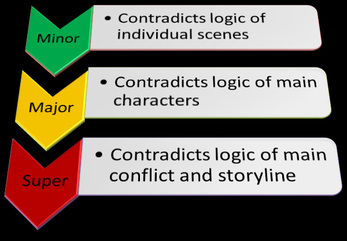
plot-holesI’m revising my manuscript soon and one of the things I’ll be looking for is plot holes. Does your plot have missing or broken parts?

I know  I have missing parts and jumps in action before I even go through it. I had the entire manuscript critiqued through a group at Scribophile and there were times critique partners would point out areas where I jumped from one idea to another without providing a bridge.

When you are writing, you know what’s happening and you may not question why Suzie is talking to Jeff about needing a job in one paragraph and working for him in the next. I’m not saying you need every little step in order for your reader to follow what’s going on. I’m sure most people don’t want to know she woke up, took a shower, put on her favorite dress, ate some Cheerios and brushed her teeth with Crest toothpaste before walking out the door to go to work, but if Jeff gave her a job, I think that’s pretty darn important. This is a missing plot piece.

Your readers will do a double take and have to try to resolve the inconsistency for themselves without the knowledge of how the scene was suppose to go. All it will take is a few of these before your readers are calling you names and tossing your work to the side.

When you read through your manuscript, look for areas where something important has happened and your reader didn’t see it. Try to put yourself in their shoes and see the story through their eyes. They don’t have access to your brain and thoughts, so they can’t fill in the missing holes.

I talked about plot holes in this blog but there are also broken plots, which can be quite amusing. I plan to address them in my Thursday blog.

-Jan R

Plot Holes?

Whose Your Accountability Partner?

untitledSo glad I have an accountability partner. If you don’t have one, you need to find one. They could be a family member, a close friend, or even a work associate. Some people have accountability boards. If you are like me, you are going to need that someone around that will occasionally ask you how things are going.

I like to think I’m disciplined enough to get things done without someone looking over my shoulder, but I have to admit, that at times I need that somebody to keep me motivated.

In my previous blog, I openly confessed my struggles with writing and keeping my commitments to this blog.  I have just finished my official first draft of my first novel and of course the holidays are coming up. The excitement and hustle and bustle of the season are enough to distract anybody from what they are doing.

I need that accountability partner more than ever to keep me focused right now. My partner as I have alluded to in the past is my husband. I love and respect him and want to succeed at this for him just as much as myself. I don’t want to let him down. This is something to keep in mind when you choose that accountability partner.

You want someone who sincerely cares about you and your success, but even more so, you want someone who you care about and whose opinions matter greatly to you. You don’t want to let them down. Talk about a motivator.

I am slowing down for the holidays, in part to allow time away from my novel before I start the big revision at the beginning of the year. But I will continue to blog, research, and prepare myself for the task ahead of me. I have set goals, and I have an accountability partner to ensure my success.

accountabilityWe all have commitments and goals that we want to achieve, but I would encourage you to take time to spend with those that you love and to enjoy and celebrate the season. Quality time with family and friends is a must and should be provided without guilt or concern about taking some time from the project you are working on at the moment. Your mental and emotional health impact your writing. Take care of yourself and the ones that you love, and if you don’t have that accountability partner, this is a great time to find one 🙂

 

-Jan R

Whose Your Accountability Partner?

Do You Have Goals Or Are You Wandering Aimlessly?

istock_000021386717medium-1-760x506I’ve been writing this blog for 1o months. It’s been my goal to do two posts a week on Tuesdays and Thursdays, and while I’ve been faithful in my commitment, I must confess the last few months have been really hard for me.
I know I’ve had a lot more outside commitments that are occupying my time, but it feels like it’s more than that. Have you ever wanted to just stop doing everything and reset? Take a break from life and catch your breath? How did you motivate yourself to work through the lulls?

I have read a lot of information on the internet and in books on motivation and how to jump start your battery when it dies (my analogy). Maybe that’s a bit drastic of an example. I don’t think I’m that bad 🙂

I’ve also wondered if finally completing the official rough draft of my first novel has taken some of the steam out of my boat, and I need to take a break and prepare for the next stage of the game. It’s not been easy. It’s required a lot of time and dedication on my part. I wasn’t an English major and literally had to learn how to write a publishable novel. I do understand the rules, but I’m not sure I’m there yet.

In order to keep moving forward, I have to keep my eyes set on the final goal. I completed step one and delivered what I feel to be a great first draft. I should pat myself on the back and take a breath, but I can’t allow too much time away from my work or I will become complacent.

My next step is moving forward to clean my first draft up and address areas that I already know are deficient. The ultimate goal is to get this work published, and while I’ve met a major milestone, I can’t lose site of that goal.

imagesThe one thing that has motivated me and kept me moving forward, is setting goals for myself. I may be dragging my feet right now, but I know where I’m heading. With my eyes set on the finish line, I will get there.

Do you have goals set for your life or are you just wandering aimlessly hoping that things work out? You will never get to where you want to be without a plan in place to get you there.  Set those goals! Work that plan!They could mean the difference between failure and success.

-Jan R


Do You Have Goals Or Are You Wandering Aimlessly?

Stop Looking Over Your Shoulder

images-3If you are constantly looking over your shoulder, you may not finish your novel. You will be too busy battling the thoughts of it not being good enough. No one wants to be humiliated or rejected. Your inner critic will paralyze you by telling you just how bad it really is (even if it’s not) .  This is another obstacle that I have had to overcome. It hasn’t gone away, I’ve just learned to deal with it.

I remember doing a Bible study on the battlefield of the mind. Though it’s primary purpose was dealing with spiritual warfare, it also related to many of the issues that we deal with in our everyday lives. Our mind is a battlefield. In writing for example, all of us worry about looking dumb and never getting published. Fiction writers make a business out of being scared, and not just looking dumb.

It took me six months from the time I started writing my novel, to tell my husband what I was doing. When I finally told him, I was a mess. I knew he would be excited for me and encourage me in my endeavor, and I didn’t want to let him down.

For the longest time I treated my novel as a hobby. That’s not a mindset that will get you published. When I finished and sent it out to the first few agents, I was more than a little anxious. The first few rejections confirmed my beliefs. I just wasn’t good enough.

Note that I said, “I wasn’t good enough.” Well that’s not exactly true. The truth is the novel wasn’t good enough. The fact is, it was filled with grammatical and structural errors, there was some serious head hopping going on, and my on-the-nose writing was all but bringing the story to a complete halt. If you are not familiar with these terms you should be. Go back and read the posts I have written addressing them.

I don’t know that the inner critic will ever go away. So how do you combat it? You keep moving forward and growing in your craft. Don’t stop writing. I still question my novel, but I know, that I know ,that I know, that it’s a lot better than it was after the unofficial first draft. I’ve learned the hard way and hope you avoid some of my pit falls.

-Jan R

Stop Looking Over Your Shoulder

Narrative Voice?

2812fa51-0be7-4e8e-83b6-c6805cfdedf6I’ve been writing seriously for the last few years, although I started my novel about five years ago. At that time I thought all you needed was to pick up a pen and paper and start writing. It wasn’t until I was rejected that I learned there were rules, strategies, and expectations that needed to be met for a publishable piece of work.

I’m still learning the rules and the writer lingo. Yes writers do have their own catch phrases and words that us non-writers may have heard but had no idea what they were talking about.

Have you ever had anyone ask you about your narrative voice? I know what the POV is and am pretty comfortable with that. Goodness knows I messed mine up so many times that I had to put some serious time in to figuring out what it was and how to use it properly, but narrative voice was not one of the options.

An article I read in Writers Digest this past week best described narrative voice. It’s the stream in which your story flows, the current carrying along the key information a story needs to thrive.

Setting descriptions, observations, philosophical musings, sensory imagery and more slip through the cracks between action, dialogue, and thoughts in your novel. All of that in-between material constitutes your narrative voice.

The narrative voice and the POV work together. If the narrative is the stream, then the POV is the swimmer stroking through it sending feelings and actions to the surface.

Now you have it. If anybody asks you about your narrative voice, you have a better understanding about what they are asking. There is so much more information available on the narrative voice and how it works with the POV but I want get into that today.

-Jan R


Narrative Voice?