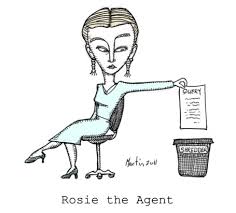
 I know you may feel helpless at times. You’ve written an exciting adventure and edited it so many times you’ve lost count. You know you’ve produced a publisheable piece of work, so why isn’t it published. I’ve been there – done that.
Remember that your work being accepted by an agent often times has nothing to do with the novel itself. How many times have you had a rejection letter following the request for the full manuscript? That agent made the decision that they liked or disliked your idea before they even started reading your novel.
That’s the importance of the query letter and getting those first few pages of your novel right. Keep in mind that most agents receive over 10,000 queries a year. They don’t have the time to give to every submission they get.
Don’t make it easy for them to toss your work before they’ve given it consideration. That query has to be as polished as your manuscript. You don’t send out your first draft of a novel? That’s what it is – a rough draft. At least I hope you don’t. I have to confess I did.
One of the many rejection letters I received was nice enough to inform me that the novel wasn’t ready for publication, and proceeded to provide a long list of reasons why. The agent did like my premise 🙂 and made it through the query without tossing it. That’s probably why she took the time to respond.
There is a formula to get that query right. First and foremost, follow the submission guidelines of the agent or agency you are querying. Don’t give them more or less. If they want more information or to see the manuscript, they will request it.
There are workshops available and unlimited information on the internet on how to compile a successful query. Do your homework. When you finish that novel, you are not finished.
Something to think about.
-Jan R
 I’ve stated in previous blogs, that there are a lot of reasons why your manuscript was passed over, and many have nothing to do with the manuscript itself, but I thought it would be nice to hear it from an agent.
 So you’re afraid you might fail. Truth is, you might stumble the first try, the second try, and maybe even the third try, but that’s part of the learning process. If you’re constantly looking over your shoulder, you may not finish your novel. You’ll be too busy battling the thoughts of it not being good enough.
 Does your manuscript have to be perfect? If you’ve already written a best seller, your agent and editor may cut you some slack. If not, yes, that book better be pretty darn near perfect, or nobody is going to look at it. Agents receive hundreds of queries a week. They don’t have time to read everyone. If your work is full of grammatical and structural errors, that’s all the excuse they need to toss it to the side and move on to the next one.
 I received two rejections this week, and while they were nice well written form letters, that’s what they were. You know the ones that thank you for considering their agency, and assure you that they will give your work a thorough going over before they make a decision. And then they add, if you haven’t heard from us in two weeks, assume we are not interested, and your work isn’t a good fit for us…
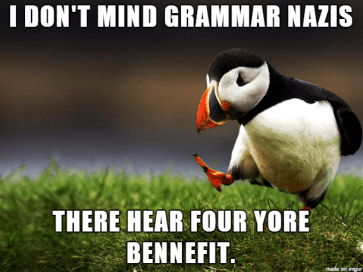 If you think grammar is just a small child’s mispronunciation of “grandmother,” and if you think syntax is a tax that the church levies on sin, maybe you should consider becoming a nuclear physicist or a neurosurgeon or just about anything at all except a novelist. Dean Koontz
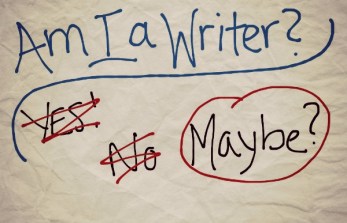 Am I a writer? You ever ask yourself that question? I do, and am still hesitant to tell people I write. I’ve never published a book. I’ve never been paid to write anything. As a matter of fact, my work was rejected because it wasn’t good enough. Side note-it really wasn’t good enough-I just didn’t know it at the time. I was too new to the game to know any better.
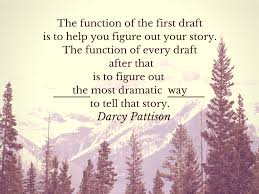
 After I completed the first very rough draft of my manuscript, I couldn’t wait to send it out to literary agents. It was a great story and I was soooo excited. What if I got more than one offer. I am a realist but a very positive one and I new that story was great.
 I read a quote the other day and thought I would share it on my blog. I don’t know who wrote it, as a name wasn’t provided. It reads as follows:
 Enough already! At least that’s how I feel sometimes. I’ve been through my book more times than I can count. In my own defense, no one taught me how to write. I had a great story idea and decided to give it a whirl.
 Writing your first novel-Things you should know