Remember – It’s Your Story!

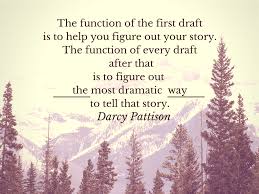
I’ve shared this message before, but it bears repeating. Just this past week, my husband pointed out that I had made a major change to a chapter of my newest work based on someone else’s recommendation. He was right—the change didn’t fit the original intent of my story. My first version had been stronger. I should have trusted my gut.

As new writers, we often listen to everyone but ourselves. Friends and critique partners mean well, but if you’re not careful, some will try to reshape your novel into what they think it should be.

I was recently revising a scene based on a critique and stopped mid‑sentence. What am I doing? The critique partner who suggested the changes is talented, and I respect her opinion. Others who read the same chapter loved it, offering only minor notes. So who was right—the three who praised it or the one who wanted significant changes?

The more I examined her suggestions, the more I realized she had her own vision for the story—and I had mine.

That said, she has also given me excellent advice. Because of her, my dialogue is more natural, my POV more consistent, and my story more believable. Her feedback has been invaluable.

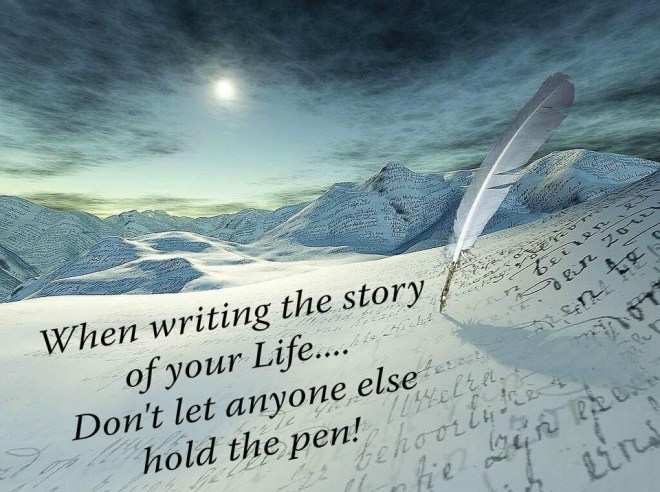
But I had to remind myself: this is my story. No one understands its dynamics better than I do. No one knows it from beginning to end but me. No one can tell it the way I can.

When you receive feedback, weigh it carefully and ask yourself: Is this making my story better—or turning it into something it’s not?

Remember: it’s your story.

-Jan R

Remember – It’s Your Story!

You Can’t Do This Alone!

I remember my middle sister as a child. She would often be found sitting in the corner with her nose in a book. She didn’t play well with others. Well to be honest, she didn’t want to play with anyone at all.  Her friends were imaginary. I always thought that she was a little strange, and she probably was, but she is also one of the most talented writers I know.

You haven’t heard of her or read any of her work. Why? Because she writes in a vacuum. I have encouraged her for years to reach out and join the writing community.

She is an introvert, like most of us who seem to enjoy the keyboard much more than a group of pretentious people. I would be okay with that if she belonged to writing groups, or had people she related to that could help motivate her to move forward with her craft.

You don’t have to interact with others face to face, at least not at first. If that’s not your cup of tea, go online. Join writing groups and form relationships with other author want-to-bes. There are some great ones out there that cater to just what you’re looking for.

Critique groups:

  • Scribophile.com
  • AbsoluteWrite.com
  • CritiqueCircle.com

I am a member of Scribophile. It’s a great site to seek critiques and suggestions from fellow writers. Members on this site operate at different levels of expertise. I have gotten some great feedback, but I have also received feedback that was not up to par. I was pleasantly surprised at the community in the group and the willingness of total strangers to help me with my work.

Genre-Specific groups:

  • Romance Writers of America  rwa.org
  • Mystery Writers of America    mysterywriters.org
  • Science Fiction and Fantasy Writers of America   sfwa.org

I think you’re getting the picture. I was a member of Romance Writers of America and need to renew. You can get excellent information and discounts from these sites. They will keep you informed on contests, conferences, writing groups/forums, what’s selling, agents looking for new works, and information on how to improve your craft.

Remember, you can’t do this alone!

Something to think about.

-Jan R

You Can’t Do This Alone!

Is My Novel Ready For Publishing?

images-4Enough already! At least that’s how I feel sometimes. I’ve been through my book more times than I can count. In my own defense, no one taught me how to write. I had a great story idea and decided to give it a whirl.

I thought it was ready and then real life happened.  My wonderful work was rejected by the five agents I sent it to. One of the them did see something promising and took it upon herself to provide me feedback about what I was doing wrong (there was a long list) and what I needed to do to improve my work.

I was totally humiliated. Grammatical and Structural errors are kindergarten stuff and completely unacceptable. Even I should have gotten those right. I could understand a little more my issues with head bopping and on-the-nose-writing. Those terms were totally foreign to me.  I wasn’t a professional novelist. I thought all you had to do was put words on paper and create a wonderful story that everyone wanted to read. And what was the deal with dragging dialogue? My people were talking. How was I suppose to know dialogue moved the story forward or had to have some significance?  I can’t believe I sent an agent such inferior work.

When you’re a newby you don’t know how bad your work is because you don’t have the knowledge and skills necessary to produce publishable work. You just think you do. While there may be a few prodigies out there, you probably aren’t one of them. Sorry!

Like myself and many others, you’re going to have to pay your dues and learn the craft. Then you will be ready to write that New York Times best seller.

I hope this got you newbies to thinking. After my slap in the face, I began reading ‘how to’ books, taking on-line classes, watching seminars and following blogs of people who were successful at their craft.

For the record just because it has taken me five years doesn’t mean it will take you that long. I lost some motivation after the initial rejections and took some time off. I regrouped, looked at the feedback I had gotten, and started educating myself on the art of writing fictional novels.

I would love your comments! I would also like to ask that you consider following me on this journey. It is my intention to provide you with useful information in every blog.

-Jan R


Is My Novel Ready For Publishing?