 Think of your POV character as your camera. He/She walks through the story giving you a personal glimpse of what’s happening. If your POV character can’t see it, you can’t describe it for your readers. If he can’t hear it, you can’t let your readers hear it. If your POV character doesn’t know it, you can’t tell it. You are bound to your POV character.
Character can’t see it
Suzy stood staring straight ahead. Her ex stood behind her, his arms crossed over his chest, his blue eyes scowling.
- Problem Unless she has a mirror in front of her, she can’t see her ex standing behind her. She wouldn’t know his arms were crossed and he was scowling.
- Fix Use other senses. She can smell him, she can hear him, and she can imagine what he is doing.
Character can’t hear it
Suzy walked down the dark hall. Several floors down, another set of footsteps echoed in the darkness. Suzy had no idea she was being followed.
- Problem For the purpose of this example, we’re assuming she can’t hear two floors down. If she can’t hear it, she can’t describe it. Moreover, if she didn’t suspect it, who is telling the reader this information? It’s not Suzy.
- Fix Set the mood that hints at what you want the reader to fear. You can also have your character imagine the worst.
Character doesn’t know that
Suzy’s ex stood behind the door with a gun, waiting for her to enter. As she approached, she had no idea what was waiting on the other side.
- Problem To be a true third person, you can’t write what your POV doesn’t know. The POV police refer to this as omniscient voice or author voice.
- Fix Your POV can suspect, sense something isn’t right, have a funny feeling, or if her ex is heavy handed with the Old Spice, she may smell him. I think you get the picture.
Other omniscient or author slips
- Suzy got out of her car and headed for the gym. She never realized she had left her keys in the ignition.
- Suzy accepted the date. She wouldn’t find out for several months that it was the worst decision she would ever make.
- Suzy walked by the window and never noticed that someone had left it opened.
I am guilty of committing all of these POV sins. I hope this post helps you as much as it helped me.
-Jan R
 I read an article today on the importance of eavesdropping. It reminded me of an online workshop I viewed several years ago.
 I’m quickly approaching the point in the writing process, where I need to start looking at submission requirements for the agents/publishers I would like to contact with a proposal.
 So how do I write the perfect opening line? I know it has to be great. I know it has to grab the reader and pique their interest from the get go, but I haven’t been able to locate a magic formula.
 I first wrote this article about 7 months ago. I attended a conference with my husband and found myself in an embarrassing and somewhat frustrating situation. I like to share information that I hope will help others, and prevent them from making some of the mistakes that I have. What was my mistake? I wasn’t prepared. The thought never crossed my mind that I would be expected to share what I was writing. I knew I would at some point, but the book wasn’t even ready to submit.
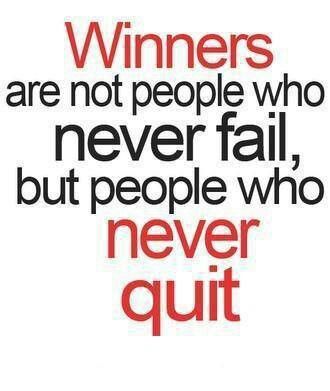 I love this quote. It applies to all aspects of life. I am an aspiring author, and remind myself often that the key to success is to not give up.
 I hope you are getting the picture. You can’t give up on your dreams. Revise, edit, do what you have to do to make your story great, but don’t give up.
 I wish I could take credit for this blog but it was written by Jerry Jenkins. He is probably my favorite blogger and one of my favorite authors. You can find him at jerryjenkins.com
 You ever have days when you don’t know what to write? I’m in one of those places right now. I’ve spent the last hour and a half reviewing blogs of some of my favorite writers and reading through my latest Writer’s Digest, but I am still struggling for inspiration.
 Well I guess you could, but that wouldn’t be very productive, and your novel would be suspended on life support, waiting to be revived.
 I have spent the last month looking at the characters in my novel. How do they relate? Are they effectively carrying out the roles intended for them? Are they unique and easily identified, or do they all present the same?
 I know it sounds good. When I was in the business world, I prided myself on having an open door. If you had a problem, you could come on in, and we would knock ideas around until we came up with a solution.
 Writing your first novel-Things you should know