 Spoiler alert! If you were one of the eight people that read this blog two weeks ago, you are experiencing deja vu. I thought it was a good blog, but one thing I’ve learned over the last two years, is the title can make you or break you.
It was initially titled ‘Show Don’t Tell’. I guess that sounded kind of boring, or maybe just to repetitious. Goodness knows how many ‘Show Don’t Tell’ blogs are out there. So I’m reposting it under a new name 🙂
Here goes!
I can’t count how many times I’ve heard the phrase-show don’t tell. You probably saw the title and questioned even reading this blog. Everybody knows you are suppose to show and not tell. You want the reader to experience the scene as if they are one of the characters walking through the story beside the hero/heroine.
If you’re like me, you know what you’re suppose to do, but you don’t really understand what to do to make it happen. How do I show and not tell? It’s a lot harder than it seems. Once you start writing that novel, you’ll understand what I’m talking about.
There are 5 tools for showing:
- Dialogue
- Action
- Interior dialogue
- Interior emotion
- Description-Sensory
If you’re doing anything that’s not one of these 5 things, you’re not showing.
Why is it so important to show versus tell? Showing provides your reader with a powerful emotional experience. If you want to be a best selling author, that’s what you have to do.
It doesn’t matter how great you do everything else in that novel, if you’re missing that emotional experience, you lose. If everything you did is bad, but you have a great emotional experience, you may still win.
It all comes down to the take away. Every great novelist will tell you, you have to give your reader that powerful emotional experience, or they wont be coming back.
-Something to think about 🙂
-Jan R
 When you are writing a novel, you want to use concrete, everyday verbs. Examples of these are jump, smile, run, look, show, and eat. You can picture the actions in your head and there is no ambiguity.
 Unnecessary information can take away from the sharpness or clarity of the sentence you are writing. The incidental or secondary details may be important information that needs to be stated somewhere, but placement is key. You want to clear up space for the main idea.
 When you hear the word setting, you think of a time period and place, but settings do so much more than that.
 I do a lot of critiques for different writers during the week. Some of the writers are very polished; others, not so much.
 Have you ever read a sentence and thought that is way too long? The author lost you two commas ago, and now you have to go back and read the whole thing again, to try and figure out what’s going on.
 When I started writing this blog, I had no idea what I was doing. All I knew was I needed to start a blog. One of the agents I had queried, told me I needed a platform, and while it didn’t guarantee a book deal, it would make placing my book with a publishing house a lot easier.
 I wasn’t an English major, but I never had an issue with stringing words together and making a coherent, easy to read sentence. I know most of the rules, but I also know those rules are meant to be broken, especially if you are writing fiction.
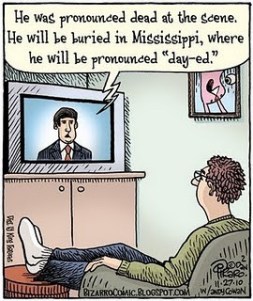 Do your characters have their own voice or do they sound the same? I had a critique partner tell me that she couldn’t distinguish characters in my manuscript based on dialogue. They all sounded the same. If I hadn’t provided a dialogue tag, she would have had no idea which character was speaking. She was right.
 I know I’m suppose to write in the active voice, but why? What is the difference between active voice and passive voice and why does it matter?
 Writing your first novel-Things you should know