 Enough already! At least that’s how I feel sometimes. I’ve been through my book more times than I can count. In my own defense, no one taught me how to write. I had a great story idea and decided to give it a whirl.
I thought it was ready, and then real life happened. My wonderful work was rejected by the five agents I sent it to. One of them must have seen something promising. She took it upon herself to provide me feedback about what I was doing wrong (there was a long list), and what I needed to do to improve my work.
I was totally humiliated. Grammatical and Structural errors are kindergarten stuff and completely unacceptable. Even I should have gotten those right. I could understand my issues with head-hopping and on-the-nose-writing. Those terms were totally foreign to me. I wasn’t a professional novelist. I thought all you had to do was put words on paper and create a wonderful story that everyone wanted to read. How was I to know there were rules?
And what was the deal with dragging dialogue? My people were talking. How was I suppose to know dialogue moved the story forward or had to have some significance? I couldn’t believe I sent an agent such inferior work!
When you’re a newbie, you don’t know how bad your work is because you lack the knowledge and skills necessary to produce publishable work. While there may be a few prodigies out there, chances are, you aren’t one of them. Sorry!
Like myself and many others, you’re going to have to pay your dues and learn the craft. Then you will be ready to write that New York Times bestseller.
One of my favorite sayings is, you don’t know what you don’t know. I’m not sure where I picked that up from, but it’s true. I wasn’t intentionally sending out bad work. I just didn’t know.
-Jan R
 Why do so many perfectly nice people make such pompous asses of themselves when they sit down at a typewriter? – Dean R Koontz.
 Commas are an albatross around my neck. Maybe that’s a bit dramatic, but they are frequently my downfall in writing prose. Unfortunately, they are the most common punctuation mark within sentences, so you had better learn their proper use.
 Overwriting is a result of our own effort to figure out what’s happening in any given scene. Only after we have discovered that core truth can we know what truly belongs and what doesn’t, based on a clearer knowledge of what we’re trying to say and what the scene requires. – David Corbett
 You may have a great elevator speech/pitch for an editor, but that doesn’t mean it will be accepted. Don’t take it personal. There are many reasons your work is rejected,
 If you don’t have that elevator speech, you need to start thinking about it. Just because your plans don’t include a writer’s conference in the near future, doesn’t mean you don’t need one. I definitely don’t want you to fall into the same trap I did. Very embarrassing 🙂
 Over the past few months, I’ve been focusing on word use. Are the words necessary or just taking up space in my work? My blogs usually relate to what I’m working on at the time they are being written. I like to think if I’m having questions about an aspect of writing, you are too. The following blog is an older one I wrote a few years ago, but it is still relevant, and I figure a refresher is good for myself and you.
 Five adjectives in one sentence are better than six; four adjectives are better than five; three are better than four; two are better than three…By using fewer words to obtain the effect you desire, you will force yourself to use more accurate and more powerful words-Dean Koontz, ‘How To Write Best Selling Fiction’.
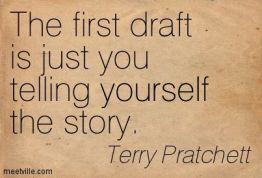 I read a quote a while back and thought I would share it on my blog. I don’t know who wrote it, as a name wasn’t provided. It reads as follows:
 I have been accused and rightly so of on-the-nose-writing, overwriting, redundancies, and throat-clearing. I’ve also had a close relationship with the words “that” and “had”. I blame it on inexperience and just not knowing any better.
 Writing your first novel-Things you should know