 When you write a novel, one of the things you’re probably going to experience, is the mayhem in the middle. You have a great story idea, with a great beginning and a great ending. The only problem is, you haven’t thought about what happens when you get to the middle.
Most people who fail to complete their novel, become lost in the middle. They bail when they realize they don’t have enough cool stuff to fill the pages. They may attempt to add scenes, but become bored, and know readers will be too.
Every book becomes a challenge a few chapters in. Trying to keep up the tension and pace gets harder and harder. But don’t panic or do anything rash, like give up.
What can you do? If you’re one of those people who hasn’t developed an outline, thinking it would just come to you as you muddled through, maybe you should consider backing up and doing one.
An outline to set every scene gives you a blueprint of what will happen next. If the action starts to wane, think about a subplot or introduce tension between your main characters. Maybe there was a misunderstanding, or maybe that one minor character that was suppose to be the good guy, isn’t what he appears. Maybe the butler did it, but nobody knows.
You can have so much fun with subplots. Just keep them believable and resolve them all in the end.
Hope this helped.
Jan R
 I read and write romance novels. I have to admit I’m a hopeless romantic. I just love stories where boy meets girl, you throw in a little conflict (okay a lot), but everything works out in the end, and they live happily ever after.
 You want to write a novel, and you have a great idea, but you’re not sure how to start. Everybody knows that first line, that first sentence, is extremely important. It has to be right.
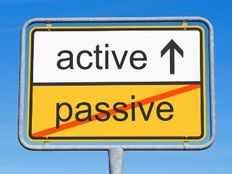 I know I’m suppose to write in the active voice, but why? What is the difference between active voice and passive voice and why does it matter?
 When writing, remember less is more. Stay away from qualifiers. They weaken your prose, and the result is the exact opposite of what your were trying to achieve. I know why you use them. I’m hooked on ‘very’. Other people are hooked on the word ‘too’. If you are resorting to qualifiers for emphasis, odds are, you are using the wrong word in the first place.
 I occasionally review older blogs I have written for content and ideas. I have been blogging for a year and a half now, and have to admit, there are days I’m at a loss as to what to write, or just don’t have the time to sit down and produce a blog I would want to read.
 When you hear the word setting, you think of a time period and place, but settings do so much more than that.
 Have you ever read a sentence and thought that is way too long? The author lost you two commas ago, and now you have to go back and read the whole thing again, to try and figure out what’s going on.
 I was reading a segment of someone’s work-in-progress during my blog time this past week. You know what I’m talking about if you’ve navigated the blog scene very long. Some bloggers use their blog to post segments of their work.
 Your main character should be a living, breathing, human being, at least in the eyes of the reader. He/she evolved into the person that they are today, just like you and me. What significant events in their life transformed them? Sounds like a little backstory to me.
 Writing your first novel-Things you should know