
My main focus for this particular blog is antagonists. I have two in my novel. One is amnesia, and the other is a young woman determined to marry the man of her dreams, even if he belongs to someone else. She uses his amnesia to her advantage, manipulating and deceiving him.
When you are creating antagonists, you must remember they are people too. Help your reader to empathize with them and understand why they act the way they do. Even bad people have weaknesses and can show love towards others. They are more than just a device to move your plot in a certain direction. Flesh them out!
Get into your antagonists head. Help people to see things from his/her point of view if possible. I write in third person omniscient, which allows me to get into the head of any character I choose, as long as I limit myself to one per scene. If this doesn’t work for you, have your point of view characters mull over and try to understand the antagonist’s point of view. You don’t want him/her to be seen as pure evil.
I have to admit, I’m a ‘Star Wars’ geek. If you’re a follower, you know who Darth Vader is. From my perspective, he is the perfect antagonist. The creator of this series, put a lot of thought into this bad guy. He is pure evil, but as Luke stated, “There is good in you, I can feel it.” Luke was right. Vader wasn’t all evil, as a matter of fact, he started out as a good guy. His motivation for turning to the dark side, was to save his wife.
You want your antagonists to be strong, smart, and capable. At least as much so as your protagonist. This serves to give the story balance and maintain interest. It also helps to increase tension and suspense. You know the antagonist is capable of defeating the protagonist. The story could go in many different directions.
Back to the ‘Star Wars saga, Darth Vader was the most powerful of all the Jedi, even though he turned to the dark side and fell under the control of the Sith Lord. His downfall in the end wasn’t his lack of strength, but his return to the light. He sacrifices himself to save his son. In a split second decision, he destroys the empire and brings balance to the universe.
Many professionals recommended that you not use abstractions, such as corporations, disease, or war as your antagonists. They are unrelatable, but that’s a blog for another day.
If you do feel the need to use an abstraction, put a human face to it. Instead of organized religion, you may consider a resentful pastor seeking revenge. Instead of corporate greed, you may consider a Bernie Madoff type. One of my antagonists is a medical condition that a second antagonist exploits to get what she wants.
Hope this post provided a couple nuggets and got you thinking 🙂
-Jan R
 When I started writing this blog, I had no idea what I was doing. All I knew was I needed to start a blog. One of the agents I had queried, told me I needed a platform, and while it didn’t guarantee a book deal, it would make placing my book with a publishing house a lot easier.
 If your hero is drinking sake in Tokyo, you better know which hand he should use to hold the cup; and when he is sunning on the beach at Cape Cod, remember that there won’t be any palm trees-Dean R. Koontz
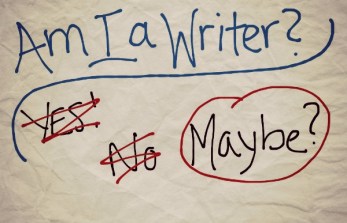 Am I a writer? You ever ask yourself that question? I do, and am still hesitant to tell people I write. I’ve never published a book. I’ve never been paid to write anything. As a matter of fact, my work was rejected because it wasn’t good enough. Side note-it really wasn’t good enough-I just didn’t know it at the time. I was too new to the game to know any better.
 I read an article a while back that described openers and finishers. I had never really thought about it, though if I had to identify with one of the two, it would definitely be finisher.
 Write with your reader in mind. You want to keep things simple: no over the top flowery sentences, that belong in poetry, not in a novel, no run on sentences that are a paragraph long, or clumsy writing that is hard to understand.
 Many people think writers live the life. Writers lay around in pajamas writing stories and making millions of dollars. They control their schedule, and of course, travel to exotic places all over the world.
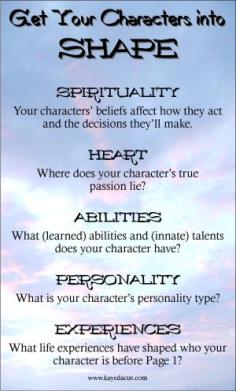 Make sure your characters behave the way they are supposed to, and don’t force them to do something that doesn’t fit with the persona you built.
 Narrative summary is a great weapon in the writers arsenal. It can be used to speed through scenes that aren’t important, slow things down after an intense scene to allow the reader to catch their breath, compress time, and to provide exposition(background information).
 Writing your first novel-Things you should know