 Have you ever read a sentence and thought that is way too long? The author lost you two commas ago, and now you have to go back and read the whole thing again, to try and figure out what’s going on.
Or maybe you read a short sentence, followed by another short sentence, and another, and you’re thinking whoa, slow down.
There’s not a set rule for short or long. The sentence length you choose depends a lot on what you are trying to accomplish. There are good reasons for those long, lost me a long time ago sentences, and short, what just happened sentences. It’s up to you to decide when to use them, given the context of your writing.
What do short sentences do?
- Create tension-When an author starts using short sentences, it’s usually a sign that something is about to happen.—-The dog growled. His teeth flashed. Jake turned. It was too late.
- Call the attention of a reader to a significant detail—She walked past central park in Manhattan, with her head held high. Gorgeous woman. Long blond hair. Blue eyes. Impeccable taste.
- Present sudden events-Out-of-the-blue actions that no one was expecting.—-We sat quietly enjoying our meal at the local fast food restaurant. Boom! “What was that?” I turned to see people rushing toward the gas station up the street.
- To summarize the ideas presented in the long paragraph or sentence.
What do long sentences do?
- Develop tension-While the short sentence is imminent, culminating with the actual event being acted out, the long sentence adds to the suspense, hinting at a situation in the process of developing.
- Give vivid description-depicting a setting, love scene, or someone’s appearance.—Autumn came without special invitation, coloring the trees in orange, yellow and red, whispering the cold in our ears and hiding the warm sun rays from our eyes.
- Investigates arguments, ideas, or facts thoroughly.
Although long sentences have the smell of the old-fashioned 19 century romantic prose, the usage of the long sentence in modern creative writing has it’s place.
When it comes to writing artistic literature, fairy tales, ghost stories, or mysteries, don’t underestimate the effects of short sentences.
Hope this didn’t confuse you too much. To sum it up, there’s a time and place for everything 🙂
-Jan R
 I was reading a segment of someone’s work-in-progress during my blog time this past week. You know what I’m talking about if you’ve navigated the blog scene very long. Some bloggers use their blog to post segments of their work.
 Your main character should be a living, breathing, human being, at least in the eyes of the reader. He/she evolved into the person that they are today, just like you and me. What significant events in their life transformed them? Sounds like a little backstory to me.
 When I started writing this blog, I had no idea what I was doing. All I knew was I needed to start a blog. One of the agents I had queried, told me I needed a platform, and while it didn’t guarantee a book deal, it would make placing my book with a publishing house a lot easier.
 If your hero is drinking sake in Tokyo, you better know which hand he should use to hold the cup; and when he is sunning on the beach at Cape Cod, remember that there won’t be any palm trees-Dean R. Koontz
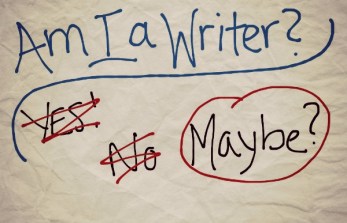 Am I a writer? You ever ask yourself that question? I do, and am still hesitant to tell people I write. I’ve never published a book. I’ve never been paid to write anything. As a matter of fact, my work was rejected because it wasn’t good enough. Side note-it really wasn’t good enough-I just didn’t know it at the time. I was too new to the game to know any better.
 I read an article a while back that described openers and finishers. I had never really thought about it, though if I had to identify with one of the two, it would definitely be finisher.
 Write with your reader in mind. You want to keep things simple: no over the top flowery sentences, that belong in poetry, not in a novel, no run on sentences that are a paragraph long, or clumsy writing that is hard to understand.
 Writing your first novel-Things you should know