 When you write, you should relax and enjoy the process. Don’t become obsessed with perfection. Nobody’s perfect. Most published novels aren’t perfect.
Since I’ve started writing, I’ve developed a keen eye for errors. They just jump off the page. If you’ve been writing for a while, you probably experience the same thing.
I love historical novels and read them every chance I get. I run into at least 2-3 errors in every novel. It usually is something as simple as using ‘the’ for ‘they’ or leaving off an ‘s’ on a word that should be plural, but because I have a trained eye, I see it, and am pulled out of the story.
Does it ruin the experience for me? Not at all. As a matter of fact, I feel better about my own writing. Nobody’s perfect, and that’s okay. With that being said, note I only see 2-3 in a 350 page novel, and not one on every other page.
The quest for perfection leads to writer’s block. It can paralyze an author. It’s great that you aim for perfection. That is what you want, but don’t allow your fear of making a mess keep you from moving forward.
Truth is, your first draft is going to be raw, awkward, and full of errors. That’s why we go back and edit, edit, edit.
Another question to ask yourself, is what is perfection? I’m not talking about grammatically and structurally sound sentences, I’m talking about every little component that goes into making a great novel.
Did you know that your idea of perfection changes as you gain more and more experience in writing?
When I finished my novel, I went back and corrected all of the grammatical and structural errors and considered it complete and pretty darn near perfect.
I didn’t know the rules for Point Of View. I was head-hopping all over the place. So my work wasn’t perfect, and I was breaking a cardinal rule, which allowed the agent to pick up on the fact that I was an amateur.
I also didn’t know the rules for writing dialogue. Nobody told me your dialogue had to move the story forward. Most people don’t want to stop and smell the daisies. They want the meat, and they want to get to the action. So my work wasn’t perfect.
Keep writing! Your work won’t be perfect on the first go round. So accept that and get over it. It’s okay, you’re not alone. No writer, published or unpublished, writes a perfect first draft. Give yourself permission to make mistakes.
I use to say get it done, then get it good. What I mean by that, is write that first draft knowing it’s full of errors. Get your ideas on paper before they fade away. Then go back and begin the refining process. You want it as near to perfect as possible before querying an agent or self-publishing.
-Jan R
 Is your writing pretentious? Do you write to impress others, or is your writing real? I’ve written several blogs on pretentious writing, but I’ve never used those words to describe it.
 Unnecessary information can take away from the sharpness or clarity of the sentence you are writing. The incidental or secondary details may be important information that needs to be stated somewhere, but placement is key. You want to clear up space for the main idea.
 I thought I would continue with the blog I wrote on Tuesday,
  Whenever you write, you should aim for maximum simplicity. You want tight writing with no redundancies, flowery language, or longer than necessary words. Shun pretentious writing. It exposes your inexperience.
 This past week I was doing research on how to come up with a title for your book. As stated in the blog, titles matter. One of the recommendations I read was to do a google search on the title you are considering.
 what they had. Well, I stopped at ‘Always and Forever’ number 20, and passed quite a few, ‘Forever and Always’ along the way.
 best sellers. This means people who liked those books, may have a positive view of mine, or at least a curiosity to check it out.
 I received two rejections this week, and while they were nice well written form letters, that’s what they were. You know the ones that thank you for considering their agency, and assure you that they will give your work a thorough going over before they make a decision. And then they add, if you haven’t heard from us in two weeks, assume we are not interested, and your work isn’t a good fit for us…
 When you start talking about copyright and fair use, you are breaching an extremely sensitive and ambiguous subject. How am I suppose to know if a piece of work that is copyrighted is okay to use in my novel?
 I was looking at some of my older blog posts this past week, when something jumped out at me.
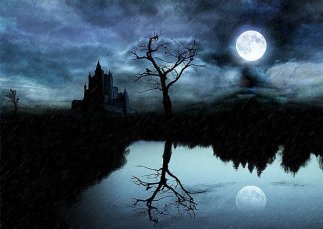 When you hear the word setting, you think of a time period and place, but settings do so much more than that.
 Writing your first novel-Things you should know