 Anybody that has read my work, knows that most of my blogs spin off of my own weaknesses. And there are many. I figure if I’m having problems with a certain aspect of writing, there are probably many others who are too.
So today I thought I would focus on writing scenes. As you may have guessed, I was shredded to pieces in a critique, and rightfully so.
I presented a 3000 word excerpt from my novel for review. I did say 3000 words, and a friendly critique (she really was nice), pointed out that I had managed to squeeze 10 different locations/scenes into those 3000 words. It was overwhelming, and the scenes were like flybys.
I have a very complicated novel, with many twists and turns, which could be a good thing. But in my haste to get through them all, I’m not providing a cohesive story. Many of my scenes are lacking.
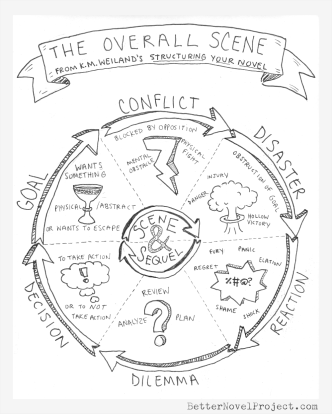
So how do I correct my mistakes? I put together a scene and a sequel. They work together to form one cohesive scene. At some point, this cycle of scenes and sequels will end, and my POV character will either succeed or fail. I would opt for succeed:-)
Scenes are as follows:
- Goal- What the POV person wants at the beginning of the scene. It must be specific and clearly definable.
- Conflict- The series of obstacles your POV character faces on the way to reaching their Goal. There has to be conflict or your reader will be bored.
- Disaster- Is a failure of you POV person to reach his goal. This is a good thing in writing. Hold off on success until the very end. If you allow your POV to reach his goal to early, then your reader has no reason to go on.
***All three of these are critical to make the scene successful.***
Sequels are as follows:
- Reactions- Is the emotional follow through to a disaster. Show your POV acting viscerally to his disaster, but remember he can’t stay there. He has to get a grip.
- Dilemma- A situation with no good options. A real dilemma gives your reader a chance to worry. That’s good, you want them emotionally involved. At the end let your POV choose the least of the bad options.
- Decision- Your POV has to make a choice. This lets your POV become proactive again. People who never make decisions are boring.
Hope this helped. I pulled most of my information off of the ‘advancedfictionwriting’ web site, that’s hosted by Randy Ingermanson-“the snowflake Guy”. He provides some great information for writers of all levels. You should check him out.
If you have any comments, I would love to hear from you. Happy Writing!
-Jan R
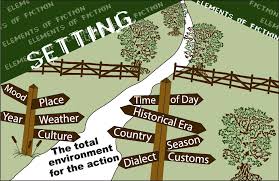 When you hear the word setting, you probably look around the room. Where are you? What do you see? And while I agree that, that is a part of the picture, there is so much more to setting than your location.
 On more than one occasion I have declared my love affair with the word ‘had’. When you use a word so many times it jumps off the page, you have a problem. It doesn’t matter if the word is used correctly or not. You need to find another way to write the sentence without using ‘the word’. In my case that word is ‘had’.
 Less is more. Five adjectives in one sentence is better than six; four adjectives are better than five; three are better than four; two are better than three…By using fewer words to obtain the effect you desire, you will force yourself to use more accurate and more powerful words-Dean Koontz, ‘How To Write Best Selling Fiction’
 Writing fiction can be fun. You get to create your own world with your own characters and you can take your story anywhere you want to go. Right?
 I was looking at some of my older blog posts this past week, when something jumped out at me.
 I have a plaque that sat on my desk for years when I worked for the state. A friend gave it to me for encouragement on those days when I felt like I wasn’t making a difference and wanted to quit. The author of the poem is unknown, but it’s words transcend time. It doesn’t matter where you are or what you’re doing, take heart and don’t quit.
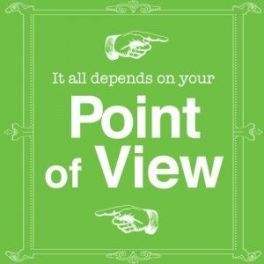 Think of your POV character as your camera. He/She walks through the story giving you a personal glimpse of what’s happening. If your POV character can’t see it, you can’t describe it for your readers. If he can’t hear it, you can’t let your readers hear it. If your POV character doesn’t know it, you can’t tell it. You are bound to your POV character.
 I read an article today on the importance of eavesdropping. It reminded me of an online workshop I viewed several years ago.
 Writing your first novel-Things you should know