What’s In Your Toolbox II

11510921-toolbox-with-tools-skrewdriver-hammer-handsaw-and-wrench-3d-stock-photoAbout a week ago I wrote a blog on tools I use to help with writing. I included the usual suspects-dictionary and thesaurus, but also included a few that I thought  many of my readers probably did not know existed. These included the ’emotion thesaurus’ -yes there is such a thing and it is great to help you get the creative juices flowing when describing your character’s reaction to what is going on in a particular scene.

After I posted the blog, I thought of a few more that have been instrumental in helping me to become a better writer and wanted to add those to the list. So, I decided to write What’s in you toolbox II.

Autocrit-is an online editing site that offers invaluable information about your prose. Being a beginner, I never thought about my word use or over word use is probably more accurate. I never thought about clichés, or passive writing, or the length of my sentences and how it affected the pacing.  One of my catch phrases is “you don’t know what you don’t know.”

So you can subscribe to Autocrit for free and it will review a segment of your writing(about 250 words at a time). After doing an analysis, it will provide you with the most used words in the segment and approximately how many you should have used, clichés, passive verbs, sentence length, and so much more.

The way Autocrit makes it’s money is you discover how great a tool it is and you pay for the upgrade. I purchased the upgrade for one year and used it frequently to help me become more aware of my writing and the common mistakes I was guilty of making. I am now more aware of my shortcomings and hopefully avoiding many of the mistakes I made in the past.

Grammarly – I’ve never used this site, but it’s my understanding that it is similar to Autocrit. I know many of my critique partners like it, so I thought I would throw it in the mix as a site to check out.

Scribophile- Who doesn’t need a critique partner who knows what they are looking for while reviewing your work and will offer an objective critique on what they are reading. If you are like me, you didn’t want to approach family and friends. They’re not writers and don’t understand the mechanics, plus they don’t want to hurt your feelings so they sugarcoat their critiques of your book. Besides that, what if they don’t like it. Nobody wants to be rejected especially by people they care about.

Scribophile is an online critique group that will critique up to about 3000 words of your novel at a time. It is free. Once again you can upgrade, but this is totally unnecessary, unless you are using it like Facebook to communicate with other aspiring authors. The way it works is you critique other peoples work and earn points. Once you have accumulated enough you can post your work. I had an 82,000 word novel critiqued in about 3 months.

You will find some of your critiques are performed by novices but many others by very good writers. The recommendations and assistance I got to correct grammar, POV issues and plot holes was invaluable.

They also have a book swap group if you would like to have someone read your work through completely without going the critique route. Before I had anyone look at my work, I wanted to go the critique route, so I could iron out as many mistakes as possible.

There are other online critique groups, but I haven’t used any of them, so I can’t comment on their effectiveness in helping with your writing. I know Scribophile and give them 5 stars 🙂

So many resources available at little to no cost. You just need to know where to look.

So what’s in your toolbox? Would love to hear from you.

-Jan R


What’s In Your Toolbox II

Edit, Edit or Edit?

Well that is true, but it’s only one type of editing, and there are three different types listed in the article. The article also noted that a novel length manuscript needed to go through all three types before it was submission ready.

Developmental Edit – better known as the content editing, story editing, structural editing or substantive editing. This edit looks at the big picture of your novel and focuses on

  • character arcs/development
  • pacing
  • story structure
  • pot holes or inconsistencies
  • strong beginning, middle and end
  • plausibility/believability
  • clear transitions
  • point of view
  • showing vs. telling
  • dialogue

Copy Edit – copy editing is the one most of us think of when we hear editor. He comes on the scene after the developmental editor and cleans things up. He is the one who does the line by line with a focus on

  • grammar
  • punctuation
  • spelling
  • redundant words
  • inconsistencies/continuity errors
  • awkward sentence structure

The proofread- I never thought of a proofreader as an editor, but in all reality he is. The proofreader checks your manuscript for lingering errors, missed commas, and typos. It may be tempting to skip this step or do it yourself. Keep in mind, you’ve read the book so many times you will be blind to many lingering errors. You need an unfamiliar eye.

I thought this was an interesting article. I’m not sure where you are in the writing process, but you do need to know  the proper steps to take before submitting your work. Remember as stated above you don’t see the errors. You are so familiar with your work the errors become invisible. Your brain actually fills in the holes as you read.

I didn’t have this information and submitted my work to several different agencies after I ‘edited’ it and had a few friends read through it. Needless to say I got nothing but rejections. I followed up on suggestions, and that’s when I realized just how bad the manuscript was. I couldn’t believe I sent such shoddy work to an agent. I was embarrassed and glad I hadn’t met them in person.

Hope this helped!

-Jan R

Edit, Edit or Edit?

What’s In Your Toolbox?

tools-for-insights-into-your-display-advertising-compete-pulse-kwccu6-clipartSo as a writer I find myself relying on numerous sources for information. I need to know how to write a cohesive, well written sentence, but I also need facts, and I need to know what to look out for. We all make errors when writing and goodness knows I will never be perfect, but I do have some reference sites I use to make my writing better.

I thought I would share those with you and ask that you share sites that have been helpful to you as you navigate the world of writing fiction.

I’m not going to include a dictionary or thesaurus in my list, as I feel they are a given. I would recommend if  you have access to a smartphone to ask Siri for spelling, definitions and synonyms. She can find the information and give it to you in a matter of seconds. I keep her next to me while I write.

Other tools that I use include:

  • Emotion Thesaurus – Look up the emotion you are trying to express and you get a list of actions, facial expressions, and sounds commonly associated with the emotion. Example:  Shock/Surprise-  small gasp, heavy feel in the stomach, reaching hand up to lightly clasp throat, flayed hands across chest, a shaky voice-soft-halting-unbelieving.

I found a free emotion thesaurus online but was unable to locate more than excerpts while writing this blog. They aren’t expensive and can be purchased on line and saved to your laptop for easy access.

  • grammar.about.com-200 common redundancies – is another great site for writers. I was amazed at how often I added redundancies to my writing. Examples: (brief) moment, circulate (around), (current) incumbent, disappear (from sight)-I think you get the gist.

You can find this one online for free. It gives an extensive list and gets you to think about what you are writing. Are you using redundant words?

  • worldatlas.com – get the facts about the countries your characters are moving through. You want to pull your readers in and make the settings believable. The world atlas provides information such as weather, language, currency, time zones, religious beliefs.

My main character spends a brief period of time in Afghanistan. The world atlas along with other research, provided information I needed to make that chapter believable.

  • wsu.edu/brians/errors/errors.html- is another great site that provides common errors made in English writing.

Hope these sites are helpful to you. I have visited and used them all. The only caution I would give is with the ‘world atlas’ site. I get a lot of pop-ups and advertisements while navigating through for information. I’m not sure if it’s just my computer or if it’s common to this site.

-Jan R


What’s In Your Toolbox?

I Don’t Feel Like Writing

writingDo you ever want to just stop writing for a while? I’m at that point right now. I’m not working on my book, as I just finished what I consider to be a really good first draft, and I’ve stepped away from it until the beginning of the year.
What I am doing is my blog. It only requires me to write a couple pages twice a week, which isn’t that much writing, but I’m still struggling.

Maybe it’s the season and all of the distractions that are going on around me. Maybe it was a mistake to pull away so drastically from my writing regime. It seems like the longer I put off writing, the harder it’s becoming. Truth be known I wrote almost daily over the last year and did countless critiques of other peoples work. Once I finished my draft, I almost completely shut down that part of my life to take a breath.

Maybe all those tips about writing everyday and setting quotas was right. Not to say that you can’t take time off to enjoy a special evening or life, but you have to stay motivated or you will lose the desire, momentum, will to write.untitled

So I find myself going through articles on how to motivate yourself to write. Not sure why, I already know most of the tips by heart. Hoping to find something new, a magic pill maybe.  Well If there is one, I haven’t found it. So I guess I just have to fall back on the tried and true.

  • Make a date with yourself to show up and write on a regular basis. It doesn’t have to be great-you just need to write.
  • Choose the time of day that works best for you. In the morning after that first cup of coffee works best for me.
  • Share your goals and dreams with family and friends. They will ask how it’s going and keep you in line.
  • Cut off all electronics. This one is a given and to be honest, I have allowed myself to get sucked back into Facebook and other social media outlets over the last month. They are mind numbing and can take precious time away from what is important. If you use them to communicate with family in other states, like myself, you need to schedule in time and watch the clock.
  • Set a daily quota. To be honest I’ve never done that one. I do set a weekly quota. It allows me time for life to happen and is more realistic. Point is you need a goal, something to work towards to keep you moving.
  • Record and keep up with your word count. It will serve as a timesheet and a reward system to praise yourself.
  • Allow yourself to write badly. At least for early drafts be gentle on yourself. If you stop to judge, edit, delete and rewrite, you will be spending all your time playing reader or critic, not writer.

Have a great weekend and don’t stop writing 🙂

-Jan R

I Don’t Feel Like Writing

They Are Only Tags-Really?

dialoguetagtotalsAt this point in the game, you probably know what a dialogue tag is. It is a phrase placed at the end of a quote to identify the speaker. It should mimic speech’s natural rhythm and make long dialogue-runs digestible.
When using dialogue tags, it is  recommended that you keep it simple. There is nothing wrong with the word ‘said’.  Don’t give in to the urge to use every big word you know. If you do, you will end up with a big clunky mess. The wrong tag can overshadow the words spoken and draw your reader out of the story.

Example:

  • “You hit my car!” she screamed.
  • “It wasn’t my fault!” he groaned.
  • “But you ran the red light!” She expostulated.
  • “I know-I’m sorry,” he stammered.

Sorry about the bullets, I just couldn’t seem to get rid of them. I think you get the point though. Could you imagine reading an entire book written this way? I would go nuts.

This example shows how tags can effect your story by slowing down the pace and overshadowing the dialogue. I was hesitating after every tag and imagining the characters going through the emotions.  I couldn’t help myself. And what was with expostulating? Somebody had their thesaurus open 🙂

When you use the words ‘he said’ or ‘she said’, they are so familiar to your reader that they blur into the background and become invisible. This allows the dialogue itself to come to the forefront. You can also drop tags entirely when it’s clear who’s speaking. Overuse of tags can be just as annoying as using the wrong tag.images9d0tdr1t

Example:

  • “You hit my car!” she said.
  • “It wasn’t my fault!” he said.
  • “But you ran the red light!”
  • “I know-I’m sorry.”

I hope you thought this example read much smoother than the first. It didn’t distract from what was being said, and you weren’t focusing on the dialogue tags themselves.

There is so much information on dialogue tags. I’m only scratching the surface with this blog.

I’m not saying that you can’t use emotion in a tag, sometimes it’s necessary. It helps the reader understand the character’s feelings or reactions to a situation.  I just wanted to emphasize the importance of balance and focus.

While they are only tags, they play an important role in the mechanics of your story and can lead to some major mistakes if not used appropriately.

-Jan R


They Are Only Tags-Really?

Thesaurus-Friend or Foe?

6207da0c9e08fd20a96cc7bf70033c98I’ve read over and over that the thesaurus is a ferocious enemy of the novice writer. As a new writer, we want to impress others with our command of the English language. Often times to the detriment of ourselves.
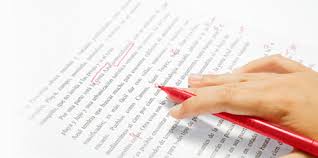
Do you use the Thesaurus for bigger better words to make yourself look smarter and more professional? STOP!

Not all synonyms are created equal-just because the thesaurus says a word is a synonym doesn’t mean it’s the exact counterpart. Some words when replaced with a synonym no longer mean the same.

Stop peppering your writing with ‘big words’-using ‘big words’ can make your writing sound fake. No normal person uses those words. Get real.

Embrace your vocabulary as it is-this will help you develop your voice and sounds authentic.

We are not walking dictionaries or thesauri but having a large vocabulary is definitely helpful which is why extensive reading is a prerequisite for a writer.

I use my thesaurus but not to replace my words with ‘big’ more impressive ones. Keep in mind, if you don’t know what a word means, your reader may not either. I find it very annoying when I’m reading a novel and run across a million dollar word that I have never heard before. I find myself reading the sentence over and over, trying to figure out the gist of the meaning through the words surrounding it. If this doesn’t work, I usually suck it up and move on. But give me too many of these words and I will probably put your book down and avoid your books in the future. You are writing over my head.

I use the thesaurus when I realize I’ve used the same word twice in close proximity, or when I’m looking for a way to say something a little bit differently. An example would be a replacement for the word ‘angry’. Some synonyms would be: annoyed, bitter, enraged, exasperated, furious, irate…I know and use all of these words but when writing sometime I have a mental block. The thesaurus helps me find the words I can’t quite put my finger on.

Remember, big words don’t mean big emotions. Good writing is choosing the right word for the situation-Hemingway

-Jan R

Thesaurus-Friend or Foe?

Fiction Writing Vs. English Teacher Writing

images-2I wasn’t an English major, but I’ve never had an issue with stringing words together and making a coherent, easy to read sentence. I know most of the rules, but I also know those rules are meant to be broken, especially if you are writing fiction.
The purpose of English Teacher grammar is to understand how to create sanitized, standardized, easy to understand, impersonal, inoffensive writing. If you’re looking for a job writing pamphlets for the government, instructional manuals, or news reports, then that’s the way to go.

These rules aren’t meant for fiction. That does not mean your story shouldn’t be grammatically and structurally sound. We are talking about styles here, not mechanics.

Fiction writing is nonstandardized, complex, personal, and occasionally offensive. It is the best way to reach into your readers head and show him your words. In order to bring your voice to life and get your world on the page, you need to say goodbye to English Teacher writing.

Fiction Writing Vs. English Teacher Writing

Fiction Writing-fits the world of the book, the mouths of the characters, and the writer who wrote it. English Teacher Writing– incorporates a specific, caricatured, extreme form of writing without regard to the story’s world, characters, or even the writer and what he or she is like.

Fiction Writing changes with the situation. English Teacher Writing is unchanged.

Fiction Writing does not look to impress, it’s sole purpose is to present the story. English Teacher Writing is self-conscious, self-important, and looks and feels forced and out right silly at times.

Fiction Writing is not always pretty, but it always fits the circumstances, characters, and story. English Teacher Writing is always pretty and always smooth but rarely fits anything.

Example:

Fiction Writing

“Get away! Don’t touch me! Leave me alone!” The girl in the alley curled into a tighter ball, her scarred, skinny arms pulling her knees up against her chest, her eyes white-rimmed, her hair wild.

English Teacher Writing

“Get away from me! Don’t lay a hand on me! Leave me alone!” The girl in the alley, already in a fetal position, pulled her knees tighter to her chest. she wore an expression of dazed panic, and radiated the signs of post-traumatic stress disorder.

-Jan R


Fiction Writing Vs. English Teacher Writing

Plot Holes?

plot-holesI’m revising my manuscript soon and one of the things I’ll be looking for is plot holes. Does your plot have missing or broken parts?

I know  I have missing parts and jumps in action before I even go through it. I had the entire manuscript critiqued through a group at Scribophile and there were times critique partners would point out areas where I jumped from one idea to another without providing a bridge.

When you are writing, you know what’s happening and you may not question why Suzie is talking to Jeff about needing a job in one paragraph and working for him in the next. I’m not saying you need every little step in order for your reader to follow what’s going on. I’m sure most people don’t want to know she woke up, took a shower, put on her favorite dress, ate some Cheerios and brushed her teeth with Crest toothpaste before walking out the door to go to work, but if Jeff gave her a job, I think that’s pretty darn important. This is a missing plot piece.

Your readers will do a double take and have to try to resolve the inconsistency for themselves without the knowledge of how the scene was suppose to go. All it will take is a few of these before your readers are calling you names and tossing your work to the side.

When you read through your manuscript, look for areas where something important has happened and your reader didn’t see it. Try to put yourself in their shoes and see the story through their eyes. They don’t have access to your brain and thoughts, so they can’t fill in the missing holes.

I talked about plot holes in this blog but there are also broken plots, which can be quite amusing. I plan to address them in my Thursday blog.

-Jan R

Plot Holes?

Narrative Voice?

2812fa51-0be7-4e8e-83b6-c6805cfdedf6I’ve been writing seriously for the last few years, although I started my novel about five years ago. At that time I thought all you needed was to pick up a pen and paper and start writing. It wasn’t until I was rejected that I learned there were rules, strategies, and expectations that needed to be met for a publishable piece of work.
I’m still learning the rules and the writer lingo. Yes writers do have their own catch phrases and words that us non-writers may have heard but had no idea what they were talking about.

Have you ever had anyone ask you about your narrative voice? I know what the POV is and am pretty comfortable with that. Goodness knows I messed mine up so many times that I had to put some serious time in to figuring out what it was and how to use it properly, but narrative voice was not one of the options.

An article I read in Writers Digest this past week best described narrative voice. It’s the stream in which your story flows, the current carrying along the key information a story needs to thrive.

Setting descriptions, observations, philosophical musings, sensory imagery and more slip through the cracks between action, dialogue, and thoughts in your novel. All of that in-between material constitutes your narrative voice.

The narrative voice and the POV work together. If the narrative is the stream, then the POV is the swimmer stroking through it sending feelings and actions to the surface.

Now you have it. If anybody asks you about your narrative voice, you have a better understanding about what they are asking. There is so much more information available on the narrative voice and how it works with the POV but I want get into that today.

-Jan R


Narrative Voice?

Cut? Or Not To Cut?(Revised)

imagesSo I’ve been married to my novel for five years. I’ve made some changes along the way, but one thing that has been a constant, is my main character going to Fallujah Iraq.

Anybody that’s been around for a while, knows that Fallujah played a big role in the Iraq War. Camp Baharia was set up just outside the city. It was one of the nicer camps, and the playground of Sudam Husseins son’s, prior to their demise.

Well, when I wrote the framework of my novel five years ago, it was set at the end of the war .  Fallujah had been won by the allies, and our marines were still there to maintain order, and ensure no further uprisings. That was the reason my main character had been sent there.

Since that time, Fallujah has been taken over by Isis and there is major fighting going on, as the Iraqi forces, along with the US and other allies, attempt to take it back.

It was the perfect setting when I started my novel, but it has evolved into the exact opposite of what I intended it to be. When people read Fallujah today, they don’t think about five years ago; they think about here and now and all of the turmoil in the region.

With that being said, my husband encouraged me a year ago to rethink Fallujah. He thought the current conflicts and notoriety of the region would cause serious doubts and credibility issues with my story.  Well I didn’t want to listen to him, Fallujah was in my story, it had been there all along, and I didn’t want to change it.

Not to long ago I received a critique from a very skilled writer. Her main problem with the story, as you probably guessed already, was Fallujah, Iraq.

My husband loved that, and gave me the told you so look. I wish I could say he rose above it and didn’t say anything, but he quickly reminded me that he wasn’t a dummy. He knew what he was talking about:-)

One of the things I’ve heard time and time again from experienced writers, is sometimes you have to throw the baby out. That’s part of writing, but it doesn’t make it any easier.

So I’m throwing the baby out and looking for another Camp, maybe in Afghanistan.

If you’re on the fence, just do it. The sooner you let go and move on, the sooner you’ll get that novel completed. You might miss your baby for a while, but I’m thinking you’ll get over it, especially when your story comes together the way it was meant to be.

-Jan R

Cut? Or Not To Cut?(Revised)