More on Keeping It Simple

keep-it-simple-1I thought I would continue with the blog I wrote on Tuesday, Keep It Simple. You don’t want your reader to have to stop and think about what you are trying to say. You don’t want to slow them down or break up the pace.

You want your reader to continue through your novel without thinking about the fact  they are reading a book. You want them to become part of your story, walking through the scenes with your cast of characters.

If they have to stop and reread a section for clarification, you’re in trouble. I recommend that you read your prose aloud before making it public. If you stop or hesitate on any sentence, go back, something isn’t right.

Additional things we do to over complicate our writing. And I did say we. I’m guilty too 🙂

Double negatives

He was not certain that he would not make a mess of it.

My head just exploded. What did that sentence just say. You’re going to have to slow down and reread that sentence a couple of times. A better way to write it-

He worried he might make a mess of it.

Over explaining/illustrating

You did a lot of research to make your story sound authentic. That’s great, and the right thing to do, but your reader doesn’t want or need to know all of the information you collected. They aren’t interested in the intricacies of a process, give them an overview. Unless there is an important reason they need to know an intricate detail, keep it out.

Adding unnecessary descriptors in titles

He became the leader of the Commonwealth of Australia in 2012.

He became the leader of Australia in 2012.

She was a reporter in the United Stated of America during the Clinton administration.

She was a reporter in America during the Clinton administration.

If your reader already knows the setting is the USA-

She was a reporter during the Clinton administration.

Careless repetition

It makes you look clumsy, like you haven’t thought things through. You’re unorganized. Why are you telling me something you told me in chapters 3,4 and 6? I know already! Give me a break! Don’t force me to relive a situation over and over again. I don’t like it.

With this being said, there are times when repetition is appropriate, but not usually in novels. Repetition can add clarity, emphasis, and eloquence- when used this way, I wouldn’t consider it careless.

A perfect example, would be the ‘I have a dream’ speech by Martin Luther King Jr.  Check it out.

Hope this gave you something to think about and didn’t add to the confusion 🙂

-Jan R


More on Keeping It Simple

Fair Use ?

copyrightWhen you start talking about copyright and fair use, you are breaching an extremely sensitive and ambiguous subject. How am I suppose to know if a piece of work that is copyrighted is okay to use in my novel?

You may hear somebody quote the Fair Use Act. What is fair use? It’s the legally permissible use of copyrighted material for specific purposes such as commentary, criticism, news reporting, research, teaching, or scholarship, but that doesn’t give you the right to their complete work. If you are only quoting a few lines from a full length book, you should be within the guidelines of fair use and not need to seek permission.

The reason I am interested in the laws surrounding copyright, is a song from the ’70s plays an important role in my novel. Something I didn’t realize when I started writing the book, is fair use doesn’t apply to songs. That’s because songs can have very few lines to use.

If you are thinking about slipping a line from a song in your novel, think again. Using lyrics from a song written in the past century or so can be a very expensive proposition, so most publishers won’t accept a book that quotes lyrics.

If you have to have the song lyrics in your book, follow up to see if the song is public domain or still under the copyright laws. If it’s public domain you are good to go, if not, you need to decide what you can afford to pay the owner for permission to use their work.

Anytime you use third party content without permission, you are at risk of being sued. The best thing you can do is be original. If you find it necessary to borrow from another writer, do your research and make sure you are within the law.

A good place to start your fair use search, is on the website of the U.S. Copyright Office.

Something to think about. I know I’m reviewing my novel to ensure there are no  copyright infringements.

-Jan R

Fair Use ?

The Title: It Matters! (Repost)

imagesFFT3CQY4I was looking at some of my older blog posts this past week, when something jumped out at me.
Nine months ago I wrote a blog titled, “Is your manuscript ready for submission?” It didn’t get much attention, as a matter of fact only 5 people viewed the blog and 2 of those liked it. Needless to say, I was pretty disappointed. It was a great blog.

Five months later I was busy and didn’t  have time to research and write a quality blog. I decided to repost, “Is your manuscript ready for submission?” I made a few changes to some of the sentences, so they reflected the new time period, but other than that, the blog read word for word.

I also did one other thing; I changed the title. It was the same blog, only it’s new title was, “Edit, Edit or Edit?” The blog did exceptionally well for someone who has been blogging  less than a year. It had 99 views, 50 likes and 3 or 4 reblogs.

I shared this story to make a point. Your title really does matter. It’s the first thing your reader sees or hears about your book/blog/poem. Your title creates anticipation and expectation, or perhaps disinterest like my previous one. Often your title determines whether or not someone reads your work.

A good title should have the following attributes:

  • Attention grabbing
  • Memorable
  • Informative (gives idea of what book is about)
  • Easy to say
  • Not embarrassing or problematic for a person to say aloud to their friends.

Another thing to keep in mind, that title you started with may not be the title you end up with. Getting the title right, may be the most important book marketing decision you make. Many well known authors have had their titles changed by publishers and editors before print. Here are a few you may recognize:

F. Scott Fitzgerald/  The Great Gatsby — Trimalchio in West Egg, On the Road to West Egg, Among Ash-heaps and Millionaires, Under the Red, White, and Blue, Gold-hatted Gatsby, or The High Bouncing Lover. I think he made the right choice 🙂

George Orwell/ 1984 — The Last Man in Europe

Ayn Rand/ Atlas Shrugged –The Strike

Harper Lee/ To Kill a Mockingbird — Atticus

Jane Austin/ Pride and Prejudice — First Impressions.

Frances Hodgson Burnett/ The Secret Garden — Mistress Mary

The title matters!!! Get it right!!!

Just a side note. This blog is a repost, but I made some minor revisions and changed the title 🙂 It was originally, “The Title Of Your Book Is What?” We’ll see how this plays out 🙂

-Jan R

The Title: It Matters! (Repost)

Settings Are Not Just A Place

4f7a9b905a1bc2d6c97e5c8f0157ee9d_fullWhen you hear the word setting, you think of a time period and place, but settings do so much more than that.
With sci-fi and historical novels, setting becomes an important part of the story. The setting doesn’t have to be real but it does have to be believable.

Writing historical novels, do your research and throw in some things that you would expect to see during the time period.

Writing Sci-Fi, you’re  creating a world. Your setting needs to be detailed. Help your reader to visualize it. Draw them in.

Settings should be visceral and vivid and allow us to experience the world the author is building as if we are one of the characters within the narrative.

Settings evoke mood. In horror stories, your description of a haunted house should evoke fear in your readers.  In a mystery your setting should evoke suspense and curiosity. In a comedy your setting should evoke laughter or an anticipated thrill.

Settings provide information about your characters. How does their home look? Is it messy, neat, compulsively organized? Do they surround themselves with darkness or light?

Settings can also be used to evoke the passage of time and movement. The saplings we had planted in our youth towered above the two story house. This was home, at least the house that I remembered.

Who knew there was so much to writing. I hope this evoked thought and helped you better understand the use of settings in your novel.

TIP

I posted this blog several months ago and for some reason it didn’t get many hits, so I’m republishing it under a different title. Titles are important. It’s the first thing the reader sees when they are determining what to read. If you aren’t getting hits, it could be something as simple as the title. You have to grab your readers attention and pique their curiosity.

-Jan R


Settings Are Not Just A Place

Grammar-Get It Right!

4QYYI7VIf you think grammar is just a small child’s mispronunciation of “grandmother,” and if you think syntax is a tax that the church levies on sin, maybe you should consider becoming a nuclear physicist or a neurosurgeon or just about anything at all except a novelist. Dean Koontz
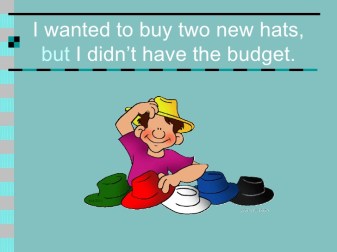
Maybe you’re inexperienced, or perhaps you have been writing for a while, but still haven’t produced a publishable piece of work. You probably have a few things to learn about writing a novel, but grammar should not be one of them. Writing grammatically sound prose has nothing to do with creativity. It is a mechanical process.

You don’t need extensive experience to produce prose that meets minimum standards of correct English usage. You don’t even need a formal education. Grammar is something that can be self-taught. While a publisher may understand your deficiencies in characterization, shaky plotting, and an overblown style, he will not excuse poor grammar.

I remember my first few rejections. One of the reasons cited had nothing to do with the story  and everything to do with the grammar. One of the literary agents stated, “It’s not ready. Your work is full of grammatical and structural errors.”

You should not expect a copyeditor to strip away your poor grammar and replace it with grammatically sound prose. This is one of the myths that I believed. I had a great story, and while it was a little rough around the edges, I thought the idea was enough to carry my work.

Remember, no one cares about your work and your future as much as you do. If you don’t care enough to write well, you are destined to fail.

A hard truth and something to think about.

-Jan R


Grammar-Get It Right!

Are Your Sentences Running Loose?

compound-sentences-7-728You’re probably sitting there wondering what in the world I am talking about. I know when I first read about loose sentences, I wondered what in the world the author was talking about. Well let me enlighten you. Loose sentences are sentences with the main concept at the beginning, followed by a string of related details.

For this blog, I am focusing on loose sentences that are composed of two clauses connected by a conjunctive or relative  (better known as the compound sentence). I use them all the time, and you probably do too. ( Yes, this is one.) There’s nothing wrong with a single sentence of this type every now and then. The problem is when you string a whole bunch of them together. A mistake many new writers make.

 ‘The Phantom of the Opera’ was performed at the downtown theater last evening, and a large audience was in attendance. The actors were right on cue, and the orchestra was spectacular. The props seemed to float through the air, as the scenes were set flawlessly. The play was a tremendous success, and I’m sure it will continue it’s run. The tickets are pretty expensive, but you won’t be disappointed.

There are probably a lot of things wrong with this example, but what I hope you focused on, was the string of loose sentences. They are trite, monotonous and annoying. I know this is an extreme example, but I wanted to make sure you understood what I was getting at.

Loose sentences are easy to correct. All you have to do is rearrange some of the sentences in the paragraph to take away the monotony.  Make them simple, short, single phrases, or drop the conjunction and add a semicolon.

It’s okay to have loose sentences, but be mindful of the frequency and placement of them.

Most of the information for this blog came from ‘The Elements of Style’ by Strunk and White. If you don’t have a copy of the book, I would highly recommend it. It is short and concise. They don’t waste a single word.

Something else to think about 🙂

-Jan R

Are Your Sentences Running Loose?

What’s Your Character’s Motivation?

Thomas-Mann-quote-on-character-motivesIf your villain shoots down sixty people, blows up an airport terminal, hijacks a jet and then crashes it into the White House–all because his Social Security check arrived one day late, you’re going to have trouble selling your novel. Dean R. Koontz
When an editor rejects a book for implausibility, he is looking at the motivation of the character, not the plot. In other words, when a novel fails because of implausibility,  the reader had a hard time believing the character would do, in real life, the things the author has him doing.

What’s his motivation? If you have your character doing something bizarre, you had better convince your reader that he in fact would blow up an airport terminal because his Social Security check arrived a day late.

Most Common Character Motivators

Love- is a strong motivator for your lead character. This universal and adaptable motivator can be found across genres. Remember almost all of your readers want to love someone, be loved, or fall in love. They are predisposed to accept love as a plausible motivation for a hero’s or a heroine’s actions. This motivator  works best when paired with another motivating force.

Curiosity-  is responsible for every important discovery since man tamed fire. Like love, it works better paired with another motivator. Throw in some self-preservation, greed, love, or duty. Your reader will not believe that a rational character would willingly die merely to satisfy his curiosity, and yes, your main character must be rational.

Self-preservation- is the most common character motivation in both popular mainstream and genre fiction. If your hero’s life is at stake, anything he does to preserve it will seem plausible to the reader, which makes this the easiest of the motivators for new writers to handle. Also it should be noted, that self-preservation can be construed to mean preservation of one’s self-image and self-respect.

Greed- as you probably guessed, this is not a good motivator for your hero or heroine unless they are a bandit. It works as an excellent motivator for your antagonist. If your antagonist is trying to destroy your hero financially and get control of his business at a bargain price, greed might very will be his primary motivation, but by throwing in another motivation, the story would have much more depth. Suppose we find out the antagonist also hates the hero, because the hero won the hand of the woman they both loved. The antagonist instantly becomes a more believable and interesting character.

Revenge- is an excellent motivator for a villain, but should not be used to motivate the protagonist, unless you can show the hero is justified in his actions.  Maybe the police and courts have utterly failed in their duties to society and to victims of violent crime, and then the hero steps in.

These are not the only character motivators, but they are the most common. Remember, your character should never be motivated by something that is inconsistent with their personality. Much more on this subject but hope this got you thinking.

-Jan R

What’s Your Character’s Motivation?

Head Hopping Again? (Revised)

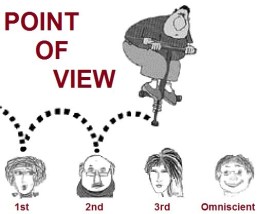
headhoppingI had a segment of my book critiqued today and got dinged on the POV. I couldn’t believe it. The reviewer was correct. I was jumping into the head of several of my main characters throughout the segment.
I know that for whatever reason, this writing 101 concept does not come easy for me. I also know, that if you want a book published, you had better get the POV under control.

I sent my novel to an agent, prematurely I might add, and she was kind enough to reject it with reasons why. I was head hopping. To be honest, I had never heard that term before. Being a novice, untrained in the art of creative writing, I’ve had to learn my way around this world. There’s a lot more to it than being able to string a group of sentences together.

The secret to making your POV work is limiting it to one perspective per scene, chapter, or book. When you start jumping around from one POV character to another in the same scene/paragraph/sentence you have committed a cardinal sin. HEAD HOPPING.

If you are writing in Third Person, which I do,  and Lauren is your POV character, you can’t write–Lauren said she would meet Janie at the mall, but Janie didn’t believe her. I was just in Lauren’s head and Janie’s head. How am I suppose to know what Janie is thinking, if I’m limited to Lauren’s POV? What you could write is –Lauren said she would meet Janie at the mall, but she could tell from her friend’s response, that she didn’t believe her.

Hope this helped somebody.

-Jan R

Head Hopping Again? (Revised)

Adverb or Not To Adverb? (Repost)

Nouns-and-VerbsI do a lot of critiques for different writers during the week. Some of the writers are very polished; others, not so much.

The one thing I’ve noticed in all levels, is an abundance of adverbs. I must admit, I get jealous at how prettified some of those sentences read. I can’t write like that. My brain isn’t wired that way.

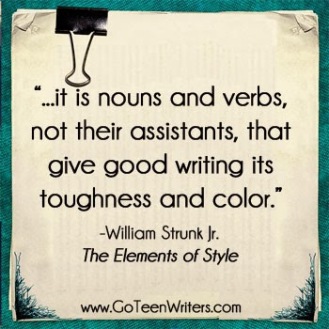
According to William Noble, many inexperienced writers, and I will add-unpublished but have been around the block a few times writers, throw in “pretty” words(adverbs or adjectives) to make their prose more dramatic and meaningful. These cosmetic touch-ups often turn out to be  redundant or simply uninspiring. They bog down your story without adding meaning.

Is the adverb necessary?

He zoomed around the oval speedily.-Is it possible to zoom without speeding?

He stuttered haltingly.-Can you stutter without doing it haltingly?

What about ‘show don’t tell’?  Adverbs encourage lazy writing.

He whispered to her lovingly. (Telling)

He whispered words of love…my sweet, dear lover, my angel…(Showing)

Remember, there are better ways to prettify your prose, and using adverbs isn’t one of them. You’re going to have to roll up your sleeves and get to work. Start showing not telling.

I am not a NEVER ADVERBS person. Sometimes they are necessary to provide detail or clarity.

The man sang loudly.

The girl was really cute.

When a writer needs to set up a scene and move through it quickly, then the adverb shortcut isn’t a bad idea. The problem comes when the shortcut becomes the norm, and your reader is left with an uninteresting experience.

What’s wrong with Adverbs? Nothing as long as you don’t abuse them.

-Jan R

Adverb or Not To Adverb? (Repost)

Romance, Science Fiction, Mystery….You Should Read Them All

Genre.htmI read and write romance novels. I have to admit I’m a hopeless romantic. I just love stories where boy meets girl, you throw in a little conflict (okay a lot), but everything works out in the end, and they live happily ever after.

There’s nothing wrong with romance and wanting the happily ever after. The only thing I’m doing wrong is limiting myself to reading romance novels. I never really thought that much about it, until I read a blog on why I should be reading all genres.

From my perspective, I write romance. I need to know what’s out there and what’s selling. How do other romance authors handle the physical and emotional sides of the relationships?

All of these reasons are valid, and I should be reading romance. But you know what? That novel has a lot more than romance in it. At least it had better have, if I want to keep my readers’ attention.

I may be great at developing a romantic relationship between my hero and heroine, but I had better be able to create the mystery and suspense necessary to keep my readers’ turning the page.

You may be writing a sci-fi novel, but odds are there’s a romance between your two main characters, and no one can explain why the lab assistant is lying on the floor dead, and there’s a  hole in the wall leading into the parking lot.

You can’t just read sci-fi and expect to be a well rounded writer. You might find yourself creating awesome aliens, but lacking when it comes to developing a relationship between the hero and heroine.

Reading different genres will make you a stronger writer. You’ll be introduced to new worlds and situations that would never arise in your typical horror, sci-fi, romance, or fantasy. Reading different genres will open your mind and encourage you to take risks that you may have never considered.

If that’s not enough, Reading different genres will also allow you to read as a reader. Instead of focusing on the author’s style, you can simply enjoy the experience of reading 🙂

Hope this helped.

-Jan R


Romance, Science Fiction, Mystery….You Should Read Them All