What’s Deep POV

If you’ve been writing for a while, you probably know what POV is. You also know what head-hopping is. Something I did regularly when I first started writing. I’ll give you a brief summary anyway. Bear with me. There may be newbies reading this blog.

POV (Point of view) is the perspective from which a story is told. You have three choices.

First Person – From the “I” perspective. I enjoy this POV, but it limits the information you get, since the entire novel is from one person’s perspective. It is actually narrated by a character within the story using “I” or “we”.

Second Person – From the “You” perspective. The narrator is speaking directly to the reader, using pronouns such as “you” and “your”. This point of view is less common. I must admit, I’ve never read a novel from this perspective, so I can’t comment on its effectiveness.

Third Person – From the he/she/they perspective. My preferred and easiest to manage, at least from my point of view:-) This one can be broken down further to limited or omniscient. I choose to work with limited. This perspective focuses on one character’s perspective at a time. It will jump back and forth between characters throughout the story. Just remember you can be in only one head per scene. If you start jumping back and forth in the same scene, you’re head hopping, a sure sign that you are a beginner and have no idea what you’re doing. I’m guilty of this one šŸ™‚

Now that we’re caught up, let’s look at Deep POV. Why? Because I recently got dinged for my POV, and I’m having to do a little research to understand what I can do to get even deeper into my character’s head.

Editor’s comment to me-

“You’re a talented writer, and you’ve created a strong connection between the reader and Ariel. When you learn and employ the elements of Deep POV. This is a real winner.’

For Deep POV, you want the reader to experience each situation through the character’s POV, not just read about them, but take every step, see every object or obstacle, feel every emotion, smell every flower.

Key Techniques to remember to stay in Deep POV:

Eliminate Filter Words: Remove words that distance the reader from the character’s experience. Saw, heard, felt, thought, believed, knew.

Show Don’t Tell: Present the character’s physical reactions and internal monologue.

Use Character Voice and Language: You are creating this character, and you know them better than anyone. Just remember to stay within your creation’s specific vocabulary, slang, opinions, and worldview.

Interact with the Setting: Have the character engage with their environment rather than just describe it objectively.

Balance internal and external responses: While focusing inward, you still have to show your character reacting to external events and people.

Hope this helped you with the Deep POV. I got most of my information from Writer and YouTuber Brandon McNutty: How to Use Deep POV in Your Writing. If you’re having the same problems I am, you may want to check him out.

Thanks for stopping by.

-Jan R
What’s Deep POV

Are You Saying What You Think You’re Saying?

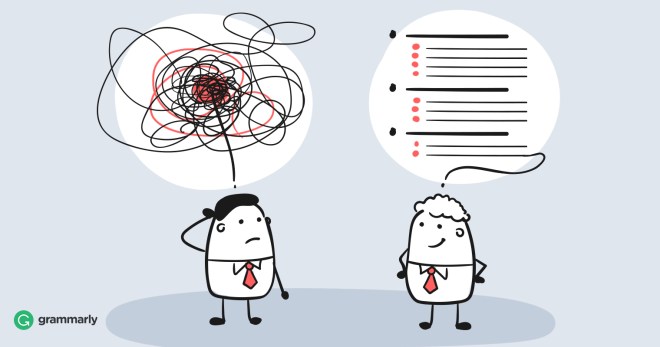
If you find yourself reading a sentence more than once, or adding information for clarification, that’s a red flag.

Your reader has less information than you. If you are confused by your work, you can only imagine what your reader is going through. I love a great mystery, but my writing shouldn’t be one.

It’s not the reader’s job to interpret your work. You should be clear and concise.  If your writing causes a pause something isn’t working.

I have to admit I love dangling modifiers though. They are some of my favorite mess-ups. I even wrote a blog entitled ā€˜just for laughs’. They are funny, but not in the middle of a serious scene. You don’t have to try to hard to imagine how quickly they can pull your reader out of their suspension of disbelief.

Dangling modifiers occur when the modifier has no clear referent and twist the meaning of your sentence in an unintended fashion.

  • I saw a tree walking down the street. Who knew a tree could walk? šŸ™‚
  • I fed the children sandwiches in Ziplock bags. How did those children get in the bags?:-)

Misplaced modifiers are similar but not nearly as fun to read. As with dangling modifiers, there is no clear referent, which can lead to a clumsy and confusing sentence.

  • Lucy carefully studied the situation.Ā  Ā  Ā  Ā  Ā  Ā  Ā  Ā  Ā  Ā  Ā  Ā  Ā  Ā  Ā  Ā  Ā  Ā  Ā  Ā  Ā  Ā  Ā  Ā  Ā  Ā  Ā  Ā  Ā  Ā  Ā  Ā  Ā  Ā  Ā  Ā  Ā  Ā  Ā  Ā  Ā  Ā  Ā  Ā  Ā  Ā  Ā  Ā  Ā  Ā Lucy studied the situation carefully.

Another mistake new writers make that isn’t always as obvious but makes for a clumsy sentence that will cause a pause is comma splicing.

Comma splicing is when two sentences are linked by a comma, but they don’t really work because they’re two separate ideas.

  • John saw the rabid fox and ran to the house to get his gun, and he forgot to eat lunch and his tummy rumbled.

What about ambiguous sentences? The sentence is grammatically and structurally sound, but the reader has no idea what you are talking about.

  • My older students know I’m extremely careful with my language. Is the teacher referring to age or length of time the students have been in his/her class?

Be clear and concise! Say What You Mean!

Something else to think about.

-Jan R

Are You Saying What You Think You’re Saying?

Books – What’s the Draw!

Why do you choose one book over another? What’s the determining factor? They’re both romances, and historical novels at that, but you can only afford one. Which novel will you purchase?

Most likely the first thing that catches your attention is the cover. At least that’s the first thing I notice. I do look at the title and the author, but they’re not the main determining factors. They cause me to take a second look, but the front cover photo and back-cover blurb are what seal the deal.

I remember standing in a discount store looking at books when I first started this journey. An employee put the price tag over the face of the heroine on the book that I was interested in purchasing. I couldn’t believe it. I wanted so bad to yank that tag off.

The cover matters, and yes, that tag could have been a deal breaker. I saw enough of the cover to know that it was an inspirational romance set in the civil war era. That was a plus and enough to encourage me to read the back cover to determine the premise of the story.

I know some people read the first couple of pages, but that is not something I do when determining my selection. Maybe I’m shallow. I have no doubt I have missed out on a lot of great books because the cover failed to get my attention.

I can tell you this, the process of determination I use to choose a book appears to be the norm based on my observations of others in bookstores. The author’s name may catch a customer’s attention, but when they pull that book off the shelf, they look at the cover photo and then read the summary on the back before deciding to purchase.

What’s important to you? What compels you to choose one book over another?

Just something else to think about as you prepare to publish your work.

-Jan R

Books – What’s the Draw!

Contest Are A Definite Yes!!!!!

I entered the ACFW Genesis contest last year. I thought about entering contests in the past but pushed them to the side. They were not my thing. Well, if they’re not your thing, maybe you should reconsider. It was $35 dollars well spent. I got invaluable information, and a chance to get my work in front of professionals in the field.

I’m posting the tally sheet with the middle score and judge who offered the most commentary. Two of the judges really seemed to like my work, and one did not. But I’m leaving that for a future blog post šŸ™‚

The judges looked at the first fifteen pages of the novel and a 100 word summary. Along with the scorecard, they provided commentary on those pages, pointing out the reason I received the scores that I did and ways to improve my writing.

The judges were editors and published authors. They were people with experience. If you’re like me, you’ve had friends and family review your work. While they can tell you if it’s a good story or not, they probably don’t have a clear understanding of the mechanics or expectations a book requires to be published.

The takeaway from their reviews is that it is a great story but needs some polish šŸ™‚

An added bonus is I connected with a Developmental Editor that could help me get the book ready for publication.

Entry: Ariel’s Revenge

Judge #: GHRJ298 | File Name: 000069014.docx

QuestionScoreComment
Does the entry hold your interest to the end?5.00Yes, I found the summary very interesting! Love that it’s a complex adventure with mystery.
Is the point of view consistent? Are POV changes smooth and logical?5.00Yes, each is well-placed.
Do sensory details (sight, sound, touch, smell, taste) enhance the scenes?4.00It is mostly smell and feel.
Is there a sense of time and place?4.00I can tell by the way they speak and transportation that it’s like the 1700s, but I’m not sure when exactly.
Do the scenes move the story forward?3.00Yes, but Ariel reflects and comments too much and repeats those that they slow down the story and tension. I have pointed this out in the Word doc.
Is there an opening line that immediately hooks the reader into the story?5.00Yes, I like that it starts with Ariel speaking and it gives mystery to why she’s doing what she’s doing that I want to keep reading to find out.
Is the writing fresh and original?4.00Mostly, it just gets weighed down by all the commentary and repetition. I’d like to see some beautifully written lines. But the POVs do have personality.
Does the writer utilize showing and telling?4.00Mostly so.
Is the author’s voice distinct?4.00Mostly because of the strong personalities of POVs.
Do you get a strong sense of what the story will be about?5.00Yes, and not just because of the summary. I can tell her plans won’t work out the way she’d like, that Blake will butt heads with her but they will fall in love, and that her step-uncle will be hot on her trial and catch up to her and reveal who her father really was and how he was murdered.
Does the author have a command of the elements of grammar, punctuation, and spelling?5.00Yes. There were only like 3 places that needed fixing.
Does the manuscript reflect Christian worldview? Are the story and plot elements compatible with the genre category?5.00Yes, although, so far, it is only Ariel who prays and exudes Christian-like attributes.
Is the dialogue between characters strong, revealing plot and emotion in a way that creates tension? Does it help move the story forward?4.00Yes, but I’d like for Ariel to have someone like her handmaid help her escape just so she has some real dialogue and someone to talk to. I get that she’s on her own, but her scenes feel very isolated.
Are the characters’ voices distinct and appropriate for the setting (time period or scenario?)4.00Mostly so. They each speak in a way and use terms for that time period. There were only a few lines that didn’t seem to fit the way they are worded.
Is the narrative necessary and well-placed with the dialogue?5.00Yes, each POV comes across as well-placed with strong motives and something to add to the story.
Are character motivations powerful enough to create sufficient conflict?4.00Yes, however, I know the most about the antagonist, her step-uncle, in what he wants and why and how he’s going to get it and what stands in his way. I only know that Ariel doesn’t want to marry him but not really what she thinks about marriage or what she wants for herself or even how she plans to clear her father’s name. I know that Blake wants to avenge his fallen comrades and get to what really happened that night, but so far I do not get the sense from what I know from the summary that he’s a rake. I’m not sure what he wants exactly or why he’s a spy.
Is the tension and conflict discernable enough to tell what the story will be about?4.00Yes, although if Ariel, Blake, and Charles’s motives were clearer, we’d have more specific conflicts.
Is the goal and purpose of the main character identifiable? Do you get a sense of what he/she wants?4.00Mostly, see my explanation above about their motives.
Do secondary characters contribute to the story?4.00Yes, they add important dialogue and tension.
Do characters’ emotions seem believable by providing understandable motive?5.00Yes, I get a sense of urgency from Ariel, sadness from Blake, and anger from Charles.
Total Score:87.00 

Hope this helps someone.

-Jan R

Contest Are A Definite Yes!!!!!

Writing-You Can’t Do This Alone

I remember my middle sister as a child. She would often be found sitting in the corner with her nose in a book. She didn’t play well with others. Well to be honest, she didn’t want to play with anyone at all.  Her friends were imaginary. I always thought that she was a little strange, and she probably was, but she is also one of the most talented writers I know.

You haven’t heard of her or read any of her work. Why? Because she writes in a vacuum. I have encouraged her for years to reach out and join the writing community.

She is an introvert, like most of us who seem to enjoy the keyboard much more than being around a group of people. I would be okay with that if she belonged to writing groups or had people she related to that could help motivate her to move forward with her craft.

You don’t have to interact with others face to face, at least not at first. If that’s not your cup of tea, go online. Join writing groups and form relationships with other author want-to-bes. There are some great ones out there that cater to just what you’re looking for.

Critique groups:

  • Scribophile.com
  • AbsoluteWrite.com
  • CritiqueCircle.com

I am a member of Scribophile. It’s a great site to seek critiques and suggestions from fellow writers. Members on this site operate at different levels of expertise. I have gotten some great feedback, but I have also received feedback that was not up to par. I was pleasantly surprised at the community in the group and the willingness of total strangers to help me with my work.

Genre-Specific groups:

  • Romance Writers of America  rwa.org
  • Mystery Writers of America    mysterywriters.org
  • Science Fiction and Fantasy Writers of America   sfwa.org
  • American Christian fiction Writers acfw.com

I think you’re getting the picture. I was a member of Romance Writers of America and need to renew. I am also a member of American Christian Fiction Writers. You can get excellent information and discounts from these sites. They will keep you informed on contests, conferences, writing groups/forums, what’s selling, agents looking for new works, and information on how to improve your craft.

Remember, you can’t do this alone!

Something to think about.

-Jan R

Writing-You Can’t Do This Alone

Filler Words – Really?

Most of the concepts I write about are simple. I just never really gave them a lot of thought before I started writing novels.

When writing, remember less is more. Stay away from qualifiers. They weaken your prose, and the result is the exact opposite of what you were trying to achieve. I know why you use them. I’m hooked on ‘very’. Other people are hooked on the word ‘too’. If you are resorting to qualifiers for emphasis, odds are, you are using the wrong word in the first place.

These qualifiers are the words your English teacher dreaded seeing, such as very, too, really, and sort of. When you overuse these words, your writing will seem lazy, as if you haven’t taken the time to look for the right word.

This pasta dish is very good.

This pasta dish is superb. (Better)

I’m feeling sort of sick.

I’m feeling nauseous. (Better)

You look really nice!

You look radiant. (Better)

Since ‘very’ is my nemesis, I thought I would provide a list of more powerful words to use to replace ‘very’ ___________.

  • very fast                    quick
  • very dry                    parched
  • very dirty                  squalid
  • very afraid               terrified
  • very angry                furious
  • very hot                    scolding
  • very hungry             ravenous
  • very large                 colossal
  • very clean                spotless
  • very clever              brilliant
  • very beautiful        exquisite
  • very ugly                 hideous
  • very pretty             beautiful
  • very thin                 gaunt
  • very tired               exhausted

I think you get the picture. Thanks for stopping by, and I hope this got you thinking.

-Jan R

Filler Words – Really?

ReWrite-itis (Revisited)

I got tickled when I first saw this word. I have to admit, I have dealt with rewrite-itis. What is it? It’s a severe condition that effects both published and unpublished writers according to The Everything Guide to Writing a Romance Novel. It means you are unable to call a book, chapter, or even a scene finished. So, what causes the condition? A fear of failure or success. For me it is definitely failure.

What are the symptoms?

  • Rewriting the same scene, chapter, or book more than ten times.
  • Never finishing a book, because you keep going back to polish the first chapter over and over again.
  • Constantly having others read your book with the hopes they will give you some new revisions to do.
  • Taking your finished manuscript to the post office to mail, only to return home with it in hand for further revision.

So, what do you think? Do you have a case of rewrite-itis?

Rewrite-itis has a close cousin – Research-itis. Maybe you have that one too. True research is crucial to any novel, but an author needs to know when to say, “Enough is enough.”

So what is the cure? Set goals and deadlines and stick to them. Remember your manuscript is your baby, but sooner or later you have to turn it loose.

Just something to think about.

-Jan R

ReWrite-itis (Revisited)

Writing Dialogue-Speech Patterns

Speech pattern is another important tool in the writer’s arsenal. It’s less about dialect and more about consistency and knowing your character. If your character is……

  • terse                –   short burst of speech
  • angry               –   speaks through clinched teeth
  • nervous            –   stammers or rambles
  • domineering    –   silent and threatening or rages

If you’re writing science fiction you can develop you own language and your own rules. There are no limits. Just be consistent.

There’s a lot more to writing dialogue than one would think.

Something to think about!

-Jan R

Writing Dialogue-Speech Patterns

Fight That Inner Critic!

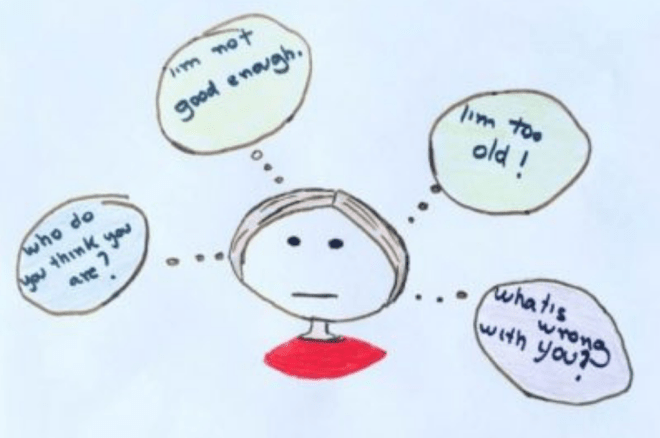
You have to fight that inner critic. You know the one that tells you your work is not good enough. No one wants to be humiliated or rejected. Your inner critic will paralyze you by telling you just how bad your work really is (even if it’s not).  This is another obstacle that I have had to overcome. It hasn’t gone away; I’ve just learned to deal with it.

I recall doing a Bible study on the battlefield of the mind. Though its primary purpose is dealing with spiritual warfare, it also relates to many of the issues that we deal with in our everyday lives. Our mind is a battlefield. In writing for example, all of us worry about looking dumb and never getting published. Fiction writers make a business out of being scared and not just looking dumb.

It took me six months from the time I started writing a novel, to tell my husband what I was doing. When I finally told him, I was a mess. I knew he would be excited for me and encourage me in my endeavor, and I didn’t want to let him down.

For the longest time I’ve treated my writing as a hobby. That’s not a mindset that will get you published. When I finished and sent out my first novel to a few agents, I was more than a little anxious. The first few rejections confirmed my beliefs. I just wasn’t good enough.

Note that I said I wasn’t good enough. Well, that’s not exactly true. The truth is the novel wasn’t good enough. It was filled with grammatical and structural errors, there was some serious head hopping going on, and my on-the-nose dialogue was all but bringing the story to a complete halt. If you are not familiar with these terms you should be. Go back and read the posts I have written addressing them.

I don’t know that the inner critic will ever go away. So how do you combat it? You keep moving forward and growing in your craft. Don’t stop. I still question my writing abilities, but I know that I know that I know, that they are a lot better than they were when I submitted my first novel. I’ve learned the hard way and hope to help you avoid some of my pit falls.

Something to think about!

-Jan R

Fight That Inner Critic!

Show Don’t Tell

Of everything I’ve learned on my journey, and there’s been a lot, Action does not equate to showing. I was dinged early in my writing because I seemed to have a love affair with telling versus showing.

In my mind, if the character was moving or doing something active, I was showing. While that’s partially true, and you do want your character moving, Action isn’t always equated to showing.

Here’s an example.

*She raced through the street with her adversary in hot pursuit. Capture was not an option.

This sentence does paint a picture in your head, but you’re on the outside watching. (Telling) You need to be walking this out through your character’s eyes. Get into their head. Use those senses. How is this chase impacting him/her?

**Her heart nearly beat out of her chest, and she struggled to breath as her footsteps quickened. The sound of her pursuers grew louder with each passing second. She glanced back and forth looking for a way of escape. Capture was not an option.

Not sure if this is the greatest of examples, but it is enough to give you an idea of the point I’m trying to convey.

By using senses and getting into the character’s head, you become a part of the scene, walking it out with them.

Another plus is you just doubled or tripled your word count šŸ™‚

Something to think about.

-Jan R

Show Don’t Tell