
When you hear the word setting, you think of a time period and place, but settings do so much more than that.
With sci-fi and historical novels, the setting becomes an important part of the story. The setting doesn’t have to be real but it does have to be believable.
Writing historical novels, do your research and throw in some things that you would expect to see during the time period.
Writing Sci-Fi, you’re creating a world. Your setting needs to be detailed. Help your reader to visualize it. Draw them in.
Settings should be visceral and vivid and allow us to experience the world the author is building as if we are one of the characters within the narrative.
Settings evoke a mood. In horror stories, your description of a haunted house should evoke fear in your readers. In a mystery, your setting should evoke suspense and curiosity. In a comedy, your setting should evoke laughter or an anticipated thrill.
Settings provide information about your characters. How does their home look? Is it messy, neat, compulsively organized? Do they surround themselves with darkness or light?
Settings can also be used to evoke the passage of time and movement. The saplings we had planted in our youth towered above the two-story house. This was home, at least the house that I remembered.
Who knew there was so much to writing. I hope this evoked thought and helped you better understand the use of settings in your novel.
Something to think about.
-Jan R



 Spoiler alert! If you were one of the eight people that read this blog following its previous publication, you are experiencing de ja vu. I thought it was a good blog, but one thing I’ve learned over the last few years, is the title can make you or break you.
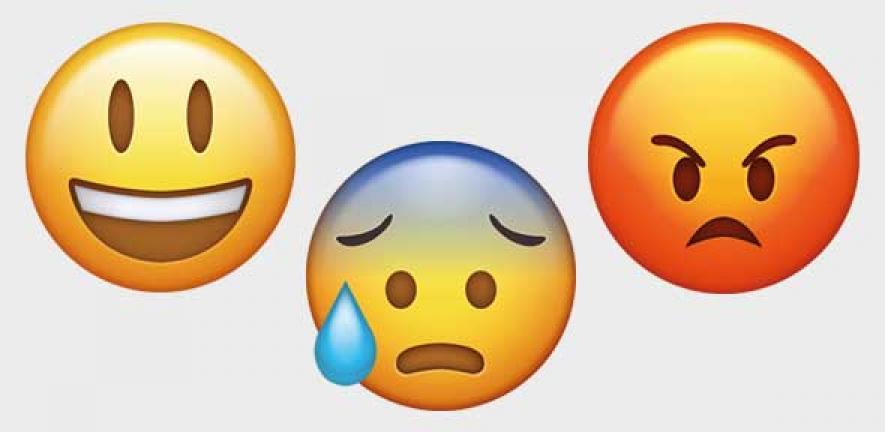 I can’t count how many times I’ve heard the phrase, ‘show don’t tell’. We all know you’re suppose to show and not tell. Why? You want the reader to experience the scene as if they are one of the characters walking through the story with the hero/heroine.
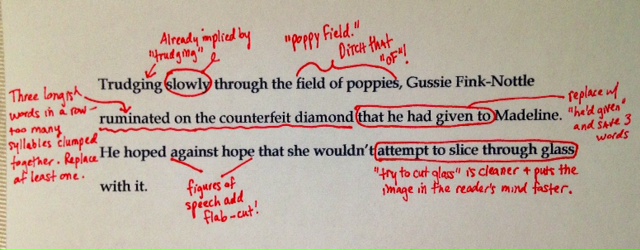 You just finished that first novel or at least you thought you did. Now the work begins. Pull out the pen and start cutting. Hopefully, red ink runs in your veins. You’re going to need a lot of it.
 Writing your first novel-Things you should know