Rewrite-itis

images559M9THLI got tickled when I first saw this word. I have to admit, I have dealt with rewrite-itis. What is it? It’s a severe condition that effects both published and unpublished writers according to The Everything Guide To Writing A Romance Novel. It means your are unable to call a book, chapter, or even a scene finished. So what causes the condition? A fear of failure or success. For me it is definitely failure.
What are the symptoms?

  • Rewriting the same scene, chapter, or book more than ten times
  • Never finishing a book, because you keep going back to polish the first chapter
  • Constantly having others read your book with the hopes they will give you some revisions to do
  • Taking your finished manuscript to the post office to mail, only to return home with it in hand for further revision

So what do you think? Do you have a case of rewrite-itis?

Rewrite-itis has a close cousin – Research-itis. Maybe you have that one too. True research is crucial to any novel, but an author needs to know when to say “Enough is enough.”

So what is the cure? Set goals and deadlines and stick to them. Remember your manuscript is your baby, but sooner or later you have to turn it loose.

Just something to think about.

-Jan R

Rewrite-itis

More on Keeping It Simple

keep-it-simple-1I thought I would continue with the blog I wrote on Tuesday, Keep It Simple. You don’t want your reader to have to stop and think about what you are trying to say. You don’t want to slow them down or break up the pace.

You want your reader to continue through your novel without thinking about the fact  they are reading a book. You want them to become part of your story, walking through the scenes with your cast of characters.

If they have to stop and reread a section for clarification, you’re in trouble. I recommend that you read your prose aloud before making it public. If you stop or hesitate on any sentence, go back, something isn’t right.

Additional things we do to over complicate our writing. And I did say we. I’m guilty too 🙂

Double negatives

He was not certain that he would not make a mess of it.

My head just exploded. What did that sentence just say. You’re going to have to slow down and reread that sentence a couple of times. A better way to write it-

He worried he might make a mess of it.

Over explaining/illustrating

You did a lot of research to make your story sound authentic. That’s great, and the right thing to do, but your reader doesn’t want or need to know all of the information you collected. They aren’t interested in the intricacies of a process, give them an overview. Unless there is an important reason they need to know an intricate detail, keep it out.

Adding unnecessary descriptors in titles

He became the leader of the Commonwealth of Australia in 2012.

He became the leader of Australia in 2012.

She was a reporter in the United Stated of America during the Clinton administration.

She was a reporter in America during the Clinton administration.

If your reader already knows the setting is the USA-

She was a reporter during the Clinton administration.

Careless repetition

It makes you look clumsy, like you haven’t thought things through. You’re unorganized. Why are you telling me something you told me in chapters 3,4 and 6? I know already! Give me a break! Don’t force me to relive a situation over and over again. I don’t like it.

With this being said, there are times when repetition is appropriate, but not usually in novels. Repetition can add clarity, emphasis, and eloquence- when used this way, I wouldn’t consider it careless.

A perfect example, would be the ‘I have a dream’ speech by Martin Luther King Jr.  Check it out.

Hope this gave you something to think about and didn’t add to the confusion 🙂

-Jan R


More on Keeping It Simple

Don’t Allow Your Characters To Steal The Show!

imagesGTB2JOL3I’m a little over half way through the revision process of the book I’m working on and dreading the next few weeks.

The first half of my novel flows. I love what’s happening and I love my characters. They all work together to accomplish what I need them to, but then it starts to get ugly.

I’m sure you have heard that once you start writing, your story can take on a life of it’s own. Well that happened to me with the introduction of  a new character. She took on a life of her own, stole the plot, and didn’t stop until almost the end of the story.

She did help in one area. She filled in the middle and carried me to the end, but I’ve never really liked the character, and I question where she went. She was nice, smart, and likeable, but  she totally disrupted the flow, and I allowed her to.  I had lost sight of the ending I had planned.

I have read through my manuscript many times. I hesitate and play with this character and the events perpetuated by her existence, every single pass through.

I’ve finally accepted the fact that she needs to go. If I’m not comfortable with the character and her role in my story, It’s bound to come across to my readers. It’s time to cut my losses and move on.

This of course means a lot of work for me. I can salvage some of scenes she is involved in by replacing her with existing characters that can fill the role, but I am still cutting about 25,000 words and reworking the latter part of my book to follow the path that I originally outlined.

I’m sure I’ve made a million novice mistakes that brought me to this point, one of the major ones was to give an unplanned character free reign over my manuscript. I allowed her to walk in the door and take my story to places it should have never gone.

I was amazed and thought, how great is this, my story is writing itself. Well in some instances that might have been a good thing, but in my story, it definitely was not. Some may consider it a great exercise in creativity to let a rogue character take off with your story. I would say as long as it’s controlled and she/he isn’t in a free fall. You have to maintain control.

What do you think?


Don’t Allow Your Characters To Steal The Show!

What’s In Your Toolbox II

11510921-toolbox-with-tools-skrewdriver-hammer-handsaw-and-wrench-3d-stock-photoAbout a week ago I wrote a blog on tools I use to help with writing. I included the usual suspects-dictionary and thesaurus, but also included a few that I thought  many of my readers probably did not know existed. These included the ’emotion thesaurus’ -yes there is such a thing and it is great to help you get the creative juices flowing when describing your character’s reaction to what is going on in a particular scene.
After I posted the blog, I thought of a few more that have been instrumental in helping me to become a better writer and wanted to add those to the list. So, I decided to write What’s in you toolbox II.

Autocrit-is an online editing site that offers invaluable information about your prose. Being a beginner, I never thought about my word use or over word use is probably more accurate. I never thought about clichés, or passive writing, or the length of my sentences and how it affected the pacing.  One of my catch phrases is “you don’t know what you don’t know.”

So you can subscribe to Autocrit for free and it will review a segment of your writing(about 250 words at a time). After doing an analysis, it will provide you with the most used words in the segment and approximately how many you should have used, clichés, passive verbs, sentence length, and so much more.

The way Autocrit makes it’s money is you discover how great a tool it is and you pay for the upgrade. I purchased the upgrade for one year and used it frequently to help me become more aware of my writing and the common mistakes I was guilty of making. I am now more aware of my shortcomings and hopefully avoiding many of the mistakes I made in the past.

Grammarly – I’ve never used this site, but it’s my understanding that it is similar to Autocrit. I know many of my critique partners like it, so I thought I would throw it in the mix as a site to check out.

Scribophile- Who doesn’t need a critique partner who knows what they are looking for while reviewing your work and will offer an objective critique on what they are reading. If you are like me, you didn’t want to approach family and friends. They’re not writers and don’t understand the mechanics, plus they don’t want to hurt your feelings so they sugarcoat their critiques of your book. Besides that, what if they don’t like it. Nobody wants to be rejected especially by people they care about.

Scribophile is an online critique group that will critique up to about 3000 words of your novel at a time. It is free. Once again you can upgrade, but this is totally unnecessary, unless you are using it like Facebook to communicate with other aspiring authors. The way it works is you critique other peoples work and earn points. Once you have accumulated enough you can post your work. I had an 82,000 word novel critiqued in about 3 months.

You will find some of your critiques are performed by novices but many others by very good writers. The recommendations and assistance I got to correct grammar, POV issues and plot holes was invaluable.

They also have a book swap group if you would like to have someone read your work through completely without going the critique route. Before I had anyone look at my work, I wanted to go the critique route, so I could iron out as many mistakes as possible.

There are other online critique groups, but I haven’t used any of them, so I can’t comment on their effectiveness in helping with your writing. I know Scribophile and give them 5 stars 🙂

So many resources available at little to no cost. You just need to know where to look.

So what’s in your toolbox? Would love to hear from you.

-Jan R


What’s In Your Toolbox II

Edit, Edit or Edit?

Well that is true, but it’s only one type of editing, and there are three different types listed in the article. The article also noted that a novel length manuscript needed to go through all three types before it was submission ready.

Developmental Edit – better known as the content editing, story editing, structural editing or substantive editing. This edit looks at the big picture of your novel and focuses on

  • character arcs/development
  • pacing
  • story structure
  • pot holes or inconsistencies
  • strong beginning, middle and end
  • plausibility/believability
  • clear transitions
  • point of view
  • showing vs. telling
  • dialogue

Copy Edit – copy editing is the one most of us think of when we hear editor. He comes on the scene after the developmental editor and cleans things up. He is the one who does the line by line with a focus on

  • grammar
  • punctuation
  • spelling
  • redundant words
  • inconsistencies/continuity errors
  • awkward sentence structure

The proofread- I never thought of a proofreader as an editor, but in all reality he is. The proofreader checks your manuscript for lingering errors, missed commas, and typos. It may be tempting to skip this step or do it yourself. Keep in mind, you’ve read the book so many times you will be blind to many lingering errors. You need an unfamiliar eye.

I thought this was an interesting article. I’m not sure where you are in the writing process, but you do need to know  the proper steps to take before submitting your work. Remember as stated above you don’t see the errors. You are so familiar with your work the errors become invisible. Your brain actually fills in the holes as you read.

I didn’t have this information and submitted my work to several different agencies after I ‘edited’ it and had a few friends read through it. Needless to say I got nothing but rejections. I followed up on suggestions, and that’s when I realized just how bad the manuscript was. I couldn’t believe I sent such shoddy work to an agent. I was embarrassed and glad I hadn’t met them in person.

Hope this helped!

-Jan R

Edit, Edit or Edit?

Plot Holes?

plot-holesI’m revising my manuscript soon and one of the things I’ll be looking for is plot holes. Does your plot have missing or broken parts?
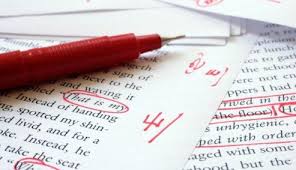
I know  I have missing parts and jumps in action before I even go through it. I had the entire manuscript critiqued through a group at Scribophile and there were times critique partners would point out areas where I jumped from one idea to another without providing a bridge.

When you are writing, you know what’s happening and you may not question why Suzie is talking to Jeff about needing a job in one paragraph and working for him in the next. I’m not saying you need every little step in order for your reader to follow what’s going on. I’m sure most people don’t want to know she woke up, took a shower, put on her favorite dress, ate some Cheerios and brushed her teeth with Crest toothpaste before walking out the door to go to work, but if Jeff gave her a job, I think that’s pretty darn important. This is a missing plot piece.

Your readers will do a double take and have to try to resolve the inconsistency for themselves without the knowledge of how the scene was suppose to go. All it will take is a few of these before your readers are calling you names and tossing your work to the side.

When you read through your manuscript, look for areas where something important has happened and your reader didn’t see it. Try to put yourself in their shoes and see the story through their eyes. They don’t have access to your brain and thoughts, so they can’t fill in the missing holes.

I talked about plot holes in this blog but there are also broken plots, which can be quite amusing. I plan to address them in my Thursday blog.

-Jan R

Plot Holes?

Cut? Or Not To Cut?(Revised)

imagesSo I’ve been married to my novel for five years. I’ve made some changes along the way, but one thing that has been a constant, is my main character going to Fallujah Iraq.

Anybody that’s been around for a while, knows that Fallujah played a big role in the Iraq War. Camp Baharia was set up just outside the city. It was one of the nicer camps, and the playground of Sudam Husseins son’s, prior to their demise.

Well, when I wrote the framework of my novel five years ago, it was set at the end of the war .  Fallujah had been won by the allies, and our marines were still there to maintain order, and ensure no further uprisings. That was the reason my main character had been sent there.

Since that time, Fallujah has been taken over by Isis and there is major fighting going on, as the Iraqi forces, along with the US and other allies, attempt to take it back.

It was the perfect setting when I started my novel, but it has evolved into the exact opposite of what I intended it to be. When people read Fallujah today, they don’t think about five years ago; they think about here and now and all of the turmoil in the region.

With that being said, my husband encouraged me a year ago to rethink Fallujah. He thought the current conflicts and notoriety of the region would cause serious doubts and credibility issues with my story.  Well I didn’t want to listen to him, Fallujah was in my story, it had been there all along, and I didn’t want to change it.

Not to long ago I received a critique from a very skilled writer. Her main problem with the story, as you probably guessed already, was Fallujah, Iraq.

My husband loved that, and gave me the told you so look. I wish I could say he rose above it and didn’t say anything, but he quickly reminded me that he wasn’t a dummy. He knew what he was talking about:-)

One of the things I’ve heard time and time again from experienced writers, is sometimes you have to throw the baby out. That’s part of writing, but it doesn’t make it any easier.

So I’m throwing the baby out and looking for another Camp, maybe in Afghanistan.

If you’re on the fence, just do it. The sooner you let go and move on, the sooner you’ll get that novel completed. You might miss your baby for a while, but I’m thinking you’ll get over it, especially when your story comes together the way it was meant to be.

-Jan R

Cut? Or Not To Cut?(Revised)

Does My Novel Have To Be Perfect?

UnknownYes!!!!!! Especially if this is your first book.  If you have already written a best seller, your agent and editor may cut you some slack, if not, that book better be pretty close to perfect or nobody is going to look at it.  I know you’ve heard this before if you’ve done any type of research, but agents receive hundreds of queries a week. They don’t have time to read everyone.  If your manuscript is full of grammatical and structural errors, that’s all the excuse they need to toss it to the side and move on to the next one.

I sent my first manuscript out to five different agents.  I was very excited and a little anxious to hear what they had to say.  I expected some rejections but not all.  I had put  over a year into that novel.  It was my baby. Well, two didn’t respond at all, one said no thanks, and another said it wasn’t what they were looking for. The fifth one responded with a rejection but also included a why. There were numerous grammatical and structural errors, I was head hopping and the dialogue dragged.

While I was disappointed, I did take her advice to heart and began the process of editing and correcting structural and grammatical errors.   I took two online courses on writing dialogue that moved your story forward. I had never really thought about dialogue moving a story before, but I see it now, and have a pretty good understanding of what the presenters were trying to get across. I also worked on perfecting my POV.

Truth be known, I was ashamed of myself for sending such poor work to an agent.  I never realized how bad it was until I began the arduous process of editing and revising. I definitely didn’t make a good first impression.

-Jan R


Does My Novel Have To Be Perfect?

How To Write Seamless Dialogue

Dialogue should be seamlessly integrated into your story.  It should flow. If you can feel yourself reading then stopping for a brief conversation and then reading again something isn’t quite right.

Conversation works best when combined with thoughts, actions and settings.  Don’t separate them but interweave them. People don’t stop to talk, they keep doing what they are doing unless it’s something really important that demands their full attention.

You can integrate by using setting, thought and action in combination with dialogue.

Example

The day had been crazy but it wasn’t over yet. Walking into the conference room, Mark  found Ellen sitting at the head of the table preparing packets for their upcoming meeting.

“Sorry I’m late,” he said walking over to offer assistance.

Handing him a few, she looked him in the eye, anger and disappointment written all over her face, “Isn’t that your norm?”

Mark grasped for something to say that would ease the tension between them and get him through this day. Staring at the packets he was at a loss. What she said was true, and he couldn’t explain why. At least not now.

Easing herself up, she walked by him without saying another word.

“Well that didn’t go well at all,” he said quietly to himself as he continued to prepare for the meeting. He would attempt to smooth things over with his secretary later, but for now he had a business to save.

By interweaving thought, action, setting and dialogue, the scene moves forward seamlessly. I hope 🙂

If you just use dialogue you are witnessing a conversation. When you begin to interweave thoughts, actions, settings, and dialogue you are pulling your reader in and making them a participant.

A really good exercise to help understand and follow this concept would be to write a simple conversation with no tags or anything.  Read it. Now go back and add tags. Read it again. Now go back and add more tags or actions. What was the person doing during the conversation? What about setting.  Where were they during the conversation?  You can even add thoughts. These aren’t conveyed through the conversation but because we are on the outside looking in, we can get a better idea of where the character is coming from.

Hope this series on writing dialogue helps you in your endeavors.  Would love for you to join me on this journey. Please consider pushing the follow button and you will receive a notice any time I write a new blog. Also if you have any comments or questions I would love to hear from you.

-Jan R

How To Write Seamless Dialogue

Critiques Are Good!

So I just realized it’s Thursday and I’m leaving for Ohio in two hours! Normally that wouldn’t be an issue, but  I haven’t written my blog for today. I am too busy. How do you forget something you’ve been doing every Tuesday and Thursday for the last five months?

So I’m continuing with the revision of my book, and if you follow me, you know I’m having it critiqued by other aspiring authors on Scribophile. I know I’ve already promoted the site, but let me say it one more time. If you have started a novel, or want to start a novel, sign up. It’s free. They do offer extras for a $65 dollar a year fee, but you don’t need to bother with that. At least not until you’ve check it out and know for sure it’s working for you.  You can post work and do critiques without the membership.

At any rate, I’ve developed somewhat of a friendship with one of the members, who far surpasses my writing skills, I might add, and we are critiquing each others work as it is posted.  I messaged her today to let her know that I posted a new segment and to apologize in advance.

It amazes me, how many errors I miss. Am I getting better? Truthfully yes, but my work still looks like a Christmas tree when she finishes marking it up. The bad part is, the mistakes are so obvious when she points them out.  I’m a pretty smart lady. Why am I not seeing them ?

The only thing I can come up with, is I’m too close to the story.  Are you too close to your story? I can’t emphasize enough the importance of having others review your work. I’m not talking about family and friends, I’m talking about people who will be honest and know what they are looking for.

I would like to invite you to join me on my journey, as I share my ups, downs, and  information that will hopefully help  you along the way.

-Jan

Critiques Are Good!