Your Protagonist

protagonist-versus-antagonistYour protagonist is the most important character in the novel. He/she will be in every moment, even if not in every scene.

It’s recommended that you have only one main character in your novel. However, some do have more. Romances, for example, usually have two main characters and are for all intents and purposes, two stories running simultaneously.

Things to keep in mind when developing your main character…

  • Introduce them in the beginning. You want your reader to bond with them more than any other character.
  • Make them active. Nobody wants to read about someone sitting on the couch doing nothing all day.
  • Give them a cause greater than themselves. Dream big.
  • Create conflict around them that battles against their flaws.
  • Make your protagonist complex. Nobody wants a goody-goody two shoes that skips through life with no adversity.
  • Keep your protagonist in character. Be consistent. If you show a change in what one would expect the character to do, you must show a reason.
  • Draw on yourself, friends, people you look up to, to build your character.
  • Create sympathy for your character. You want your reader to care about them and what they are going through.
  • Make them virtuous, clever, and generous. You want your reader to like them.
  • Make your character attractive. I know this isn’t politically correct, but it’s what works.

Something to think about.

-Jan R

Your Protagonist

Antagonist-Friend or Foe (Revisited)

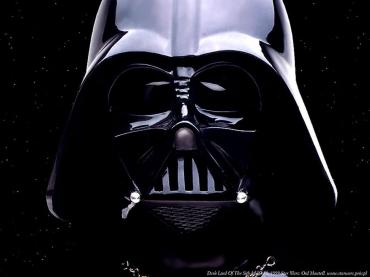
1-darth-vadar-skull

My main focus for this particular blog is antagonists. I have two in my novel. One is amnesia, and the other is a young woman determined to marry the man of her dreams, even if he belongs to someone else. She uses his amnesia to her advantage, manipulating and deceiving him.

When you are creating antagonists, you must remember they are people too. Help your reader to empathize with them and understand why they act the way they do. Even bad people have weaknesses and can show love towards others. They are more than just a device to move your plot in a certain direction. Flesh them out!

Get into your antagonists head. Help people to see things from his/her point of view if possible. I write in third person omniscient, which allows me to get into the head of any character I choose, as long as I limit myself to one per scene. If this doesn’t work for you, have your point of view characters mull over and try to understand the antagonist’s point of view. You don’t want him/her to be seen as pure evil.

I have to admit, I’m a ‘Star Wars’ geek. If you’re a follower, you know who Darth Vader is. From my perspective, he is the perfect antagonist. The creator of this series, put a lot of thought into this bad guy. He is pure evil, but as Luke stated, “There is good in you, I can feel it.” Luke was right. Vader wasn’t all evil, as a matter of fact, he started out as a good guy. His motivation for turning to the dark side, was to save his wife.

You want your antagonists to be strong, smart, and capable. At least as much so as your protagonist. This serves to give the story balance and maintain interest.  It also helps to increase tension and suspense. You know the antagonist is capable of defeating the protagonist. The story could go in many different directions.

Back to the ‘Star Wars saga, Darth Vader was  the most powerful of all the Jedi, even though he turned to the dark side and fell under the control of the Sith Lord. His downfall in the end wasn’t his lack of strength, but his return to the light.  He sacrificed himself to save his son. In a split second decision, he destroyed the empire and brought balance to the universe.

Many professionals recommended that you not use abstractions, such as corporations, disease, or war as your antagonists. They are unrelatable, but that’s a blog for another day.

If you do feel the need to use an abstraction, put a human face to it.  Instead of organized religion, you may consider a resentful pastor seeking revenge. Instead of corporate greed, you may consider a Bernie Madoff type. One of my antagonists is a medical condition that a second antagonist exploits to get what she wants.

Hope this post provided a couple nuggets and got you thinking 🙂

-Jan R

Antagonist-Friend or Foe (Revisited)

What’s Your Character’s Core Desire?

800x800-the-desire-map-ombre-on-white_4How well do you know your main character? Do you know his/her deepest longing? If your answer is no, you need to stop and take a closer look at your character arc. What is motivating your character? If you can identify that, you know their core desire.

Does he/she want to be loved or save the world? Does he/she want to be respected or rich? Whatever the desire, it has to be something your reader can relate to.

Your character may have more than one desire. I know most of us do, but our minor desires usually lead us to our core desire. That one thing that we really want more than anything.

A great example I read described a young girl who was abused by her father. As you probably guessed, her core desire was to be loved by him, or maybe you thought to get even. Not sure how your mind works 🙂 At any rate, the only thing he seemed to be interested in was astronauts and space exploration. So the young girl set her sights on becoming an astronaut. Now she may have found her studies fascinating and developed an interest in space along the way, but her goal was to earn her father’s respect and love by becoming the one thing that piqued his interest.

After you’ve identified your main character’s core desire and put him/her on the path of achieving it, the fun begins. What can be thrown in to threaten his/her core desire? What can throw him/her off, and how can it be fixed?

You have to know your character’s core desire. It helps you understand what kind of things he/she will seek in life, and what kind of things can mess his/her life up.

Something to think about.

-Jan R


What’s Your Character’s Core Desire?

Don’t Forget Those Minor Characters(Revisited)

images-2

I received this critique a while back in regards to four minor characters in my novel. “A lot of new characters have been introduced, and they all run together in my mind. I think more time needs to be spent developing these characters as individuals rather than some generic group of friends.”

I didn’t provide much description of the characters, because they were only in one full chapter and part of another. I didn’t think descriptions were necessary. They served one purpose and one purpose only. They did their job and disappeared.

Not long after that I was looking at Writers Digest and bumped into an article on Minor Characters. Maybe somebody was trying to tell me something.

According to Elizabeth Sims, If the person is important enough to exist in the world of your story, let your readers picture that existence.

When you introduce minor characters, you should have one or better two details.  He was as wide as he was tall, and talked with a lisp.

Even characters who exist in passing, should exist in the readers eye. For a literally glancing description, make it visual. The freckle faced boy stuck his tongue out at us, then turned to go inside.

If you have a group-Pan the crowd and then zoom in. Give one or two details describing them all, and then move in to one person as the representative.  The demonstrators walked down Main street waving their signs and shouting obscenities.  “Where is the Mayor, ” shouted a tall gray haired man at the front of the line.

So there you have it. I guess I need to go back and give my minor characters some life 🙂

-Jan R

Don’t Forget Those Minor Characters(Revisited)

Don’t Let Your Character’s Steal The Show

headercreativeexercisesIf you are to have any chance as a writer, you must embrace the plot.  Consider your plot as the skeleton of the novel. It’s the bare bones that keep everything from collapsing.

You must maintain control. Don’t give your plot over to a character who would gladly pick it up and carry it into directions you never intended to go.

Fictional characters can become so vivid, so alive, that you find yourself altering the plot to accommodate their growth and the direction they want to go.

 I got caught up in the excitement of following one of my characters through a storyline that I didn’t write. It was as if the novel was writing itself. The problem was, it was veering from my original intent and messing up my plot. 

Most authors will tell you that allowing your characters that much freedom is disastrous. That doesn’t mean you can’t allow some revisions to your plot to accommodate growth, it does mean you don’t alter your entire storyline at the urging of a character that has no idea were you are going with your story.

Something to think about.

-Jan R

Don’t Let Your Character’s Steal The Show

What’s Your Character’s Motivation?

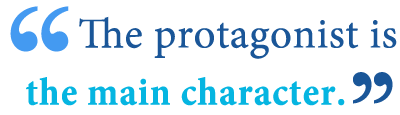
Thomas-Mann-quote-on-character-motivesIf your villain shoots down sixty people, blows up an airport terminal, hijacks a jet and then crashes it into the White House–all because his Social Security check arrived one day late, you’re going to have trouble selling your novel. Dean R. Koontz

When an editor rejects a book for implausibility, he is looking at the motivation of the character, not the plot. In other words, when a novel fails because of implausibility,  the reader had a hard time believing the character would do, in real life, the things the author has him doing.

What’s his motivation? If you have your character doing something bizarre, you had better convince your reader that he in fact would blow up an airport terminal because his Social Security check arrived a day late.

Most Common Character Motivators

Love- is a strong motivator for your lead character. This universal and adaptable motivator can be found across genres. Remember almost all of your readers want to love someone, be loved, or fall in love. They are predisposed to accept love as a plausible motivation for a hero’s or a heroine’s actions. This motivator  works best when paired with another motivating force.

Curiosity-  is responsible for every important discovery since man tamed fire. Like love, it works better paired with another motivator. Throw in some self-preservation, greed, love, or duty. Your reader will not believe that a rational character would willingly die merely to satisfy his curiosity, and yes, your main character must be rational.

Self-preservation- is the most common character motivation in both popular mainstream and genre fiction. If your hero’s life is at stake, anything he does to preserve it will seem plausible to the reader, which makes this the easiest of the motivators for new writers to handle. Also it should be noted, that self-preservation can be construed to mean preservation of one’s self-image and self-respect.

Greed- as you probably guessed, this is not a good motivator for your hero or heroine unless they are a bandit. It works as an excellent motivator for your antagonist. If your antagonist is trying to destroy your hero financially and get control of his business at a bargain price, greed might very will be his primary motivation, but by throwing in another motivation, the story would have much more depth. Suppose we find out the antagonist also hates the hero, because the hero won the hand of the woman they both loved. The antagonist instantly becomes a more believable and interesting character.

Revenge- is an excellent motivator for a villain, but should not be used to motivate the protagonist, unless you can show the hero is justified in his actions.  Maybe the police and courts have utterly failed in their duties to society and to victims of violent crime, and then the hero steps in.

These are not the only character motivators, but they are the most common. Remember, your character should never be motivated by something that is inconsistent with their personality. Much more on this subject but hope this got you thinking.

-Jan R
What’s Your Character’s Motivation?

Do You Really Know Your Characters?

fall-in-love-with-the-charactersYour main character should be a living, breathing, human being, at least in the eyes of the reader. He/she evolved into the person that they are today, just like you and me. What significant events in their life transformed them? Sounds like a little backstory to me.
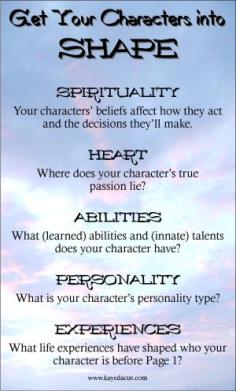
You have to make your main character real, and in order to do this, that character must first become real to you. While you don’t have to include every bit of information you’ve developed and highlighted in your own mind, you do need to know that information.

  • What’s your character’s name
  • What does your character look like
  • When, where, and to whom was your main character(s) born
  • Brothers and sisters, their names and ages
  • Family dynamics(warm and loving, dysfunctional, abusive)
  • Where he/she attended high school, college, and graduate school
  • Any flaws-remember nobody’s perfect
  • Political affiliation
  • Occupation
  • Income
  • Goals
  • Religious views
  • Friends (best friend)
  • Marital status
  • Worldview
  • Personality
  • What makes them angry
  • What makes them happy
  • What are their fears
  • And anything else relevant to your story

Take the time to flesh that character out. They will make or break your story.

Think of your favorite book. I bet when you focus in on what made that story stand out, you are going to run into some pretty amazing characters.

-Jan R


Do You Really Know Your Characters?

Antagonist-Friend or Foe?

1-darth-vadar-skull

My main focus for this particular blog is antagonists. I have two in my novel. One is amnesia, and the other is a young woman determined to marry the man of her dreams, even if he belongs to someone else. She uses his amnesia to her advantage, manipulating and deceiving him.

When you are creating antagonists, you must remember they are people too. Help your reader to empathize with them and understand why they act the way they do. Even bad people have weaknesses and can show love towards others. They are more than just a device to move your plot in a certain direction. Flesh them out!

Get into your antagonists head. Help people to see things from his/her point of view if possible. I write in third person omniscient, which allows me to get into the head of any character I choose, as long as I limit myself to one per scene. If this doesn’t work for you, have your point of view characters mull over and try to understand the antagonist’s point of view. You don’t want him/her to be seen as pure evil.

I have to admit, I’m a ‘Star Wars’ geek. If you’re a follower, you know who Darth Vader is. From my perspective, he is the perfect antagonist. The creator of this series, put a lot of thought into this bad guy. He is pure evil, but as Luke stated, “There is good in you, I can feel it.” Luke was right. Vader wasn’t all evil, as a matter of fact, he started out as a good guy. His motivation for turning to the dark side, was to save his wife.


You want your antagonists to be strong, smart, and capable. At least as much so as your protagonist. This serves to give the story balance and maintain interest.  It also helps to increase tension and suspense. You know the antagonist is capable of defeating the protagonist. The story could go in many different directions.

Back to the ‘Star Wars saga, Darth Vader was  the most powerful of all the Jedi, even though he turned to the dark side and fell under the control of the Sith Lord. His downfall in the end wasn’t his lack of strength, but his return to the light.  He sacrifices himself to save his son. In a split second decision, he destroys the empire and brings balance to the universe.

Many professionals recommended that you not use abstractions, such as corporations, disease, or war as your antagonists. They are unrelatable, but that’s a blog for another day.

If you do feel the need to use an abstraction, put a human face to it.  Instead of organized religion, you may consider a resentful pastor seeking revenge. Instead of corporate greed, you may consider a Bernie Madoff type. One of my antagonists is a medical condition that a second antagonist exploits to get what she wants.

Hope this post provided a couple nuggets and got you thinking 🙂

-Jan R

Antagonist-Friend or Foe?

Are Your Characters Behaving?

456ffd61f6611997a74945a5622289fbMake sure your characters behave the way they are supposed to, and don’t force them to do something that doesn’t fit with the persona you built.
You know what I’m talking about. Think about the people closest to you. You know them well, and you also know there are certain things they just wouldn’t do. Your characters should be the same. You introduced them one way-don’t send them in the opposite direction, unless you built a bridge explaining their actions or hinted that they aren’t who they pretend to be. Make sure they behave the way they are expected. That doesn’t mean they can’t surprise you occasionally, but remember they should always do what’s true to themselves.

Your character should also grow and change as they mature and face different circumstances in their lives. Felicity may start out being selfish and spoiled, but when she is forced to work at a homeless shelter, her perspective changes. She changes. She learns to empathize and relate.

Your character must act and not merely be acted upon. Nobody wants to read a book from front to back about a victim. The character may start out in peril and face numerous conflicts for which they have no control, but at some point, they had better step up and take control. Even the most passive protagonist must in the end choose to do something.

-Jan R


Are Your Characters Behaving?

Distinguish Your Characters With Dialect

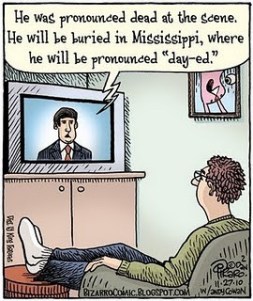
BizarroDay-edDo your characters have their own voice or do they sound the same? I had a critique partner tell me that she couldn’t distinguish characters in my manuscript based on dialogue. They all sounded the same. If I hadn’t provided a dialogue tag, she would have had no idea which character was speaking. She was right.

This was something I definitely had to correct. So I did some research, watched a webinar, and took a class on dialogue. Distinguishing between characters is a lot easier than you would think.

One way to differentiate characters and determine who they are is through dialect.  We can learn a lot about a person based on their accent, grammar, and choice of words.

You don’t have to ask a person if they are from the North or South-just listen to how they speak and note their word choices.  While this is one of the most obvious examples for me, you can also distinguish education level, social status, race, and ethnicity from the way a person speaks.

One thing you want to avoid is coming across offensive or stereotypical(racist).  Look at your word choice or variation of syntax as tools to differentiate your characters and suggest their ethnicity.

Use slang, nonstandard syntax, or grammar to suggest race, social class, education i.e. gonna vs. going to,  kinda vs kind of,  holler vs hollow, don’t matta vs It doesn’t matter. If you have a character from abroad throw in some regional slang ( Scottish say-aye for yes and bairns for children).

The next time you read a book take a close look at your characters and their dialect. You will learn a lot, and the fact that you didn’t even think about it while reading the novel is a plus for the author. It was woven seamlessly into the story.

Creating a characters speech pattern is less about reproducing dialect and more about knowing your character. If your character is……

  • terse                –   short burst of speech
  • angry               –   speaks through clinched teeth
  • nervous           –  stammers or rambles
  • domineering  –  silent and threatening or rages

If you’re writing science fiction you can develop you own language and your own rules. There is no limits. Just be consistent.

Hope this gives you something to think about when writing dialogue. Remember to differentiate using dialect, and the dialect should match your characters position in society. Also remember to be consistent with speech patterns, unless an evolution in speech pattern is an integral part of the story (Flowers for Algernon, My fair lady).

-Jan R


Distinguish Your Characters With Dialect