 We have all heard phrases that stuck with us. We use them in our writing and speech. Problems arise when we either misheard or remembered the phrases incorrectly. The results range from humorous to downright confusing.
The Correct Phrase What You’ll Sometimes See or Hear
all it entails all it in tails
by and large buy in large
chock full of chaulked full of
in cahoots with in cohorts with
amusing anecdotes amusing antidotes
beck and call beckon call
bated breath baited breath
beside the point besides the point
can’t fathom it can’t phantom it
down the pike down the pipe
far be it from me far be it for me
for all intents and purposes or all intensive purposes
home in on hone in on
got my dander up got my dandruff up
had the wherewithal had the where with all
I couldn’t care less I could care less
in like Flynn in like Flint
moot point mute point
whet my appetite wet my appetite
up and at ’em up and adam
tough row to hoe tough road to hoe
supposedly supposably
shoo -in to win shoe-in to win
over the airwaves over the airways
of utmost importance of upmost importance
recent poll recent pole
dyed in the wool died in the wool
en route in route
I think you’re getting the picture. Before you use those all too common phrases, make sure you have them down. I know I’m guilty of using several of the phrases listed above in the ‘what you’ll sometimes see or hear‘ list.
Something else to check during the revision process 🙂
-Jan R
 I have to be honest, I just want an agent to say yes, I will represent you. I’ve had my fill of rejections, but I know, just like anything else in life, you need to do your homework.
 I pray often for my home to be blessed with love, joy, and peace. For those who are wondering, it is. Who wouldn’t want a peaceful stress-free home environment, especially after a crazy day at the office?
 Are your scenes dead, or do they just need a little get up and go? If you want to turn off an agent, front load your work with backstory and boring narrative.
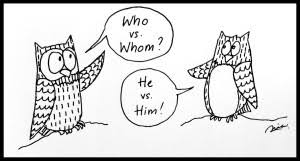 Am I the only person who has a problem with who versus whom? Fortunately, I don’t use sentences requiring these words that often, but when I do, I become paralyzed. I’m not sure. I usually read through the sentence a few times using both words and pick the one that sounds better to me. There is nothing scientific about that. It simply boils down to preference.
 Several years back I was doing a critique on a ladies work, and the number of times she entered his or her, he or she, was distracting and cumbersome. In my write up of suggestions, I recommended she go with the masculine pronoun to refer to either sex.
 I like to highlight my mistakes. I guess my thought is, if I’m doing it, there are plenty of newbies out there doing the same thing. I like to think I’m not alone 🙂
 Not to long ago I picked up my first completed manuscript, shook off the dust, and began the revision process yet again. I had become discouraged and didn’t want anything to do with the story.
 I got tickled when I first saw this word. I have to admit, I have dealt with rewrite-itis. What is it? It’s a severe condition that effects both published and unpublished writers according to The Everything Guide To Writing A Romance Novel. It means your are unable to call a book, chapter, or even a scene finished. So what causes the condition? A fear of failure or success. For me it is definitely failure.
