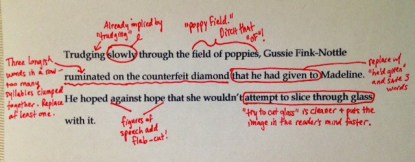
 You just finished that first novel or at least you thought you did. Now the work begins. Pull out the pen and start cutting. Hopefully, red ink runs in your veins. You’re going to need a lot of it.
How do you know what to cut? You put a lot of thought into those words, and it all sounds good and provides useful information to help the reader follow what’s going on.
It comes down to two things.
- Is it essential to the story?
- Does it move the story forward?
I love Jerry Jenkins. We all have our favorite bloggers and teachers of the craft. Jerry Jenkins is probably my favorite. Why? Because he’s clear, concise, and easy to follow. I’m using an example from one of his blogs to help you understand editing. I would encourage you to visit his sight. You won’t be disappointed.
Paige’s phone chirped, telling her she had a call. She slid her bag off her shoulder, opened it, pulled out her cell, hit the Accept Call button and put it to her ear.
“This is Paige,” she said.
“Hey, Paige.”
She recognized her fiancé’s voice. “Jim, darling! Hello!”
“Where are you, Babe?”
“Just got to the parking garage.”
“No more problems with the car then?”
“Oh, the guy at the gas station said he thinks it needs a wheel alignment.”
“Good. We still on for tonight?”
“Looking forward to it, Sweetie.”
“Did you hear about Alyson?”
“No, what about her?”
“Cancer.”
“What?”
Here’s a good example of how that scene should be rendered:
Paige’s phone chirped. It was her fiancé, Jim, and he told her something about one of their best friends that made her forget where she was.
“Cancer?” she whispered, barely able to speak. “I didn’t even know Alyson was sick. Did you?”
We don’t need to be told that the chirp told her she had a call, that her phone is in her purse, that her purse is over her shoulder, that she has to open it to get her phone, push a button to take the call, identify herself to the caller, be informed who it is. I think you’re getting the point.
This is a good example of dragging dialogue as well. It’s not necessary and adds fluff without any real purpose. Don’t distract with minutia. Give the reader the adventure they signed up for when they chose to purchase your book. Take the reader with Paige when she says:
“I need to call her, Jim. I’ve got to cancel my meeting. And I don’t know about tonight…”
Something to think about.
-Jan R
 Don’t you hate it when you’re talking to somebody and they are all wishy-washy? Why can’t they just come out and say it? Most of the time you know what they are getting at and want to spit it out for them. Well, the same thing goes for writing.
 I’ve written several blogs patting authors on the back and thanking them for the joy they provide to people like my mom.
 I’ve been kicking around the thought of having a ‘Writing Tip’ Thursday for a while, but still haven’t come up with a witty title for the blog. There are so many one-liners out there. Useful information provided by successful authors that grab your attention and make you stop and think. Some may even tickle your funny bone 🙂
 Is your book available as an ebook? You should definitely produce a print-on-demand book, but so many new authors want that book deal with distribution in bookstores and don’t consider ebooks. Most indie authors make more income from ebooks. Something to think about.
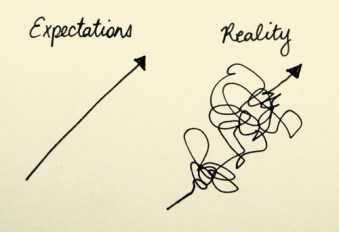 You’re an aspiring author. Your ultimate goal is to find a great agent and get published. Who doesn’t want to be the author of that blockbuster book/movie of the year with a million-dollar payout?
 It seems like it’s been a long time since I truly sat down to write. I’ve been doing posts, but mainly older blogs revisited or simple quotes.
 Your lead character doesn’t have to leap tall buildings in a single bound, and he doesn’t have to stop speeding bullets with his bare hands, but he darn well better know the difference between right and wrong, and he better be kind to animals, and it sure wouldn’t hurt any if he brushed his teeth regularly. Dean R. Koontz – How To Write Best Selling Fiction
 Writing your first novel-Things you should know