
Don’t give up.
-Jan R
Don’t give up.
-Jan R
 I pray often for my home to be blessed with love, joy, and peace. For those who are wondering, it is. Who wouldn’t want a peaceful stress-free home environment, especially after a crazy day at the office?
However, I don’t want love, joy, and peace, in the novels I read. I want action, adventure, and adversity. Who wants to read a humdrum book about a couple meeting, falling in love, and getting married? That’s sweet, but it’s a little too sweet.
Without conflict, your story is going to be rejected. We all want the happily ever after ending. So make sure you have it, but it’s the conflicts and challenges your couple faces along the way that keeps your reader turning the page.
Keep in mind, conflict shouldn’t be something that shows up at the climax of your novel, you are going to lose your readers before they get that far.
Conflict should be evident in every scene and practically every page. It’s the engine that propels your story forward and keeps your reader engaged.
Most novels have one major conflict, but then each character will have one or two of their own conflicts. All of these conflicts go hand in hand to create an even bigger problem.
When you do introduce conflict, it has to be a natural extension of your plot or your character. The conflict has to be something that prevents your hero or heroine from achieving their goals. It can’t be something you just magically pull out of the air.
It’s okay to have a flat tire or an unforeseen traffic jam that prevents your character from making that all-important meeting. Just remember, too many coincidences like these are not directly related to your character or plot and can sound contrived.
One flat tire is acceptable, but if you are going to have more, then you had better find a way to make it a part of your story. Maybe someone is purposely flattening the tires of the main character to prevent them from meeting their goal.
Something to think about.
-Jan R
 Did you get rid of the filler words? Search for the words there, here, and it followed by a verb like is, are, was, and were. Those weaken your writing by diluting it and taking focus away from the object and often make your sentences longer. Estelle Erasmus, Writer’s Digest
Examples:
There are many people who write. Vs. Many people write.
It was a great party. Vs. The party was great.
Something else to think about.
-Jan R
 There are four main dramatic elements to your novel. You probably never thought about it, but if you did it right, they are there. If they’re missing, you need to revisit your work and make some adjustments.
That’s one of the nice things about writing. Nothing is set in stone, and when equipped with time and knowledge, you can change anything.
So back to the blog and the elements that I was referring to.
One of the things that the agent wrote to me after rejecting my work, was I had a great premise. It was a silver lining to a dark cloud that sprung up after the initial shock of being rejected. And while I thought the passion and theme were there, my characters were not flawed, which means that my passion and theme were probably weak.
Something to think about.
-Jan R

Something to think about. So much information out there.
-Jan R
 Does your plot have missing or broken parts? Does it jump from one idea to another without providing a bridge?
When you are writing, you know what’s happening and you may not question why Suzie is talking to Jeff about needing a job in one paragraph and working for him in the next.
I’m not saying you need every little step in order for your reader to follow what’s going on. I’m sure most people don’t want to know she woke up, took a shower, put on her favorite dress, ate some Cheerios, and brushed her teeth with Crest toothpaste before walking out the door to go to work, but if Jeff gave her a job, I think that’s pretty darn important. This is a missing plot piece.
Your readers will do a double-take and have to try to resolve the inconsistency for themselves without the knowledge of how the scene was supposed to go. All it will take is a few of these before your readers are calling you names and tossing your work to the side.
When you read through your manuscript, look for areas where something important has happened and your reader didn’t see it. Try to put yourself in their shoes and see the story through their eyes. They don’t have access to your brain and thoughts, so they can’t fill in the missing holes.
I talked about plot holes in this blog but there are also broken plots that I pointed out in last week’s Thursday Thoughts. Check it out 🙂
-Jan R

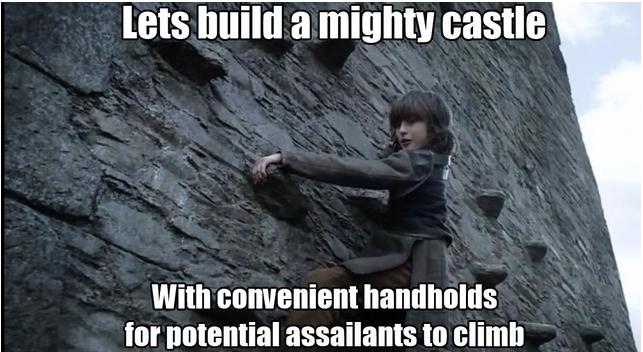

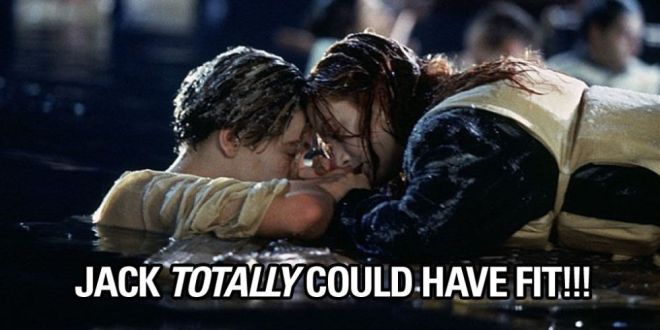
I think you get the picture. Make sure your plot makes sense. Your reader is smart and they will catch on. Push them too far and you may lose them.
-Jan R
Once that first draft is written, the real work begins.

Something to think about.
-Jan R
 I started reworking my first manuscript a couple weeks ago. Like many of you, I poured out a lot of blood, sweat, and tears over that piece of work. I spent five years of my life trying to take an idea and package it into an entertaining publishable piece of work. I thought it was great, and it was a great premise. I just couldn’t seem to pull it all together and make it work.
A few months ago I started work on a new novel. I love it. Everything about this new piece of work is better than my first attempt.
The biggest difference between the two is the opening. I started the first novel in the wrong place. Like many newbies, I thought I needed to add some backstory prior to getting into the ‘real story’, so my reader would understand my characters and be able to follow along.
Well, you do want your reader to understand what’s going on, but you dribble in the backstory as you go along. You can’t put it all upfront.
You may have an amazing story, but you’ll lose your reader before they get to the good parts if they are having to muddle through the character’s history (my mistake) or description overload of the setting. Prep work doomed my first story before it even got started.
Below are the opening paragraphs of two novels I’m working on. Which one gets your attention from the very beginning and makes you want to know more?
A cool breeze swept over Josh’s face tousling his too-long hair across his forehead and into his eyes. Brushing the dark strands to the side, he stared out at the glassy water with only one thought on his mind. Laura. He would be going to Afghanistan in a month and there wasn’t a thing he could do about it. Six months wasn’t that long, but it seemed like an eternity right now. (The first chapter gives you a picture of Josh’s life and that of his identical twin Jacob before they meet in Afghanistan – something I thought the reader needed to know to put the story in context.)
“I’m sorry mother, but I have no choice. Papa, I know you would be proud.” A soft smile crossed Ariel’s lips as she pulled up her baggy knee pants. She didn’t have time to dwell on the last few days or mourn her father’s death. She had to get to Southampton and to the safety of her godfather’s home. If Pierre thought he would steal her virtue and force a marriage, he didn’t know Ariel Dubois as well as he thought. ( This opening pulls you into the story from the very beginning. You want to know what happens next.)
Don’t take too long to get to the inciting incident, or incident that sets your story in motion. Grab your reader’s attention from the beginning by starting your story in the right place.
You need to ask yourself, what is the absolute latest moment you can begin your story without leaving out anything critical to the story problem or character goal? (Jane Friedman)
Something to think about.
-Jan R

Something to think about 🙂
 Writing your first novel-Things you should know