What’s Your Biggest Obstacle-Revisited

signsmall_thumbWriting can be both rewarding and frustrating. I’ve been around the block a few times and have had my share of rejections. Don’t judge me, get used to it. If you are out to write that best selling blockbuster, and I’m cheering for you, you’re going to have to develop some tough skin.

I’ve stated in previous blogs, that there are a lot of reasons why your manuscript was passed over, and many have nothing to do with the manuscript itself, but I thought it would be nice to hear it from an agent.

You just submitted a query for an awesome piece of work. You’ve had several agents request full manuscripts and one even gave you a call, but just like that it was over. What happened?

You may have submitted an amazing piece of work, but the submission before yours hit the ball out of the park, and the one after yours did likewise. Those two works raised the bar and affected the impact you novel had on the agent.

Maybe you presented a very well written novel, but the market is saturated with the genre you are offering. Agents may have manuscripts for the particular genre you submitted on hold for the next few seasons.

You made it to the personal phone call. Where did you go wrong? Maybe you were missing the synopsis or logline for your next novel. Agents don’t want to just sell a book, they want to represent a career. Another guess would be that you were resistant to editorial thoughts presented by the agent.

The biggest obstacle one can have in getting a novel published is quitting. If you’re going to do a little bit right, have that little bit be the fact that you don’t quit. – Barbara Poelle, agent

Something to think about.

-Jan R
What’s Your Biggest Obstacle-Revisited

Don’t Muddle Through The Middle

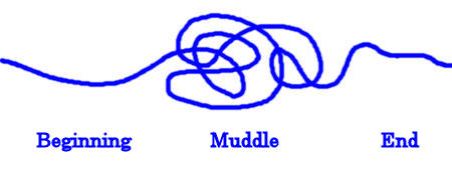
beginmuddleend4It’s been a while, so I have to ask. Are you muddling through the middle? If you’ve been around the block a few times, you know exactly what I’m talking about. We all experience it. You have a great idea for a novel, which includes in detail the beginning and end, and you have to figure out how to connect the two without putting your reader to sleep.
I call it the mayhem in the middle.  The problem is, you haven’t thought about what happens when you get there.

Most people who fail to complete their novel, become lost in the middle. They bail when they realize they don’t have enough cool stuff to fill the pages. They may attempt to add scenes, but become bored, and know readers will be too.

Every book becomes a challenge a few chapters in. You’re not alone. Trying to keep up the tension and pace gets harder and harder. But don’t panic or do anything rash, like give up.

What can you do? If you’re one of those people who hasn’t developed an outline, thinking it would just come to you as you muddled through, maybe you should consider backing up and doing one.

An outline to set every scene gives you a blueprint of what will happen next. If the action starts to wane, think about a subplot, or introduce tension between your main characters.

Maybe there was a misunderstanding, or maybe that one minor character that was supposed to be the good guy isn’t what he appears. Maybe the butler did it, but nobody knows.

You can have so much fun with subplots. Just keep them believable and resolve them all in the end.

I hope this helped.

Jan R

Don’t Muddle Through The Middle

Speculative, Upmarket, Dystopian?

huhI’ve been reading literary agent biographies and blogs in an attempt to narrow my search and find a few I think would be a good fit for my novel.

While researching, I found myself going on-line and doing searches for words and abbreviations that were totally foreign to me: MG, Dystopian, MS, Upmarket, and so on. I guess I still have a lot to learn.

At any rate, I thought I could save you some time by sharing a list of not so common words and abbreviations that I found during my research.

  • MS:  Abbreviation for manuscript (the plural being MSS).
  • MG:  Middle grade-ages 8-12.
  • YA:  Young adult-ages 12-18.
  • NA:  New adult: features a protagonist 18-25 and focuses on the first struggles of adulthood.
  • Speculative Fiction:  Fiction that encompasses supernatural, fantastical, or futuristic elements.
  • Upmarket:  Fiction with a commercial appeal (book clubs) particularly women’s fiction.
  • Dystopian:  A futuristic, imagined universe, in which oppressive societal control and the illusion of a perfect society are maintained through corporate, bureaucratic, technical, moral, or totalitarian control.
  • Literary Fiction: Serious fiction, style and technique are often as important as the subject matter.
  • Commercial Fiction:  Written with the purpose of attracting as wide an audience as possible. It includes westerns, romance, mysteries, and horror genres.

I’m sure I missed a few. Who knew there were so many different categories?

I guess I’m old school. In my day it was westerns, romance, mysteries, comedies, and horror. Oh yeah, you can throw children books and youth in there as well.

-Jan R

Speculative, Upmarket, Dystopian?

Don’t Put Them To Sleep!

sleeping-in-classWhen you’re writing, you need to mix things up.  You don’t want to be the one that puts your reader to sleep.

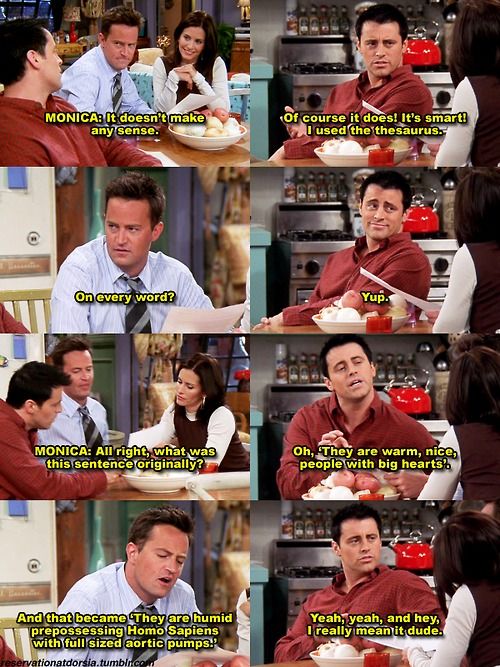
You know what I’m talking about. We’ve all had teachers or sat through sermons that literally put us to sleep. How embarrassing! You can’t hide the little jerk of the head when you catch yourself and attempt to shake it off. You know what I’m talking about.

There are many different things you can do to add a little excitement and keep your reader’s attention, but one thing you have to avoid is monotony. Change those sentences up.  Use structure and length for change of pace to slow down or speed up your prose.

WHAT NOT TO DO!

Suzie entered the boutique. She looked around for dresses. She walked over to the semi-formals. The store owner said hello. She picked the one she liked. She walked over to the counter. The owner rang her up. She handed her the money. She left with a smile.

Now there’s a lot of things wrong with this paragraph from the style perspective, but there are no grammatical or structural errors -I hope :-). It has strong verbs and nouns. They are both good and necessary elements, but something isn’t quite right.

It’s a string of segregated sentences that can stand on their own. It’s also composed of sentences similar in length and cadence.

You need to vary the length. Change the beat every now and then. 7-14 word sentences are recommended as they feel more natural. Nobody talks like that paragraph was written. Well, nobody except that boring teacher or preacher that put you to sleep 🙂

By the way, did you finish reading that short paragraph? 🙂

Something to think about.

-Jan R

Don’t Put Them To Sleep!