
This meme would have been perfect for my blog on elevator speeches. Do You Have That Elevator Speech Ready? I have no doubt this is how I looked 🙂
Something to think about!
-Jan R
This meme would have been perfect for my blog on elevator speeches. Do You Have That Elevator Speech Ready? I have no doubt this is how I looked 🙂
Something to think about!
-Jan R

I have been criticized for touting the rules of writing. The person that criticized my blog was correct to a certain extent. Rules are guidelines, and while mainly true, there are times you should throw that rule book out the window.
I read an article a while back that made me stop and think. It went against everything I had been told, but it also supported everything I had been told. I know that was confusing so I’m going to clear it up for you.
We have all heard show don’t tell. Telling is a sell-out and the result of lazy writing. Right! Wrong!
Showing is the rule of thumb and I support it wholeheartedly. The problem is people who take it literally and want to show everything down to the most minute detail, or those who think you can never tell anything, and of course, that’s simply not true.
If you show every single detail, you will never finish that novel, and your reader will get lost in the minutia.
My husband is always telling me you can’t check your brain in at the door. Of course, he’s referring to my reliance on the GPS in my car, but it relates to every aspect of life.
Rules are great and give us guidelines to follow, but yes, rules are sometimes meant to be broken.
Something to think about.
-Jan R

Something to think about!
-Jan R

Keep it Simple!
-Jan R
If you don’t have that elevator speech, you need to start thinking about it. Just because your plans don’t include a writer’s conference in the near future, doesn’t mean you don’t need one. I definitely don’t want you to fall into the same trap I did. Very embarrassing 🙂
I attended a work conference with my husband several years ago. It was a great getaway for me and a chance to focus on my novel without the distractions of home. Needless to say, I was enjoying myself and making some significant progress.

The last day of the conference, I was asked to join my husband and some of his peers for supper. I was surrounded by men talking shop, so all I had to do was smile and display exemplary dining skills, or so I thought.
About halfway through the meal, one of the men looked over at me and said, “Your husband told us what you do during the day while he is at the conference. We would love to hear a little more about your book. What’s it about?”
Well, I froze. My mind went totally blank. It was all I could do to control my suddenly out of whack emotions, as I turned to face this man who had the audacity to ask me such a question.
I wasn’t prepared. I didn’t have an Elevator Speech. I didn’t think I needed one. My novel was complete, but it wasn’t ready for prime time. I was totally incoherent and presented a jumbled mess.
I have that Elevator Speech now. I felt foolish and was totally caught off guard by men who were only trying to include me in the conversation. You never know when you’ll come across someone who’ll ask you what your book is about.
I’ll be prepared the next time. Plus, it will give me practice for when I do attend that writing conference, or get the opportunity to speak to an agent/author I just happen to run into at the airport.
Some things to keep in mind :
If you haven’t prepared your speech, you need to start working on it. It’s just a matter of time. Somebody is going to ask.
-Jan R

🙂
-Jan R
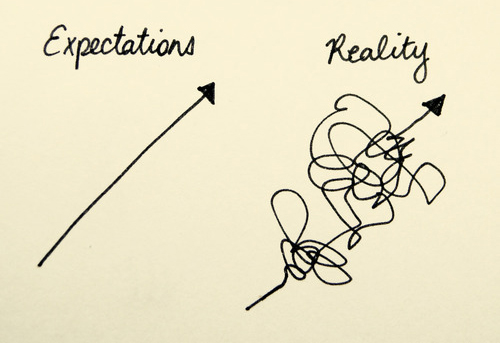 You’re an aspiring author. Your ultimate goal is to find a great agent and get published. Who doesn’t want to be the author of that blockbuster book/movie of the year with a million-dollar payout?
Newbies have a tendency to set unrealistic expectations. I’m not saying you won’t achieve your goal, but odds are, you’re going to have to start at the bottom and work your way up like the rest of us.
I’m not trying to discourage you. You can do this. I’m just trying to help you set realistic goals. I want you to be prepared not only for success, but the failures that you will most likely incur along the way.
There are some things you can and should be doing as you build your platform and prepare that first novel for publishing.
Some things to think about 🙂
-Jan R
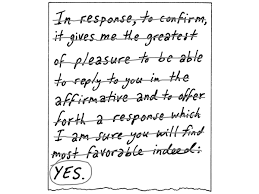
I think you get the picture 🙂
-Jan R

Your main characters may need some work, but for this particular blog I would like to focus on those ‘fly by’ characters that step into your novel, do what you want them to do, and then disappear never to be heard of again.
I received a critique a while back in regards to four minor characters in my novel. “A lot of new characters have been introduced, and they all run together in my mind. I think more time needs to be spent developing these characters as individuals rather than some generic group of friends.”
The lady that provided the critique was right. I didn’t provide any description of these characters. Except for the fact that they had names, you would have had no idea which one I was using in the scene. I didn’t think descriptions were necessary. They served one purpose and one purpose only. They did their job and disappeared.
Well shortly after receiving the critique, I bumped into an article on Minor Characters in the Writers Digest I was reading. Maybe somebody was trying to tell me something.
According to Elizabeth Sims, who wrote the article, if the person is important enough to exist in the world of your story, let your readers picture that existence.
When you introduce minor characters, you should have one or better two details. He was as wide as he was tall, and talked with a lisp.
Even characters who exist in passing should exist in the readers eye. For a literally glancing description, make it visual. The freckle faced boy stuck his tongue out at us, then turned to go inside.
If you have a group-Pan the crowd and then zoom in. Give one or two details describing them all, and then move in to one person as the representative. The demonstrators walked down Main street waving their signs and shouting obscenities. “Where is Mayor Blackman? ” shouted a tall, gray haired man at the front of the line.
-Jan R

Something to think about 🙂
-Jan R
 Writing your first novel-Things you should know