Writing Dialogue – Dialect

Dialogue is one of my favorite tools in the writing arsenal. You can do so much with it and if done correctly it will keep your story moving forward by showing not telling. One of the key components in dialogue is dialect.

Dialect allows you to differentiate between characters and get a better understanding about who they are. You can learn a lot about a person based on their accent, grammar, and choice of words. Dialect done properly suggests- education level, social status, race, and ethnicity.

Examples of dialect used to differentiate race, social class, education i.e.

gonna vs. going to

kinda vs kind of

holler vs hollow

don’t matta vs It doesn’t matter.

If you have a character from abroad throw in some regional slang (Scottish say-aye for yes and bairns for children).

The next time you read a book take a close look at your characters and their dialect. You will learn a lot. The fact that you didn’t even think about it while reading the novel is a plus for the author. It was seamlessly woven into the story.

Hope this gives you something to think about when writing dialogue. Remember to differentiate through dialect, and the dialect should match your characters position in society. Also remember to be consistent with speech patterns, unless an evolution in speech pattern is an integral part of the story (Flowers for Algernon, My fair lady).

Something to think about!

-Jan R

Writing Dialogue – Dialect

Fight That Inner Critic!

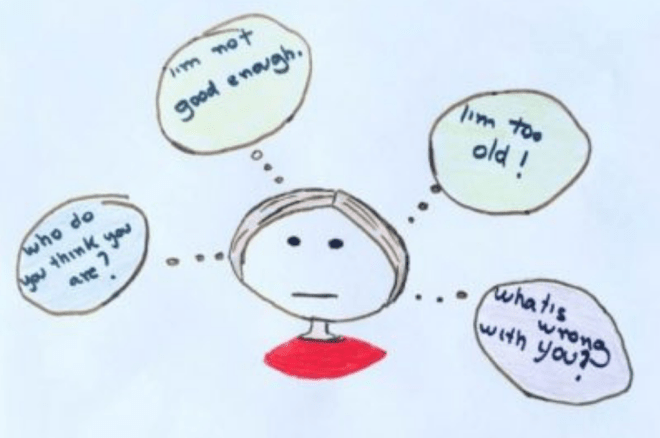
You have to fight that inner critic. You know the one that tells you your work is not good enough. No one wants to be humiliated or rejected. Your inner critic will paralyze you by telling you just how bad your work really is (even if it’s not).  This is another obstacle that I have had to overcome. It hasn’t gone away; I’ve just learned to deal with it.

I recall doing a Bible study on the battlefield of the mind. Though its primary purpose is dealing with spiritual warfare, it also relates to many of the issues that we deal with in our everyday lives. Our mind is a battlefield. In writing for example, all of us worry about looking dumb and never getting published. Fiction writers make a business out of being scared and not just looking dumb.

It took me six months from the time I started writing a novel, to tell my husband what I was doing. When I finally told him, I was a mess. I knew he would be excited for me and encourage me in my endeavor, and I didn’t want to let him down.

For the longest time I’ve treated my writing as a hobby. That’s not a mindset that will get you published. When I finished and sent out my first novel to a few agents, I was more than a little anxious. The first few rejections confirmed my beliefs. I just wasn’t good enough.

Note that I said I wasn’t good enough. Well, that’s not exactly true. The truth is the novel wasn’t good enough. It was filled with grammatical and structural errors, there was some serious head hopping going on, and my on-the-nose dialogue was all but bringing the story to a complete halt. If you are not familiar with these terms you should be. Go back and read the posts I have written addressing them.

I don’t know that the inner critic will ever go away. So how do you combat it? You keep moving forward and growing in your craft. Don’t stop. I still question my writing abilities, but I know that I know that I know, that they are a lot better than they were when I submitted my first novel. I’ve learned the hard way and hope to help you avoid some of my pit falls.

Something to think about!

-Jan R

Fight That Inner Critic!

Show Don’t Tell

Of everything I’ve learned on my journey, and there’s been a lot, Action does not equate to showing. I was dinged early in my writing because I seemed to have a love affair with telling versus showing.

In my mind, if the character was moving or doing something active, I was showing. While that’s partially true, and you do want your character moving, Action isn’t always equated to showing.

Here’s an example.

*She raced through the street with her adversary in hot pursuit. Capture was not an option.

This sentence does paint a picture in your head, but you’re on the outside watching. (Telling) You need to be walking this out through your character’s eyes. Get into their head. Use those senses. How is this chase impacting him/her?

**Her heart nearly beat out of her chest, and she struggled to breath as her footsteps quickened. The sound of her pursuers grew louder with each passing second. She glanced back and forth looking for a way of escape. Capture was not an option.

Not sure if this is the greatest of examples, but it is enough to give you an idea of the point I’m trying to convey.

By using senses and getting into the character’s head, you become a part of the scene, walking it out with them.

Another plus is you just doubled or tripled your word count 🙂

Something to think about.

-Jan R

Show Don’t Tell