Perseverence-Revisited

Cb3l1HoVAAEOgtTSince my adventure began six years ago, I have read numerous stories from well known authors about their journey to becoming published. I put so much time and effort into my craft I couldn’t help but feel discouraged, and I wondered what I was doing wrong. It helped and encouraged me to know that I was not alone but in great company.

The one common theme in all of their stories was perseverance. The agent that worked with me on my book, always ended her critiques with don’t give up. Perseverance is the one characteristic that all successful writers have.

If you have a high quality, marketable piece of work, persevere and you will eventually find an agent and get published. Kathryn Stockett wrote The Help over a five year period of time, then had three and a half years worth of rejections. 60 in all. It was agent 61 who took her on. The book spent 100 weeks on the best seller list.

Other notable Authors who suffered rejection:

  • Richard Adam’s Watership Down 17 rejections
  • Frank Herbert’s Dune  20+ rejections
  • JK Rowlings’  Harry Potter 12+ rejections
  • Nicholas Sparks’  The Notebook 24 rejections.

I hope you are getting the picture.  Revise, edit, do what you have to do to make your story great and don’t give up.

Hope this offered a little encouragement.  I know how disheartening it can be to send your baby out and have it rejected. Don’t take it personal and don’t give up.

-Jan R

Perseverence-Revisited

Read It All!

Genre.htmI have to admit I’m a hopeless romantic. I just love stories where boy meets girl, you throw in a little conflict (okay a lot), but everything works out in the end, and of course, they live happily ever after.
There’s nothing wrong with romance and wanting the happily ever after, but if you’re only reading one genre (romance, scifi, mystery, horror) you’re limiting yourself.  I never really thought that much about it, until I read a blog on why I should be reading all genres.

From my perspective, I write romance. I need to know what’s out there and what’s selling. How do other romance authors handle the physical and emotional sides of the relationships?

All of these reasons are valid, and I should be reading romance. But you know what? That novel has a lot more than romance in it. At least it had better have, if I want to keep my readers’ attention.

I may be great at developing a romantic relationship between my hero and heroine, but I had better be able to create the mystery and suspense necessary to keep my readers’ turning the page.

You may be writing a sci-fi novel, but odds are there’s a romance between your two main characters, and no one can explain why the lab assistant is lying on the floor dead, and there’s a  hole in the wall leading into the parking lot.

You can’t just read sci-fi and expect to be a well rounded writer. You might find yourself creating awesome aliens, but lacking when it comes to developing a relationship between the hero and heroine.

Reading different genres will make you a stronger writer. You’ll be introduced to new worlds and situations that would never arise in your typical horror, sci-fi, romance, or fantasy. Reading different genres will open your mind and encourage you to take risks that you may have never considered.

If that’s not enough, reading different genres will also allow you to read as a reader. Instead of focusing on the author’s style, you can simply enjoy the experience of reading 🙂

Hope this helped.

-Jan R

Read It All!

Help Your Reader Connect!

500-words_TestI just read through and edited my novel for God knows the number of times, I’ve lost count. That’s a problem in itself. I should be more efficient and effective with my time, but I’ll save that issue for another blog.

While my work is grammatically and structurally sound, the scenes flow, and there are no obvious plot holes, something’s missing, and I need to figure out what it is.

I followed all the rules, but it takes more than rules to pump up that novel and make it interesting enough for someone to want to purchase. You need to cover all of the basis, not just the technical ones.

I went back and did something I haven’t done in six months. I hate to confess, but I haven’t been reading. I love historical romances and have at least twenty sitting on a shelf that I haven’t read. Why? I don’t have the time.

I picked up one of them this past weekend and began reading. What was it about the novel that was drawing me in? What was it this novel had, that mine didn’t?

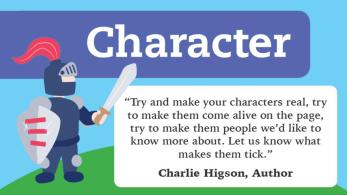
One thing that jumped out at me was character development. I have distinguishable and I think likable characters, but the depth that you get from introspection, from getting into the characters’ heads, is missing. I’m lacking that something that helps the reader connect with the characters and care about what happens to them.

I know my characters. I don’t need an explanation for why Josh did what he did. I don’t need to include what motivates him for myself. He is real to me and I care about him. I know everything about him. But my reader doesn’t.

My reader only knows what I tell them. You have to make those characters come alive and be as real to your reader as they are to you. Give them some details ( don’t over do it with mindless chatter-that creates another issue). Help them to understand your characters and why they act the way they do. Yes, you want the characters to be likable, but there’s so much more.

I’m getting off on a tangent. This blog was supposed to be about reading, and I’m morphing it into what I discovered when I picked up that novel. I guess that’s okay.

Hope you were able to take something from this blog.

-Jan R

Help Your Reader Connect!

Are You Muddling Through The Middle?

beginmuddleend4When you write a novel, one of the things you’re probably going to experience, is the mayhem in the middle. You have a great story idea, with a great beginning and a great ending. The only problem is, you haven’t thought about what happens when you get to the middle.
That’s exactlly where I’m at in the process. I completed going through and editing my rough draft yesterday.  I then reflected on what I had written. I love the beginning and the end. There are some great moments in the middle, but something is lacking. I’m muddling through the middle.

Most people who fail to complete their novel, become lost in the middle. They bail when they realize they don’t have enough cool stuff to fill the pages. They may attempt to add scenes, but become bored, and know readers will be too.

Every book becomes a challenge a few chapters in. Trying to keep up the tension and pace gets harder and harder. But don’t panic or do anything rash, like give up.

What can you do? If you’re one of those people who hasn’t developed an outline, thinking it would just come to you as you muddled through, maybe you should consider backing up and doing one. That’s were I’m at now.

An outline to set every scene gives you a blueprint of what will happen next. If the action starts to wane, think about a subplot or introduce tension between your main characters. Maybe there was a misunderstanding, or maybe that one minor character that was suppose to be the good guy, isn’t what he appears. Maybe the butler did it, but nobody knows.

You can have so much fun with subplots. Just keep them believable and resolve them all in the end.

Hope this helped.

Jan R

Are You Muddling Through The Middle?

Am I A Writer? (Revisited)


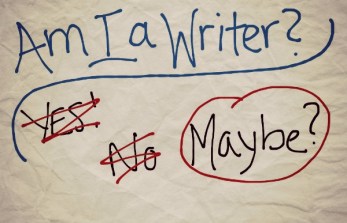
writerAm I a writer? You ever ask yourself that question? I do, and am still hesitant to tell people I write. I’ve never published a book. I’ve never been paid to write anything. As a matter of fact, my work was rejected because it wasn’t good enough. Side note-it really wasn’t good enough-I just didn’t know it at the time. I was too new to the game. I lacked experience and knowledge.

Becoming a writer is a process. You may have the desire and a great idea, but if you’re just starting out, you lack the skills and knowledge necessary to produce a successful piece of work.

Think of it like anything else you try for the first time.  Did you start out knowing how to tie your shoes, ride a bike, or read a book? No! You had to learn. They were skills you developed.

Being bad at something you really want to succeed at is part of the process. If you’re not willing to fail, stink, make mistakes, accept corrections and criticism, or seek counsel from experts, then you’re not likely to progress.–Jerry Jenkins

So when can you call yourself a writer? As soon as you’re willing to jump in and put yourself, or maybe I should say your ego, on the line.

If you’ve failed and are still writing, if you’re scared and are still writing, if you’ve stood up to a stinging critique and made your piece better by applying what you learned, if you’ve stayed at it despite that pervasive fear of failure, you are a writer.–Jerry Jenkins.

I hope this cleared up some questions in your mind. I, as mentioned above,  still struggle with the concept-I AM A WRITER 🙂

-Jan R

Am I A Writer? (Revisited)

I’m Having A Love Affair With ‘Had’-Again!

resumewritingoverusedwordsYesterday I was proofreading a novel I’ve been working on for the last six years. Needless to say, it’s seen many revisions and read-throughs. To my dismay, I ran into a paragraph with one of my favorite words, ‘had’. I’m joking, ‘had’ is not my favorite word, but it is my favorite overused word. I couldn’t believe it. I’d been around this block before and thought the ‘hads’ were under control.

It reminded me of a post I wrote about a year or so ago on my love affair with ‘had’. I decided I needed to revisit the blog and thought I would share it once again as a reminder to those who have been following me for a while. I also hoped it would help those who have recently joined me on this journey.

On more than one occasion I have declared my love affair with the word ‘had’. When you use a word so many times it jumps off the page, you have a problem. It doesn’t matter if the word is used correctly or not. You need to find another way to write the sentence without using ‘the word’. In my case, that word is ‘had’.

What’s wrong with using the word ‘had’ over and over, besides making it an awkward read?

  • If you are using ‘had’ a lot, odds are you have a lot of backstory/info dumping going on, because ‘had’ specifically details things that happened before the current action. In some circumstances, that can seem dull, or like the focus is in the wrong place. Why spend so much time on something that’s not happening right now?
  • Using ‘had’ too much can also indicate you are telling vs. showing.
  • ‘Had’ is also rather formal. People rarely say ‘he had put on weight’- you say ‘he’d put on a bit of weight’ or ‘he was looking fatter’ something to that effect.
  • If it’s overused to the point that it becomes noticeable to the reader. It is bad.

For this blog, I’m focusing on ‘had’ because it’s a problem word for me. Most of us have them. They could be words like but, although, because, however, that, and if you’re writing dialogue–so(another one of my favorites that I know to look out for 🙂

To a certain extent, this is a matter of style. A lot of writers have these little tics. You may find a turn of phrase that you fall in love with, or it may be a word that carries over from the way you speak. It becomes a problem when the word is used so often your reader notices.

Recognizing that you use a particular word frequently, is the first step to improving your writing. Make some adjustments, but don’t get bogged down for a half hour trying to decide if ‘your word’ is really necessary.

The best time to work on these tics is after you’ve written a chunk of prose. Go back through and look for your problem word. You can use the find feature on your computer (Usually ctrl-F or command-F). As you review, check to see if the ‘word’ is really necessary. Read the sentence leaving the ‘word’ out. I think you’ll be surprised at the number of times it actually reads better without the ‘word’. If you have to, rewrite the entire sentence and get rid of the overused word.

Food for thought. I bet I’m not alone in my love affair with certain words 🙂

-Jan R

I’m Having A Love Affair With ‘Had’-Again!

The Title Of Your Novel Is What? (Revisited)

imagesFFT3CQY4I was looking at some of my older blog posts this past week when something jumped out at me.

A while back I wrote a blog titled, “Is your manuscript ready for submission?” It didn’t get much attention, as a matter of fact, only 5 people viewed the blog and 2 of those liked it. Needless to say, I was pretty disappointed. It was a great blog.

Five months later I was busy and didn’t have time to research and write a quality blog. I decided to report, “Is your manuscript ready for submission?” I made a few changes to some of the sentences, so they reflected the new time period, but other than that, the blog read word for word.

I also did one other thing; I changed the title. It was the same blog, only it’s new title was, “Edit, Edit, or Edit?” The blog did exceptionally well for someone who had been blogging less than a year. It had 99 views, 50 likes and 3 or 4 reblogs.

I shared this story to make a point. Your title really does make a difference. It’s the first thing your reader sees or hears about your book/blog/poem. Your title creates anticipation and expectation, or perhaps disinterest. Often your title determines whether or not someone reads your work.

A good title should have the following attributes:

  • Attention-grabbing
  • Memorable
  • Informative (gives an idea of what book is about)
  • Easy to say
  • Not embarrassing or problematic for a person to say aloud to their friends.

Also keep in mind, that the title you start with, may not be the title you end up with. Getting the title right may be the most important book marketing decision you make. Many well-known authors have had their titles changed by publishers and editors before print. Here are a few you may recognize:

F. Scott Fitzgerald/  The Great Gatsby – Trimalchio in West Egg, On the Road to West Egg, Among Ash-heaps and Millionaires, Under the Red, White, and Blue, Gold-hatted Gatsby, or The High Bouncing Lover. I think he made the right choice 🙂

George Orwell/ 1984 – The Last Man in Europe

Ayn Rand/ Atlas Shrugged – The Strike

Harper Lee/ To Kill a Mockingbird – Atticus

Jane Austin/ Pride and Prejudice – First Impressions.

Frances Hodgson Burnett/ The Secret Garden – Mistress Mary

The title matters!!! Get it right!!!

-Jan R

The Title Of Your Novel Is What? (Revisited)

Follow The Rules!

iStock_000013116314_Full-919x1030.jpgOne of my resolutions this year is to get Always and Forever published. It’s a beautiful story with a great premise, but it wasn’t quite ready for prime time 🙂 At least that’s what I was told by one of the agents I queried.

That was my first lesson learned. You can have a great story, but if it’s not written correctly, you can forget it. You have to follow the rules. No grammatical or structural errors, no head-hopping, no information dumps, watch the pacing, transition from scene to scene, and for goodness sake, make sure it’s clear and concise. Nobody wants to read a bunch of written-ese, it doesn’t matter how pretty the sentence sounds with all those extra adjectives. Remember you are writing a novel, not poetry.

I left out a lot of the rules that should be on your checklist when you go back and edit that book, but the previous paragraph was becoming too long and cumbersome, and I think you got the point. And no, the publishers and literary agents do not have editors on standby to do a complete makeover on your story, no matter how good it is. Let’s put that myth to rest.

You’re never too old to learn a new skill. So that’s what I set out to do. If I was going to make my dream a reality, I was going to have to learn the rules and apply them to my story. I have to admit, I thought often about throwing the first very rough draft out and starting over. I’m glad I didn’t.

Don’t give up!!! That was something else the literary agent that I queried told me. You can do this! Most people fail because they stop trying. You never know, you could be one query away from a literary agent excepting your work.

You want to go the e-book route? That’s okay too. I have considered it myself.  But you still have to produce high-quality work. You have to follow the rules. You can put anything you want on e-books if your only goal is to be called author, but if you want to actually sell your books and be successful, you’re going to have to take the time to get that story right.

Something to think about.

-Jan R

Follow The Rules!

Grammar Is A Must-But Lose That English Teacher Writing! (Revisited)

English teacherI wasn’t an English major, but I never had a problem with stringing words together and making coherent, easy to read sentences. I know most of the rules, but I also know those rules are meant to be broken, especially if you are writing fiction.

The purpose of English Teacher grammar is to understand how to create sanitized, standardized, easy to understand, impersonal, inoffensive writing. If you’re looking for a job writing pamphlets for the government, instructional manuals, or news reports, then that’s the way to go.

These rules aren’t meant for fiction. That does not mean your story shouldn’t be grammatically and structurally sound. We are talking about styles here, not mechanics.

Fiction writing is nonstandardized, complex, personal, and occasionally offensive. It is the best way to reach into your readers head and show him your words. In order to bring your voice to life and get your world on the page, you need to say goodbye to English Teacher writing.

Fiction Writing Vs. English Teacher Writing

Fiction Writing-fits the world of the book, the mouths of the characters, and the writer who wrote it.                                                                                                                              English Teacher Writing– incorporates a specific, caricatured, extreme form of writing without regard to the story’s world, characters, or even the writer and what he or she is like.

Fiction Writing changes with the situation.                                                                         English Teacher Writing is unchanged.

Fiction Writing does not look to impress, it’s sole purpose is to present the story.  English Teacher Writing is self-conscious, self-important, and looks and feels forced and outright silly at times.

Fiction Writing is not always pretty, but it always fits the circumstances, characters, and story.                                                                                                                                            English Teacher Writing is always pretty and always smooth, but rarely fits anything.

Example:

Fiction Writing

“Get away! Don’t touch me! Leave me alone!” The girl in the alley curled into a tighter ball, her scarred, skinny arms pulling her knees up against her chest, her eyes white-rimmed, her hair wild.

English Teacher Writing

“Get away from me! Don’t lay a hand on me! Leave me alone!” The girl in the alley, already in a fetal position, pulled her knees tighter to her chest. she wore an expression of dazed panic and radiated the signs of post-traumatic stress disorder.

-Jan R

Grammar Is A Must-But Lose That English Teacher Writing! (Revisited)

It’s All In The Details!

imagesZUMJKFVWWriting fiction can be fun. You get to create your own world with your own characters and you can take your story anywhere you want to go. Right?

Well, that statement is true to a certain degree. You do have a lot of leeway but keep in mind your story has to make sense. It has to be believable to your readers. That’s where research comes in. Your plot may be fictitious but your details had better be correct.

Anachronisms-details out of place and time can break a readers suspension of disbelief if they notice the error. If for example, a character in ancient Egypt consults his watch, a reader would instantly be drawn out of the story and roll his eyes. That is an extreme example but I think it helps you get the point.

There’s no excuse for anachronisms or lack of detail.  Once you know what you are writing about, immerse yourself in the subject. If you want to write about the police, you do a ride along or shadow a precinct. If your novel takes place in a school, interview teachers or volunteer.

You can also use social media to learn about people and places, by watching videos or listening to interviews.  My novel is set primarily in the Carolinas but my main character is deployed to Afghanistan for a short period of time. I’ve never been to Afghanistan and have no intention of ever going there.  For that short but important segment of my book, I watched a documentary with actual footage, interviewed someone who had been at camp leatherneck, and read pages set up on the internet by marines returning from the area. I found the information I needed to make that portion of my story believable through research.

It is always best to set your novels in cities that you know.  A good example of this would be Nicholas Sparks. His books are set in North Carolina. That’s where he lives. He understands the culture and can provide the details his readers expect.

One word of caution is to remember your research and detail are the seasoning for the story, don’t make them center stage. Resist the urge to show off how much research you have done. You don’t want to overwhelm your readers with unnecessary information.

-Jan R

It’s All In The Details!