Contest Are A Definite Yes!!!!!

I entered the ACFW Genesis contest last year. I thought about entering contests in the past but pushed them to the side. They were not my thing. Well, if they’re not your thing, maybe you should reconsider. It was $35 dollars well spent. I got invaluable information, and a chance to get my work in front of professionals in the field.

I’m posting the tally sheet with the middle score and judge who offered the most commentary. Two of the judges really seemed to like my work, and one did not. But I’m leaving that for a future blog post 🙂

The judges looked at the first fifteen pages of the novel and a 100 word summary. Along with the scorecard, they provided commentary on those pages, pointing out the reason I received the scores that I did and ways to improve my writing.

The judges were editors and published authors. They were people with experience. If you’re like me, you’ve had friends and family review your work. While they can tell you if it’s a good story or not, they probably don’t have a clear understanding of the mechanics or expectations a book requires to be published.

The takeaway from their reviews is that it is a great story but needs some polish 🙂

An added bonus is I connected with a Developmental Editor that could help me get the book ready for publication.

Entry: Ariel’s Revenge

Judge #: GHRJ298 | File Name: 000069014.docx

QuestionScoreComment
Does the entry hold your interest to the end?5.00Yes, I found the summary very interesting! Love that it’s a complex adventure with mystery.
Is the point of view consistent? Are POV changes smooth and logical?5.00Yes, each is well-placed.
Do sensory details (sight, sound, touch, smell, taste) enhance the scenes?4.00It is mostly smell and feel.
Is there a sense of time and place?4.00I can tell by the way they speak and transportation that it’s like the 1700s, but I’m not sure when exactly.
Do the scenes move the story forward?3.00Yes, but Ariel reflects and comments too much and repeats those that they slow down the story and tension. I have pointed this out in the Word doc.
Is there an opening line that immediately hooks the reader into the story?5.00Yes, I like that it starts with Ariel speaking and it gives mystery to why she’s doing what she’s doing that I want to keep reading to find out.
Is the writing fresh and original?4.00Mostly, it just gets weighed down by all the commentary and repetition. I’d like to see some beautifully written lines. But the POVs do have personality.
Does the writer utilize showing and telling?4.00Mostly so.
Is the author’s voice distinct?4.00Mostly because of the strong personalities of POVs.
Do you get a strong sense of what the story will be about?5.00Yes, and not just because of the summary. I can tell her plans won’t work out the way she’d like, that Blake will butt heads with her but they will fall in love, and that her step-uncle will be hot on her trial and catch up to her and reveal who her father really was and how he was murdered.
Does the author have a command of the elements of grammar, punctuation, and spelling?5.00Yes. There were only like 3 places that needed fixing.
Does the manuscript reflect Christian worldview? Are the story and plot elements compatible with the genre category?5.00Yes, although, so far, it is only Ariel who prays and exudes Christian-like attributes.
Is the dialogue between characters strong, revealing plot and emotion in a way that creates tension? Does it help move the story forward?4.00Yes, but I’d like for Ariel to have someone like her handmaid help her escape just so she has some real dialogue and someone to talk to. I get that she’s on her own, but her scenes feel very isolated.
Are the characters’ voices distinct and appropriate for the setting (time period or scenario?)4.00Mostly so. They each speak in a way and use terms for that time period. There were only a few lines that didn’t seem to fit the way they are worded.
Is the narrative necessary and well-placed with the dialogue?5.00Yes, each POV comes across as well-placed with strong motives and something to add to the story.
Are character motivations powerful enough to create sufficient conflict?4.00Yes, however, I know the most about the antagonist, her step-uncle, in what he wants and why and how he’s going to get it and what stands in his way. I only know that Ariel doesn’t want to marry him but not really what she thinks about marriage or what she wants for herself or even how she plans to clear her father’s name. I know that Blake wants to avenge his fallen comrades and get to what really happened that night, but so far I do not get the sense from what I know from the summary that he’s a rake. I’m not sure what he wants exactly or why he’s a spy.
Is the tension and conflict discernable enough to tell what the story will be about?4.00Yes, although if Ariel, Blake, and Charles’s motives were clearer, we’d have more specific conflicts.
Is the goal and purpose of the main character identifiable? Do you get a sense of what he/she wants?4.00Mostly, see my explanation above about their motives.
Do secondary characters contribute to the story?4.00Yes, they add important dialogue and tension.
Do characters’ emotions seem believable by providing understandable motive?5.00Yes, I get a sense of urgency from Ariel, sadness from Blake, and anger from Charles.
Total Score:87.00 

Hope this helps someone.

-Jan R

Contest Are A Definite Yes!!!!!

Surviving The Sting (Repost)

I write a lot about rejection because it’s a part of life if you’re an unpublished author seeking a literary agent or publishing contract. Many would-be authors allow a simple rejection to end their attempts at writing. Their thought – I must not be good enough. Well maybe that’s true, but odds are it is not.

Manuscripts are rejected for numerous reasons, and many have nothing to do with your work. So what are you supposed to do if you receive a rejection?

  • Admit it hurts.
  • Allow yourself time to grieve, but never take more than a week.
  • Nurture your artist. Read a good book, take a walk, eat some chocolate… TLC is a good thing, but don’t wallow in self-pity.
  • Share your news and disappointment with close friends and family who will understand and offer encouragement.
  • If you must, write a rebuttal to the editor or literary agent, but don’t send it. Tear it up and throw it in the trash. Your only response should be a thank you for their time and consideration.
  • Just because your work wasn’t right for that particular editor or agent, doesn’t mean it won’t be right for another.
  • Remember just because it isn’t ready for publication, doesn’t mean you can’t make it publishable.

A writer not being able to deal with rejection, is like a doctor not being able to deal with death. It’s going to happen, and like successful authors, you will have to learn to live with it.

-Jan R

Surviving The Sting (Repost)

Be Definite, Specific, and Concrete – Revisited

Don’t you hate it when you’re talking to somebody and they are all wishy-washy? Why can’t they just come out and say it? Most of the time you know what they are getting at and want to spit it out for them. Well, the same thing goes for writing.

The surest way to gain and hold a reader’s attention is through definite, specific, concrete writing. Don’t make me as a reader try to figure out what you are trying to say. It’s not my place to write your novel. I just want to read and enjoy it. Allow me to enter the realm of your imagination without trying to figure out every little detail myself.

Examples:

The weather was dreadful. vs. It rained every day for a week.

He was happy to take possession of his well-earned reward. vs. He smiled as he placed the coin in his pocket.

I don’t think I have to point out which sentence in these examples is the more specific and concrete. Also, you may have noticed when I went concrete, I lost the passive “be” verbs 🙂

Best-selling authors are effective because they deal in particulars and report details that matter in a definite, specific, concrete way.

Just something to think about.

-Jan R

Be Definite, Specific, and Concrete – Revisited

Write For the Masses!

Why do so many perfectly nice people make such pompous asses of themselves when they sit down at a typewriter? – Dean R Koontz.

Even if you’re not a fan of Dean Koontz’s, I would recommend finding a copy of his book, How To Write Best Selling Fiction. You won’t find it in book stores. It’s out of print but still considered one of the best resources for new writers. Check used book stores, or go online ( That’s where I found mine). Now back to the pompous asses.

What Mr. Koontz was getting at, was new authors and not so new authors sit down and try to write  A Tale Of Two Cities, The Scarlett Letter, or Moby Dick. The idea of sitting down and attempting to write ‘important and lasting literature’ is pretentious and self-defeating. Keep in mind, these books are seldom read these days.

If an author ignores the masses and refuses to write a novel with popular appeal, if he chooses to live solely or primarily by the grace of academe, then he will die by academe.

What’s the problem with Academe? The standards are considerably less stringent.

  • Academe views a plot as having little or no use. It is restrictive, impacting the writer’s imagination.
  • Academe does not worry about pace or filling a story with action.
  • Literary novels seldom have genuine heroes and heroines. The characters are almost always weak, flawed, and unlikeable.

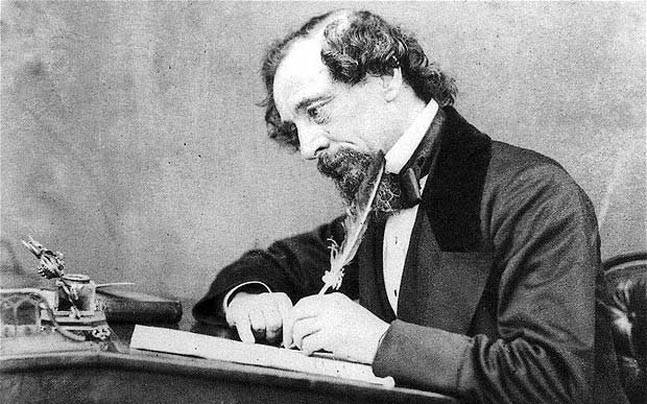
Charles Dickens was considered a hack in his day. He was paid to thrill the masses by producing melodrama. His stories were entertaining and relatable.  They have been kept alive for so long by the masses, that the academe finally had to admit that he was a great writer.

Remember, the masses read storytellers. They don’t read academically-oriented novelists. They want stories that speak to them.

When you write to please yourself, you are writing to please an individual. When you write to please an audience, you are writing to please a lot of individuals. When you write to please academe, you are writing to please an institution.

Something to think about.

-Jan R

Write For the Masses!

Rewrite-itis – It’s Real!

I got tickled when I first saw this word. I have to admit, I have dealt with rewrite-itis. What is it? It’s a severe condition that affects both published and unpublished writers according to The Everything Guide To Writing A Romance Novel. It means you are unable to call a book, chapter, or even a scene finished. So what causes the condition? For me, it is definitely a fear of failure.

What are the symptoms?

  • Rewriting the same scene, chapter, or book more than ten times.
  • Never finishing a book, because you keep going back to polish the first chapter.
  • Constantly having others read your book with the hopes they will give you some revisions to do.
  • Taking your finished manuscript to the post office to mail, only to return home with it in hand for further revision.

So, what do you think? Do you have a case of rewrite-itis?

Rewrite-itis has a close cousin called Research-itis. Maybe you have that one too. True research is crucial to any novel, but an author needs to know when to say, “Enough is enough.”

So what is the cure? Set goals and deadlines and stick to them. Remember your manuscript is your baby, but sooner or later you have to turn it loose.

Just something to think about.

-Jan R

Rewrite-itis – It’s Real!

Just Write!

cha_647_020717110811It seems like it’s been a long time since I truly sat down to write. I’ve been doing posts, but mainly older blogs revisited or simple quotes.

My life has been hectic over the last year or so, and it’s been maybe a little too easy for me to say, “I just don’t have the time to write”. I allowed one day to grow into two days and then three and on and on and on.

Before I knew it, I was barely writing at all. I now fully understand why many professional writers encourage you to write every day.

We all have days or personal situations to arise that hinder us from getting to the keyboard. I’m not condemning anyone for taking a needed day off. Life happens!

The problem I had, was the longer I went without writing, the easier it became to put it off. I had become so engulfed with what was going on around me, that I had pushed writing to the side.

Something that I truly enjoyed doing had become an afterthought. Should I write today or not. The answer was usually not.

I am back in the game and wanted to warn those who follow my blog, listen to the experts.

Write! Write! Write! Hopefully, you got that. Just Write!

-Jan R

Just Write!

Pique Their Interest!

1e7cba28f25210164154825f3d16c176Ninety-nine out of one-hundred new writers make the same major mistake. I know I did.  They fail to plunge their hero or heroine into trouble at the beginning of the novel. If you don’t pique the interest of your reader from the start, they won’t make it through the first chapter.
This was one of the issues with my novel. It started out slow. I thought I needed to provide some background information prior to introducing conflict. If my reader would hold on for the first few chapters, they would get to an amazingly interesting story.

Well that might have been true, and I may have been exaggerating a little, but the fact that I failed to start the story with interest and intrigue, resulted in rejections of my novel.

Editors and agents are readers too. When they read your submission, they expected to be gripped and held within the first three pages. If you don’t grab them in that first one thousand words, your manuscript is tossed to the side.

What! You can’t believe they would do that? It’s a great novel and they just need to hold on a little longer. Well it may be a great novel, but they will never know. You have to start out with the good stuff and not expect them to navigate the swamp to get to it.

Published authors think it’s a mistake to believe you have three pages to get your reader’s attention. A wise novelist will approach each book with the goal of proving himself within the first page.

Something to think about.

-Jan R


Pique Their Interest!

Edit, Edit, or Edit?

 edit-icon-hi

I know I’ve posted this before, but it’s been a while, and I thought it was worth being revisited. When you’re a newbie like I was, you don’t even think you have to edit-much. The publishing company has people that will go through and correct your work, making you look like a pro, right?
About a year ago, I ran into an article in Writers Digest that talked about the different types of editing. Yes, there are different types, and as a novelist, you need to know what they are.

Developmental Edit – better known as the content editing, story editing, structural editing, or substantive editing. This edit looks at the big picture of your novel and focuses on:

  • character arcs/development
  • pacing
  • story structure
  • pot holes or inconsistencies
  • strong beginning, middle and end
  • plausibility/believability
  • clear transitions
  • point of view
  • showing vs. telling
  • dialogue

Copy Edit – is the one most of us think of when we hear edit. It is completed after the developmental edit and cleans things up. This edit is the line by line with a focus on:

  • grammar
  • punctuation
  • spelling
  • redundant words
  • inconsistencies/continuity errors
  • awkward sentence structure

The proofread- I never thought of a proofreader as an editor, but in all reality he is. The proofreader checks your manuscript for lingering errors, missed commas, and typos. It may be tempting to skip this step or do it yourself. Keep in mind, you’ve read the book so many times you will be blind to many lingering errors. You need an unfamiliar eye.

I’m not sure where you are in the writing process, but you do need to know the proper steps to take before submitting your work. Remember as stated above, you don’t see the errors. You are so familiar with your work the errors become invisible. Your brain actually fills in the holes as you read.

I didn’t have this information and submitted my work to several different agencies after I ‘edited’ it and had a few friends read through it. Needless to say I got nothing but rejections. I followed up on suggestions, and that’s when I realized just how bad the manuscript was. I couldn’t believe I sent such shoddy work to an agent. I was embarrassed and glad I hadn’t met the agents in person.

Hope this helped!

-Jan R

Edit, Edit, or Edit?

Five Tools For Showing

screen-shot-2013-11-20-at-3-24-03-pmSpoiler alert! If you were one of the eight people that read this blog two weeks ago, you are experiencing deja vu. I thought it was a good blog, but one thing I’ve learned over the last two years, is the title can make you or break you.

It was initially titled ‘Show Don’t Tell’. I guess that sounded kind of boring, or maybe just to repetitious. Goodness knows how many ‘Show Don’t Tell’ blogs are out there. So I’m reposting it under a new name 🙂

Here goes!

I can’t count how many times I’ve heard the phrase-show don’t tell. You probably saw the title and questioned even reading this blog. Everybody knows you are suppose to show and not tell. You want the reader to experience the scene as if they are one of the characters walking through the story beside the hero/heroine.

If you’re like me, you know what you’re suppose to do, but you don’t really understand what to do to make it happen. How do I show and not tell? It’s a lot harder than it seems. Once you start writing that novel, you’ll understand what I’m talking about.

There are 5 tools for showing:

  • Dialogue
  • Action
  • Interior dialogue
  • Interior emotion
  • Description-Sensory

If you’re doing anything that’s not one of these 5 things, you’re not showing.

Why is it so important to show versus tell? Showing provides your reader with a powerful emotional experience. If you want to be a best selling author, that’s what you have to do.

It doesn’t matter how great you do everything else in that novel, if you’re missing that emotional experience, you lose. If everything you did is bad, but you have a great emotional experience, you may still win.

It all comes down to the take away. Every great novelist will tell you, you have to give your reader that powerful emotional experience, or they wont be coming back.

-Something to think about 🙂

-Jan R

Five Tools For Showing

Strong Nouns?

scan0006We’ve talked about weak and strong verbs, but did you know the same holds true for nouns? I never really thought about it, until I took an online class that talked about strong and weak nouns. My first thought on weak nouns; the instructor has to be referring to pronouns. Well he wasn’t and that is a subject for another day.

Strong nouns can help us picture what/who the writer is talking about immediately. He doesn’t have to describe the person, place, or thing. We get it. The more specific the noun, the clearer the picture.

If I wrote city, dog, or car in a sentence, you would picture your version of a city, dog, or car in your mind. While these nouns aren’t bad they could be made stronger. An upgrade would be; New York City, German Shepherd, or Ford Mustang. While you may want to make that mustang candy apple red, it doesn’t need much more detail to get a clear picture of the author’s intent.

Names are also strong nouns. Cinderella, Clark Kent, and Harry Potter, all conjure up strong images in your mind.

Weak nouns require additional information to create a clear image in your mind.  The weaker the noun, the more information you will need to provide.

Most weak or dead nouns end in ‘tion’. Examples would be publication, devotion, recitation, adaptation.

These nouns tend to way your sentences down and as stated above, require more detail to produce a clear image. The best way to address these weak nouns, is to change them back into verbs, and rework the sentence.

The couple’s separation occurred at the end of the year.

The couple separated at the end of the year.

Just something else to think about while you’re writing that best selling novel 🙂

-Jan R


Strong Nouns?