Fight That Inner Critic!

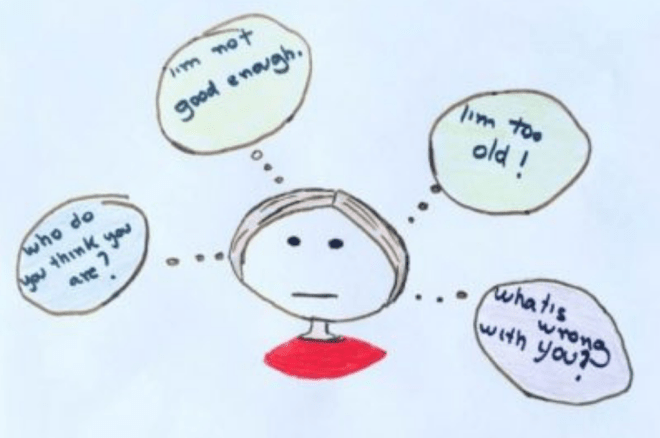
You have to fight that inner critic. You know the one that tells you your work is not good enough. No one wants to be humiliated or rejected. Your inner critic will paralyze you by telling you just how bad your work really is (even if it’s not).  This is another obstacle that I have had to overcome. It hasn’t gone away; I’ve just learned to deal with it.

I recall doing a Bible study on the battlefield of the mind. Though its primary purpose is dealing with spiritual warfare, it also relates to many of the issues that we deal with in our everyday lives. Our mind is a battlefield. In writing for example, all of us worry about looking dumb and never getting published. Fiction writers make a business out of being scared and not just looking dumb.

It took me six months from the time I started writing a novel, to tell my husband what I was doing. When I finally told him, I was a mess. I knew he would be excited for me and encourage me in my endeavor, and I didn’t want to let him down.

For the longest time I’ve treated my writing as a hobby. That’s not a mindset that will get you published. When I finished and sent out my first novel to a few agents, I was more than a little anxious. The first few rejections confirmed my beliefs. I just wasn’t good enough.

Note that I said I wasn’t good enough. Well, that’s not exactly true. The truth is the novel wasn’t good enough. It was filled with grammatical and structural errors, there was some serious head hopping going on, and my on-the-nose dialogue was all but bringing the story to a complete halt. If you are not familiar with these terms you should be. Go back and read the posts I have written addressing them.

I don’t know that the inner critic will ever go away. So how do you combat it? You keep moving forward and growing in your craft. Don’t stop. I still question my writing abilities, but I know that I know that I know, that they are a lot better than they were when I submitted my first novel. I’ve learned the hard way and hope to help you avoid some of my pit falls.

Something to think about!

-Jan R

Fight That Inner Critic!

Your Inner Critic is Your Worst Enemy

If you are constantly looking over your shoulder, you may not finish your novel. You will be too busy battling the thoughts of it not being good enough. No one wants to be humiliated or rejected. Your inner critic will paralyze you by telling you just how bad your work really is (even if it’s not).  This is another obstacle that I have had to overcome. It hasn’t gone away, I’ve just learned to deal with it.

I recall doing a Bible study on the battlefield of the mind. Though its primary purpose is dealing with spiritual warfare, it also relates to many of the issues that we deal with in our everyday lives. Our mind is a battlefield. In writing for example, all of us worry about looking dumb and never getting published. Fiction writers make a business out of being scared and not just looking dumb.

It took me six months from the time I started writing a novel, to tell my husband what I was doing. When I finally told him, I was a mess. I knew he would be excited for me and encourage me in my endeavor, and I didn’t want to let him down.

For the longest time I’ve treated my writing as a hobby. That’s not a mindset that will get you published. When I finished and sent out my first novel to a few agents, I was more than a little anxious. The first few rejections confirmed my beliefs. I just wasn’t good enough.

Note that I said I wasn’t good enough. Well that’s not exactly true. The truth is the novel wasn’t good enough. The fact is, it was filled with grammatical and structural errors, there was some serious head hopping going on, and my on-the-nose dialogue was all but bringing the story to a complete halt. If you are not familiar with these terms you should be. Go back and read the posts I have written addressing them.

I don’t know that the inner critic will ever go away. So how do you combat it? You keep moving forward and growing in your craft. Don’t stop. I still question my writing abilities, but I know that I know that I know, that they are a lot better than they were when I submitted my first novel. I’ve learned the hard way and hope to help you avoid some of my pit falls.

Some professionals recommend the following exercises to help you move forward  when the inner critic tries to stop you.  I do my own variation but never really thought about it.

  1. The five-minute nonstop-Write for five minutes nonstop without thinking about what you’re writing.
  2. The page long sentence-Choose something to describe and write a page long sentence about it.
  3. The list maker-Whenever you’re stuck for an idea make a list. Brainstorm the ideas and use the best.

I just pound away at the keyboard and concentrate on what I’m writing about until inspiration kicks in and it will. Just don’t quit.

-Jan R

Your Inner Critic is Your Worst Enemy

Surviving The Sting (Repost)

I write a lot about rejection because it’s a part of life if you’re an unpublished author seeking a literary agent or publishing contract. Many would-be authors allow a simple rejection to end their attempts at writing. Their thought – I must not be good enough. Well maybe that’s true, but odds are it is not.

Manuscripts are rejected for numerous reasons, and many have nothing to do with your work. So what are you supposed to do if you receive a rejection?

  • Admit it hurts.
  • Allow yourself time to grieve, but never take more than a week.
  • Nurture your artist. Read a good book, take a walk, eat some chocolate… TLC is a good thing, but don’t wallow in self-pity.
  • Share your news and disappointment with close friends and family who will understand and offer encouragement.
  • If you must, write a rebuttal to the editor or literary agent, but don’t send it. Tear it up and throw it in the trash. Your only response should be a thank you for their time and consideration.
  • Just because your work wasn’t right for that particular editor or agent, doesn’t mean it won’t be right for another.
  • Remember just because it isn’t ready for publication, doesn’t mean you can’t make it publishable.

A writer not being able to deal with rejection, is like a doctor not being able to deal with death. It’s going to happen, and like successful authors, you will have to learn to live with it.

-Jan R

Surviving The Sting (Repost)

Don’t Give Up – Repost

I write a lot about perseverance, because from everything I’ve read, it’s the one characteristic all published authors have in common. They don’t give up! They take their day or two or however long they need to get over the rejection from yet another agent, and then they dust themselves off and get back to work.

Don’t take rejections personal. The agent’s/publisher’s decision is business related, and truth be known, it may have nothing to do with your manuscript. If there are no obvious flaws with your work, send it out to other agents. Just because you were rejected by one agent, doesn’t mean you will be by the next.

The New York Times best selling author of “The Help”, was rejected by 60 different agents. You read that right. Her 61st attempt was a success. The book was on the best seller list for the entire year and eventually made into a movie.

So why do books get rejected?

Maybe your manuscript just isn’t ready.

  • The author can’t format, spell, and doesn’t understand grammar. The result is  incomprehensible sentences that leave the reader confused, pulling them completely out of the story.
  • Dragging dialogue, head hopping, poor character development, plot holes, info dumping…
  • Maybe your work isn’t that bad and with competent editing, it’s publishable. Staff editors don’t have the time and sometimes don’t even have the necessary experience to clean your work up. Hire an editor before you send your manuscript out for consideration if self-editing isn’t an option.

Maybe your manuscript is ready but….

  • The agent/agency has an abundance of the genre you just submitted, and they are not accepting anything new in that genre until their inventory decreases.  You really weren’t a fit for what they were looking for.
  • Maybe the agent/publisher reviewing your work is in such a bad mood, they would turn down  Nicholas Sparks “The Notebook”,  even if it was handed to them on a silver platter – twenty four did. Agents make mistakes.
  • Maybe the storyline/subject matter you’re writing about isn’t selling right now. Zombie books are getting old. People want something new.
  • The publisher could literally be in a cash crunch, and no matter how great your book is, they can’t purchase it right now. They have a freeze in place until some books start selling, and they can build up their reserves.

What I’m trying to say, is there are a lot of reasons books get rejected, and they may have nothing to do with your work. I’ve read more than once, that perseverance is the key.

If you have a great, publishable piece of work, don’t give up, submit it to other agencies for review. If you have less than perfect work, roll up your sleeves and get to work. Don’t expect someone to fix it for you. They won’t.

It might be time to hire that editor, but don’t give up!!!

-Jan R

Don’t Give Up – Repost

Write! Write! Write!

It seems like it’s been a long time since I truly sat down to write. I’ve been doing posts, but mainly older blogs revisited or simple quotes.

My life has been hectic over the last year or so, and it’s been maybe a little too easy for me to say, “I just don’t have the time to write”. I allowed one day to grow into two days and then three and on and on and on.

Before I knew it, I was barely writing at all. I now fully understand why many professional writers encourage you to write every day.

We all have days or personal situations to arise that hinder us from getting to the keyboard. I’m not condemning anyone for taking a needed day off. Life happens!

The problem I had, was the longer I went without writing, the easier it became to put it off. I had become so engulfed with what was going on around me, that I had pushed writing to the side.

Something that I truly enjoyed doing had become an afterthought. Should I write today or not. The answer usually was not.

I am back in the game and wanted to warn those who follow my blog, listen to the experts.

Write! Write! Write! Hopefully, you got that. Just Write!

-Jan R

Write! Write! Write!

Set Realistic Expectations!

You’re an aspiring author. Your ultimate goal is to find a great agent and get published. Who doesn’t want to be the author of that blockbuster book/movie of the year with a million-dollar payout?

Newbies have a tendency to set unrealistic expectations, and I can attest to this from personal experience. I’m not saying you won’t achieve your goal, but odds are, you’re going to have to start at the bottom and work your way up like the rest of us.

I’m not trying to discourage you. You can do this. I’m just trying to help you set realistic goals. I want you to be prepared not only for successes but the failures that you will most likely incur along the way.

There are some things you can and should be doing as you build your platform and prepare that first novel for publishing.

  1.  Get your life out of the way. You don’t have control over everything that goes on around you. We all have situations that arise. Don’t allow them to impede your daily writing time.
  2.  Find a trusted friend or spouse who will listen and respond intelligently. You need a cheerleader/an accountability partner.
  3. Until you become successful, write in one genre. Once you’ve achieved success, you can spread your wings and venture into different areas.
  4.  Don’t be picky about where you get published initially. Use your experience and publications to build on new ones. You will get there.
  5.  Learn what’s selling. You want to cater to your customers.
  6.  Develop tough skin. You will probably hear a lot of things you don’t want to hear. Everybody has an opinion. Let it roll off your back!
  7. If a bad review holds merit, adjust your writing and admit your mistakes. This is a learning process. You won’t get everything right the first time.
  8. Don’t give up! The number one characteristic of successful authors is as you probably guessed, they’re persistent. Don’t allow a bad review or hateful word to get in your way.

Some things to think about 🙂

-Jan R

Set Realistic Expectations!

Remember – Your Mind Is a Battlefield

If you are constantly looking over your shoulder, you may not finish your novel. You will be too busy battling the thoughts of it not being good enough. No one wants to be humiliated or rejected. Your inner critic will paralyze you by telling you just how bad it really is (even if it’s not).  This is an obstacle that I have had to overcome. It hasn’t gone away, I’ve just learned to deal with it.

I remember doing a Bible study on the battlefield of the mind. Though it’s primary purpose was dealing with spiritual warfare, it also related to many of the issues that we deal with in our everyday lives. Our mind is a battlefield. In writing, for example, all of us worry about looking dumb and never getting published. Fiction writers make a business out of being scared, and not just looking dumb.

It took me six months from the time I started writing my first novel, to tell my husband what I was doing. When I finally told him, I was a mess. I knew he would be excited for me and encourage me in my endeavor, and I didn’t want to let him down.

For the longest time, I treated my novel as a hobby. That’s not a mindset that will get you published. When I finished and sent it out to the first few agents, I was more than a little anxious. The first few rejections confirmed my beliefs. I just wasn’t good enough.

Note that I said, “I wasn’t good enough.” Well, that’s not exactly true. The truth is the novel wasn’t good enough. It wasn’t ready. The fact is, it was filled with grammatical and structural errors, there was some serious head hopping going on, and my on-the-nose writing was all but bringing the story to a complete halt. If you are not familiar with these terms you should be. Go back and read the posts I have written or surf the web.

I don’t know that the inner critic will ever go away. So how do you combat it? You keep moving forward and growing in your craft. Don’t stop writing.

Remember all professions require training and experience. A brain surgeon didn’t just wake up one day and start operating on patients, nor did a successful author sit down and start producing best sellers.

I still question my work at times, but I know, that I know, that I know, that it’s a lot better than it was when I first started on this journey.

-Jan R

Remember – Your Mind Is a Battlefield

Will Your Manuscript Be Rejected?

I have to admit I’m wondering this myself right now. I submitted my second novel for consideration of representation a little over a month ago. I do multiple submissions after reviewing the biographies and type of work each of the literary agents represents, and like you, sit back and wait anxiously. Well, that isn’t totally true. I do try to busy myself with other projects while I wait, but the thoughts are never far from my mind.

After submitting the initial queries, I got a request for a full proposal. This was something I’ve never done before, at least not in the detail that the agent asked. I wrote a blog on this a couple of weeks ago in hopes of giving you a heads up. At any rate, I’m on the edge of my seat waiting for a response. The proposal was a rush job as I thought he wanted it immediately, but apparently not. I suppose I should have asked when he needed it. If I had just a few more days, it would have been so much better. Yes, I battle the same thoughts and second guesses you do 🙂

Enough babbling now let’s get to the blog.

This is one of my favorite blogs. I wish I could claim it, but the post was actually written by Jerry Jenkins. I love his work. If you haven’t visited him, I would highly recommend you do. He did put a disclaimer at the end of this article saying it was ok to share with friends, so I am in no way stealing his work. Hope this helps someone and hope you consider visiting his site.

It doesn’t sound fair.

It doesn’t seem right.

But here’s a dirty little secret of the writing life you need to hear:

Any veteran editor can tell within two minutes whether they’re going to reject your manuscript.

It takes longer to decide whether they’ll recommend it for purchase, of course, but—sad to say—it can, and often does, go into the reject pile just that fast.

“What?” you say. “Before I’ve had a chance to wow them with my stupendous villain? Before my mind-blowing twist? Before my plot really takes off?”

Sorry.

And I’m not exaggerating.

Why?

Because the competition is so stiff and editors have so many manuscripts to read, you have only nanoseconds to grab them by the throat and hang on.

Every writing mentor hammers at this ad infinitum: Your editor is your first reader.

Every word counts. You get one chance. You must capture them from the get-go.

Am I saying editors look for reasons to reject your work?

No, no, a thousand times no! They’re looking for the next Harry Potter!

Editors want you to succeed!

Then how can they know so quickly that your book won’t cut it?

In my lifetime in the business I’ve heard dozens of reasons, but let me give you my personal top five from my experience as both an editor and publisher:

  1. Throat-clearing

This is what editors call anything that comes before a story or chapter finally, really, begins. It usually consists of a page or two of scene setting and background. Get on with the story. Get your main character introduced, establish and upset some status quo, then plunge him into terrible trouble that reveals the engine of your story. Is it a quest, a journey, a challenge, what?

There’ll be plenty of time to work in all those details that seemed so important while you were throat-clearing that would have cost you a sale. For now, your job is to start with a bang.

  1. Too many characters introduced too quickly

I’m usually wary of generalizations or hard and fast rules, but almost any time I see more than three characters within the first few pages, my eyes start to swim. If I feel like I need a program to keep track of the players, I quickly lose interest.

Your reader is trying to comprehend the story, and if you ask him to start cataloging a cast of characters right away, you risk losing him. Keep things simple until the story has taken shape.

  1. Point of View violations

Maintain a single Point of View (POV) for every scene. Violate that cardinal rule and you expose yourself as an amateur right out of the gate. Beginners often defend themselves against this criticism by citing classics by famous authors or citing J.K. Rowling, the exception who proves the rule.

Times change. Readers’ tastes evolve. This is the rule for today, and it’s true of what sells.

  1. Clichés, and not just words and phrases

There are also clichéd situations, like starting your story with the main character waking to an alarm clock, a character describing herself while looking in a full-length mirror, future love interests literally bumping into each other upon first meeting, etc.

Also avoid beginning with an evocative, dramatic scene, and surprise, surprise, the main character wakes up to discover it’s all been a dream. There’s nothing wrong with dreams, but having them come as surprises has been used to death and takes all the air from the balloon of your story.

It’s also a clichĂ© to have your main character feel his heart pound, race, thud, or hammer; and then he gasps, sucks wind, his breath comes short
 If you describe the scene properly, your reader should experience all that and you shouldn’t have to say your character did. Put your character into a rough enough situation, and the reader will know what he’s feeling without having to be told—and hopefully, he’ll share his distress.

  1. Simply bad writing:
  • Written-ese

This is what I call that special language we all tend to use when we forget to Just Say It. I recently edited this sentence from a beginner: “The fire drop from the pommel of Tambre’s sword shot past the shimmering silver mist of her involuntary dispersal.”

I had to read a few more paragraphs to have a clue to what it even meant. That’s written-ese.

Hollywood screenwriters coined this term for prose that exactly mirrors real life but fails to advance your plot. There’s nothing wrong with the words themselves, except that they could be synopsized to save the reader’s time and patience. A perfect example is replacing all the hi’s and hello’s and how are you’s that precede meaningful dialogue with something like: “After trading pleasantries, Jim asked Fred if he’d heard about what had happened to Tricia. ‘No, what?’”

  • Passive voice

Avoid state-of-being verbs. Change sentences like “There was a man standing
” to “A man stood
”

  • Needless words

The most famous rule in the bible of writing hints, The Elements of Style, is “Omit Needless Words,” which follows its own advice. This should be the hallmark of every writer.

Example: The administrative assistant ushered me through the open door into the CEO’s office, and I sat down in a chair across from his big, wood desk.

Edit: Obviously, there would be a door. And even more obviously, it would be open. If I sat, I would sit “down,” and naturally it would be in a chair. Because I’m seeing the CEO, a description of his desk would be notable only if it weren’t big or wood.

Result: The administrative assistant ushered me into the CEO’s office, and I sat across from his desk.

Re-examine these 5 common mistakes, and study more self-editing tips here

-Jan R

Will Your Manuscript Be Rejected?

YOUR BIGGEST OBSTACLE IS YOU!

Writing can be both rewarding and frustrating. I’ve been around the block a few times and have had my share of rejections. Don’t judge me, get used to it. If you are out to write that bestselling blockbuster, and know I’m cheering for you, you’re going to have to develop some tough skin.

I’ve stated in previous blogs, that there are a lot of reasons why your manuscript was passed over, and many have nothing to do with the manuscript itself, but I thought it would be nice to hear from an agent.

You just submitted a query for an awesome piece of work. You’ve had several agents request full manuscripts and one even gave you a call, but just like that it was over. What happened?

You may have submitted an amazing piece of work, but the submission before yours hit the ball out of the park, and the one after yours did likewise. Those two works raised the bar and affected the impact you novel had on the agent.

Maybe you presented a very well written novel, but the market is saturated with the genre you are offering. Agents may have manuscripts for the particular genre you submitted on hold for the next few seasons.

You made it to the personal phone call. Where did you go wrong? Maybe you were missing the synopsis or logline for your next novel. Agents don’t want to just sell a book, they want to represent a career. Another guess would be that you were resistant to editorial thoughts presented by the agent.

While all of the aforementioned obstacles are factual, they are not your biggest obstruction. What’s the biggest obstacle to you getting published? It’s you!!!!!

The biggest obstacle one can have in getting a novel published is quitting. If you’re going to do a little bit right, have that little bit be the fact that you don’t quit. – Barbara Poelle, agent

Something to think about.

-Jan R

YOUR BIGGEST OBSTACLE IS YOU!

Are You the Tortoise or the Hare?

I read an article recently that described openers and finishers. I had never really thought about it, though if I had to identify with one of the two, it would definitely be finisher.

An opener is someone with grand ideas, too many grand ideas. They get bogged down and jump back and forth between projects, never to finish one, or they allow themselves to become discouraged and quit before crossing the finish line.

A finisher as you may have already guessed, finishes what they start. They stick to one project at a time and move at a slow consistent pace until they have completed their work or met their goal.

I usually have two projects going at one time. The primary work in progress, and the secondary project, that I plan to continue as my next novel. This allows for a break when I just need to get away from my primary work, and it allows me to continue moving forward. If other great ideas jump into my head while I am working on these two projects, I simply jot them down, so I don’t forget. I can pick them up later.

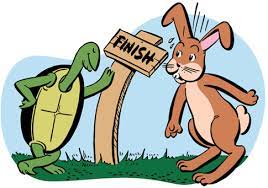
When I read this article, I couldn’t help but think about ‘The Tortoise and The Hare’.  The Hare was enthusiastic and fast, but he allowed distractions (other projects) to get in his way, and he looked for shortcuts to help him catch back up. Of course, we all know how that went.

The Tortoise on the other hand, stood at the starting line with one thing in mind, finishing the race. He didn’t try to take any shortcuts, which could result in inferior work. He was in for the long haul. He wasn’t giving up.

Since my adventure began, I have read numerous stories from well-known authors about their journeys to becoming published.  The one common theme in all of their stories was perseverance. I’ve put so much time and effort into my craft, I can’t help but feel discouraged at times. It helps and encourages me to know that I am not alone but in great company.

If you have a high quality, marketable piece of work, persevere and you will eventually find an agent and get published. Kathryn Stockett wrote, ‘The Help’ over a five-year period of time, then had three and a half years’ worth of rejections-60 in all. It was agent number 61 who took her on. The book spent 100 weeks on the best seller list.

The agent that took the time to work with me, always ended her critique s with the phrase don’t give up.

We all know who won that race. Are you the Tortoise or the Hare?

Something to think about.

Are You the Tortoise or the Hare?