Are You Saying What You Think You’re Saying?

If you find yourself reading a sentence more than once, or adding information for clarification, that’s a red flag.

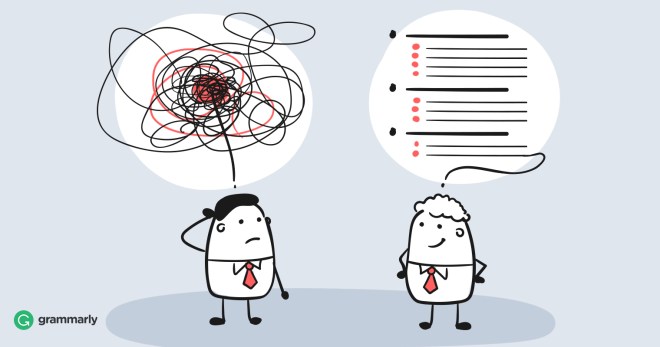
Your reader has less information than you. If you are confused by your work, you can only imagine what your reader is going through. I love a great mystery, but my writing shouldn’t be one.

It’s not the reader’s job to interpret your work. You should be clear and concise.  If your writing causes a pause something isn’t working.

I have to admit I love dangling modifiers though. They are some of my favorite mess-ups. I even wrote a blog entitled ‘just for laughs’. They are funny, but not in the middle of a serious scene. You don’t have to try to hard to imagine how quickly they can pull your reader out of their suspension of disbelief.

Dangling modifiers occur when the modifier has no clear referent and twist the meaning of your sentence in an unintended fashion.

  • I saw a tree walking down the street. Who knew a tree could walk? 🙂
  • I fed the children sandwiches in Ziplock bags. How did those children get in the bags?:-)

Misplaced modifiers are similar but not nearly as fun to read. As with dangling modifiers, there is no clear referent, which can lead to a clumsy and confusing sentence.

  • Lucy carefully studied the situation.                                                                                                   Lucy studied the situation carefully.

Another mistake new writers make that isn’t always as obvious but makes for a clumsy sentence that will cause a pause is comma splicing.

Comma splicing is when two sentences are linked by a comma, but they don’t really work because they’re two separate ideas.

  • John saw the rabid fox and ran to the house to get his gun, and he forgot to eat lunch and his tummy rumbled.

What about ambiguous sentences? The sentence is grammatically and structurally sound, but the reader has no idea what you are talking about.

  • My older students know I’m extremely careful with my language. Is the teacher referring to age or length of time the students have been in his/her class?

Be clear and concise! Say What You Mean!

Something else to think about.

-Jan R

Are You Saying What You Think You’re Saying?

Filler Words – Really?

Most of the concepts I write about are simple. I just never really gave them a lot of thought before I started writing novels.

When writing, remember less is more. Stay away from qualifiers. They weaken your prose, and the result is the exact opposite of what you were trying to achieve. I know why you use them. I’m hooked on ‘very’. Other people are hooked on the word ‘too’. If you are resorting to qualifiers for emphasis, odds are, you are using the wrong word in the first place.

These qualifiers are the words your English teacher dreaded seeing, such as very, too, really, and sort of. When you overuse these words, your writing will seem lazy, as if you haven’t taken the time to look for the right word.

This pasta dish is very good.

This pasta dish is superb. (Better)

I’m feeling sort of sick.

I’m feeling nauseous. (Better)

You look really nice!

You look radiant. (Better)

Since ‘very’ is my nemesis, I thought I would provide a list of more powerful words to use to replace ‘very’ ___________.

  • very fast                    quick
  • very dry                    parched
  • very dirty                  squalid
  • very afraid               terrified
  • very angry                furious
  • very hot                    scolding
  • very hungry             ravenous
  • very large                 colossal
  • very clean                spotless
  • very clever              brilliant
  • very beautiful        exquisite
  • very ugly                 hideous
  • very pretty             beautiful
  • very thin                 gaunt
  • very tired               exhausted

I think you get the picture. Thanks for stopping by, and I hope this got you thinking.

-Jan R

Filler Words – Really?

How Do I Show and Not Tell?

A simple question with what should be a simple answer, but I can tell you it’s a lot harder than you think. I did major revisions on my current novel and entered it in a contest expecting rave reviews. Well, at least good ones. All three judges came to the same conclusion. I was telling far more than I was showing.

While some narrative is necessary, it shouldn’t be front loaded, and it should be balanced with dialogue and action.

Jerry Jenkins, one of my favorite blogger/mentors in the writing arena, said show don’t tell is a hard concept for most new writers to grasp, but once you’ve got it, you’ve got it.

I agree with him totally and am in the process of revising my manuscript to show not tell again 🙂 One thing to keep in mind while writing, just because there’s a lot of action doesn’t mean you’re showing. A mistake I made.

Exxample:

John’s horse’s hoofs seemed to take flight as it ran for safety. (A lot of action there and a pretty sentence too, but I’m telling.)

John held on tight, as his hips ached, and his teeth rattled from quick repetitive thumps on the saddle. What spooked my horse?

The second sentence may not be perfect 🙂 but I hope it helps you understand show not tell. Just because your sentences are packed with action, doesn’t mean they are showing. Get into your character’s head. What are they feeling? What are they thinking? What are they seeing?

I thought I could use a refresher on how to show and not tell, and why it’s so important. Of course, I wanted to share it with you.

I can’t count how many times I’ve heard the phrase-show don’t tell. Everybody knows you’re supposed to show and not tell. You want the reader to experience the scene as if they are one of the characters walking through the story beside the hero/heroine.

If you’re like me, you know what you’re supposed to do, but it’s a lot harder than it seems. Once you start writing that novel, you’ll understand what I’m talking about.

There are 5 tools for showing:

  • Dialogue
  • Action
  • Interior dialogue
  • Interior emotion
  • Description-Sensory

If you’re doing anything that’s not one of these 5 things, you’re telling.

Why is it so important to show versus tell? Showing provides your reader with a powerful emotional experience.

It doesn’t matter how great you do everything else in that novel if you’re missing that emotional experience, you lose. If everything you did is bad, but you have a great emotional experience, you may still win.

It all comes down to the takeaway. Every great novelist will tell you, you have to give your reader that powerful emotional experience or they won’t be coming back.

-Something to think about 🙂

-Jan R

How Do I Show and Not Tell?

ing – The Good, The Bad and the Ugly

One of my favorite Posts deals with ‘ing’ words. They’re there. Sometimes they take over your story without you even realizing it, and other times they get lost in the background. Take a closer look at your prose. Especially in those areas that aren’t reading as smoothly as you would like. Maybe you will discover you are having a love affair with ‘ing’. These ‘ing’ words are all over the place.

Once I discovered my love affair with ‘ing’, I stopped the revision process and did some research on ‘ing’. I remembered reading somewhere, that the overuse of ‘ing’ words was not a good thing.

Opportunities to overuse the ‘ing’ word are boundless. There are nouns, adjectives, verbs, and even verbs masquerading as nouns called gerunds, all ending in ‘ing’.

So, what’s the big deal? What’s wrong with ‘ing’ words?

The overuse of ‘ing’ words mark you as an amateur – Don’t be alarmed if you see more than a handful on one page. Do take a closer look if you see more than a handful in a single paragraph.

Example of bad use of ‘ing’

While wrapping a soothing sling around the fledgling’s broken wing, Diana was humming, dreaming of her prince charming. Yet troubling thoughts about his depressing friend Starling kept intruding, interrupting her very entertaining daydreams. There was something intriguing and alarming about him.

‘ing’ verbs weaken your writing and make it clumsy and hard to read .                                                                                                                                                                    Abigail was walking along the bike trail. There was a boy riding his bike. He was smiling up at her as she passed. She started wondering what the boy was so happy about.

Abigail walked along the bike trail. A boy smiled at her as he rode passed. She wondered what he was so happy about.

Starting a sentence with an ‘ing’ word is the weakest way to begin a sentence.

Hitting the thug in the face with her purse, Josie reached for her phone.

Josie hit the thug in the face with her purse and reached for her phone.

To identify overuse of ‘ing’ words in your writing, try this:

  1. Use the “search” or “find” function in your word processing app(usually under editing).
  2. Use ‘ing’ as your search term.
  3. Examine each ‘ing’ word you find.
  4. Ask whether the ‘ing’ word is essential to meaning.
  5. Determine whether a simple past or other tense might work better.
  6. Decide if a stronger word choice might be the way to go.

Once you identify ‘ing’ words, replace weak or common ones with specific, stronger word choices. Your writing will become more concise, clear, and engaging.

Remember, not all ‘ing’ words are bad. The issue is whether or not you have made the best word choice.

So much info on the internet. You get the cliff notes. Hope they help, or at least get you thinking  🙂

-Jan R

ing – The Good, The Bad and the Ugly

Are Your Words Qualified? (Revisited)

A few years ago, I picked up a copy of “The Elements of Style” at a library book sale for a dollar. If you’ve never heard of the book, I would highly recommend it. It’s one of those books that every writer should own.

It is filled with tips on how to write and make every word count, or every word tell, as the authors like to put it.

One of the tips offered, that I am guilty of, is avoiding the addition of qualifiers to your words. Qualifiers are words like rather, very, pretty, big, and little. My favorite one to use, or misuse I should say,  is very 🙂 These words are described as leeches that take hold and suck the blood out of your words.

Because ‘very’ is my nemesis, I thought I would share a picture that I found on Google Images. As you can see, it provides alternatives to using ‘very’ and gets you to thinking about what you are really trying to say.  I love it, and it has been very helpful (invaluable) to me. I hope it helps you as well.

180cfb2d106dba23a34473f7df75495b

Something to think about!

-Jan R

Are Your Words Qualified? (Revisited)

Is Your Main Character Likeable?

Your lead character doesn’t have to leap tall buildings in a single bound, and he doesn’t have to stop speeding bullets with his bare hands, but he darn well better know the difference between right and wrong, and he better be kind to animals, and it sure wouldn’t hurt any if he brushed his teeth regularly.  Dean R. Koontz – How To Write Best Selling Fiction

I think you get the picture. Your main character needs to be likable and relatable. It would help if he had a few flaws as well. Nobody’s perfect.

Something to think about 🙂

-Jan R

Is Your Main Character Likeable?

Be Definite, Specific, and Concrete – Revisited

Don’t you hate it when you’re talking to somebody and they are all wishy-washy? Why can’t they just come out and say it? Most of the time you know what they are getting at and want to spit it out for them. Well, the same thing goes for writing.

The surest way to gain and hold a reader’s attention is through definite, specific, concrete writing. Don’t make me as a reader try to figure out what you are trying to say. It’s not my place to write your novel. I just want to read and enjoy it. Allow me to enter the realm of your imagination without trying to figure out every little detail myself.

Examples:

The weather was dreadful. vs. It rained every day for a week.

He was happy to take possession of his well-earned reward. vs. He smiled as he placed the coin in his pocket.

I don’t think I have to point out which sentence in these examples is the more specific and concrete. Also, you may have noticed when I went concrete, I lost the passive “be” verbs 🙂

Best-selling authors are effective because they deal in particulars and report details that matter in a definite, specific, concrete way.

Just something to think about.

-Jan R

Be Definite, Specific, and Concrete – Revisited

Will Your Manuscript Be Rejected?

This is one of my favorite blogs. I have published it a couple of times as a reminder to my readers and myself. I wish I could claim it, but the post was actually written by Jerry Jenkins. I love his work. If you haven’t visited him, I would highly recommend you do. He did put a disclaimer at the end of this article saying it was ok to share with friends, so I am in no way stealing his work. Hope this helps someone and hope you consider visiting his site.

It doesn’t sound fair.

It doesn’t seem right.

But here’s a dirty little secret of the writing life you need to hear:

Any veteran editor can tell within two minutes whether they’re going to reject your manuscript.

It takes longer to decide whether they’ll recommend it for purchase, of course, but—sad to say—it can, and often does, go into the reject pile just that fast.

“What?” you say. “Before I’ve had a chance to wow them with my stupendous villain? Before my mind-blowing twist? Before my plot really takes off?”

Sorry.

And I’m not exaggerating.

Why?

Because the competition is so stiff and editors have so many manuscripts to read, you have only nanoseconds to grab them by the throat and hang on.

Every writing mentor hammers at this ad infinitum: Your editor is your first reader.

Every word counts. You get one chance. You must capture them from the get-go.

Am I saying editors look for reasons to reject your work?

No, no, a thousand times no! They’re looking for the next Harry Potter!

Editors want you to succeed!

Then how can they know so quickly that your book won’t cut it?

In my lifetime in the business I’ve heard dozens of reasons, but let me give you my personal top five from my experience as both an editor and publisher:

  1. Throat-clearing

This is what editors call anything that comes before a story or chapter finally, really, begins. It usually consists of a page or two of scene setting and background. Get on with the story. Get your main character introduced, establish and upset some status quo, then plunge him into terrible trouble that reveals the engine of your story. Is it a quest, a journey, a challenge, what?

There’ll be plenty of time to work in all those details that seemed so important while you were throat-clearing that would have cost you a sale. For now, your job is to start with a bang.

  1. Too many characters introduced too quickly

I’m usually wary of generalizations or hard and fast rules, but almost any time I see more than three characters within the first few pages, my eyes start to swim. If I feel like I need a program to keep track of the players, I quickly lose interest.

Your reader is trying to comprehend the story, and if you ask him to start cataloging a cast of characters right away, you risk losing him. Keep things simple until the story has taken shape.

  1. Point of View violations

Maintain a single Point of View (POV) for every scene. Violate that cardinal rule and you expose yourself as an amateur right out of the gate. Beginners often defend themselves against this criticism by citing classics by famous authors or citing J.K. Rowling, the exception who proves the rule.

Times change. Readers’ tastes evolve. This is the rule for today, and it’s true of what sells.

  1. Clichés, and not just words and phrases

There are also clichéd situations, like starting your story with the main character waking to an alarm clock, a character describing herself while looking in a full-length mirror, future love interests literally bumping into each other upon first meeting, etc.

Also avoid beginning with an evocative, dramatic scene, and surprise, surprise, the main character wakes up to discover it’s all been a dream. There’s nothing wrong with dreams, but having them come as surprises has been used to death and takes all the air from the balloon of your story.

It’s also a cliché to have your main character feel his heart pound, race, thud, or hammer; and then he gasps, sucks wind, his breath comes short… If you describe the scene properly, your reader should experience all that and you shouldn’t have to say your character did. Put your character into a rough enough situation, and the reader will know what he’s feeling without having to be told—and hopefully, he’ll share his distress.

  1. Simply bad writing:
  • Written-ese

This is what I call that special language we all tend to use when we forget to Just Say It. I recently edited this sentence from a beginner: “The fire drop from the pommel of Tambre’s sword shot past the shimmering silver mist of her involuntary dispersal.”

I had to read a few more paragraphs to have a clue to what it even meant. That’s written-ese.

Hollywood screenwriters coined this term for prose that exactly mirrors real life but fails to advance your plot. There’s nothing wrong with the words themselves, except that they could be synopsized to save the reader’s time and patience. A perfect example is replacing all the hi’s and hello’s and how are you’s that precede meaningful dialogue with something like: “After trading pleasantries, Jim asked Fred if he’d heard about what had happened to Tricia. ‘No, what?’”

  • Passive voice

Avoid state-of-being verbs. Change sentences like “There was a man standing…” to “A man stood…”

  • Needless words

The most famous rule in the bible of writing hints, The Elements of Style, is “Omit Needless Words,” which follows its own advice. This should be the hallmark of every writer.

Example: The administrative assistant ushered me through the open door into the CEO’s office, and I sat down in a chair across from his big, wood desk.

Edit: Obviously, there would be a door. And even more obviously, it would be open. If I sat, I would sit “down,” and naturally it would be in a chair. Because I’m seeing the CEO, a description of his desk would be notable only if it weren’t big or wood.

Result: The administrative assistant ushered me into the CEO’s office, and I sat across from his desk.

Re-examine these 5 common mistakes, and study more self-editing tips here

-Jan R

Will Your Manuscript Be Rejected?

Read It All!!! – Revisited

I have to admit I’m a hopeless romantic. I just love stories where boy meets girl, you throw in a little conflict (okay a lot), but everything works out in the end, and of course, they live happily ever after.

There’s nothing wrong with romance and wanting the happily ever after, but if you’re only reading one genre (romance, scifi, mystery, horror) you’re limiting yourself.  I never really thought that much about it, until I read a blog on why I should be reading all genres.

From my perspective, I write romance. I need to know what’s out there and what’s selling. How do other romance authors handle the physical and emotional sides of the relationships?

All of these reasons are valid, and I should be reading romance. But you know what? That novel has a lot more than romance in it. At least it had better have, if I want to keep my readers’ attention.

I may be great at developing a romantic relationship between my hero and heroine, but I had better be able to create the mystery and suspense necessary to keep my readers’ turning the page.

You may be writing a sci-fi novel, but odds are there’s a romance between your two main characters, and no one can explain why the lab assistant is lying on the floor dead, and there’s a  hole in the wall leading into the parking lot.

You can’t just read sci-fi and expect to be a well rounded writer. You might find yourself creating awesome aliens, but lacking when it comes to developing a relationship between the hero and heroine.

Reading different genres will make you a stronger writer. You’ll be introduced to new worlds and situations that would never arise in your typical horror, sci-fi, romance, or fantasy. Reading different genres will open your mind and encourage you to take risks that you may have never considered.

If that’s not enough, reading different genres will also allow you to read as a reader. Instead of focusing on the author’s style, you can simply enjoy the experience of reading 🙂

Hope this helped.

-Jan R

Read It All!!! – Revisited

195 Powerful Verbs That Will Spice Up Your Writing

I wish I could take credit for this blog, but it was written by Jerry Jenkins. He is probably my favorite blogger and one of my favorite authors. You can find him at jerryjenkins.com

I share this blog every year to catch my new subscribers and remind myself and my older subscribers of the importance of powerful verbs.

He gave permission to share his work with any writer who needed to read it. He wanted to get the word out. I thought about you, my followers.

Jerry Jenkins ….

Do you ever wonder why a grammatically correct sentence you’ve written just lies there like a dead fish? I sure have.

Your sentence might even be full of those adjectives and adverbs your teachers and loved ones so admired in your writing when you were a kid.

But still the sentence doesn’t work.

Something simple I learned from The Elements of Style years ago changed the way I write and added verve to my prose. The authors of that little bible of style said: “Write with nouns and verbs, not with adjectives and adverbs.”

Even Mark Twain was quoted, regarding adjectives: “When in doubt, strike it out.”

That’s not to say there’s no place for adjectives. I used three in the title and first paragraph of this post alone.

The point is that good writing is more about well-chosen nouns and powerful verbs than it is about adjectives and adverbs, regardless of what you were told as a kid.

There’s no quicker win for you and your manuscript than ferreting out and eliminating flabby verbs and replacing them with vibrant ones.

How To Know Which Verbs Need Replacing

Your first hint is your own discomfort with a sentence. Odds are it features a snooze-inducing verb.

As you hone your ferocious self-editing skills, train yourself to exploit opportunities to replace a weak verb for a strong one.

At the end of this post I suggest a list of 195 powerful verbs you can experiment with to replace tired ones.

What constitutes a tired verb? Here’s what to look for:

3 Types of Verbs to Beware of in Your Prose

1. State-of-being verbs

These are passive as opposed to powerful:

  • Is
  • Am
  • Are
  • Was
  • Were
  • Be
  • Being
  • Been
  • Have
  • Has
  • Had
  • Do
  • Does
  • Did
  • Shall
  • Will
  • Should
  • Would
  • May
  • Might
  • Must
  • Can
  • Could

Am I saying these should never appear in your writing? Of course not. You’ll find them in this piece. But when a sentence lies limp, you can bet it contains at least one of these. Determining when a state-of-being verb is the culprit creates a problem—and finding a better, more powerful verb to replace it—is what makes us writers. [Note how I replaced the state-of-being verbs in this paragraph.]

Resist the urge to consult a thesaurus for the most exotic verb you can find. I consult such references only for the normal word that carries power but refuses to come to mind.

I would suggest even that you consult my list of powerful verbs only after you have exhausted all efforts to come up with one on your own. You want Make your prose any your own creation, not yours plus Roget or Webster or Jenkins. [See how easy they are to spot and fix?]

Examples

Impotent: The man was walking on the platform.

Powerful: The man strode along the platform.

Impotent: Jim is a lover of country living.

Powerful: Jim treasures country living.

Impotent: There are three things that make me feel the way I do…

Powerful: Three things convince me…

2. Verbs that rely on adverbs

Powerful verbs are strong enough to stand alone.

Examples

The fox ran quickly dashed through the forest.

She menacingly looked glared at her rival.

He secretly listened eavesdropped while they discussed their plans.

3. Verbs with -ing suffixes

Examples

Before: He was walking

After: He walked

Before: She was loving the idea of…

After: She loved the idea of…

Before: The family was starting to gather…

After: The family started to gather…

The List of 195 Powerful Verbs

  • Advance
  • Advise
  • Alter
  • Amend
  • Amplify
  • Attack
  • Balloon
  • Bash
  • Batter
  • Beam
  • Beef
  • Blab
  • Blast
  • Bolt
  • Boost
  • Brief
  • Burst
  • Bus
  • Bust
  • Capture
  • Catch
  • Charge
  • Chap
  • Chip
  • Clasp
  • Climb
  • Clutch
  • Collide
  • Command
  • Crackle
  • Crash
  • Crush
  • Dash
  • Demolish
  • Depart
  • Deposit
  • Detect
  • Deviate
  • Devour
  • Direct
  • Discern
  • Discover
  • Drain
  • Drip
  • Drop
  • Eavesdrop
  • Engulf
  • Enlarge
  • Ensnare
  • Erase
  • Escort
  • Expand
  • Explode
  • Explore
  • Expose
  • Extend
  • Extract
  • Eyeball
  • Fish
  • Frown
  • Gaze
  • Glare
  • Glisten
  • Glitter
  • Gobble
  • Govern
  • Grasp
  • Grip
  • Groan
  • Growl
  • Guide
  • Hail
  • Heighten
  • Hurry
  • Ignite
  • Illuminate
  • Inspect
  • Instruct
  • Intensify
  • Intertwine
  • Impart
  • Journey
  • Lash
  • Lead
  • Leap
  • Locate
  • Magnify
  • Moan
  • Modify
  • Multiply
  • Mushroom
  • Mystify
  • Notice
  • Notify
  • Obtain
  • Oppress
  • Order
  • Paint
  • Park
  • Peck
  • Peek
  • Peer
  • Perceive
  • Picture
  • Pilot
  • Pinpoint
  • Place
  • Plant
  • Plop
  • Poison
  • Pop
  • Position
  • Power
  • Prickle
  • Probe
  • Prune
  • Realize
  • Recite
  • Recoil
  • Refashion
  • Refine
  • Remove
  • Report
  • Retreat
  • Reveal
  • Revolutionize
  • Revolve
  • Rip
  • Rise
  • Ruin
  • Rush
  • Rust
  • Scan
  • Scrape
  • Scratch
  • Scrawl
  • Seize
  • Serve
  • Shatter
  • Shepherd
  • Shimmer
  • Shine
  • Shock
  • Shrivel
  • Sizzle
  • Skip
  • Slash
  • Slide
  • Slip
  • Slurp
  • Smash
  • Snag
  • Snarl
  • Snowball
  • Soar
  • Sparkle
  • Sport
  • Stare
  • Steal
  • Steer
  • Storm
  • Strain
  • Stretch
  • Strip
  • Stroll
  • Struggle
  • Stumble
  • Supercharge
  • Supersize
  • Surge
  • Survey
  • Swell
  • Swipe
  • Swoon
  • Tail
  • Tattle
  • Transfigure
  • Transform
  • Travel
  • Treat
  • Trim
  • Uncover
  • Unearth
  • Untangle
  • Unveil
  • Usher
  • Veil
  • Weave
  • Wind
  • Withdraw
  • Wreck
  • Wrench
  • Wrest
  • Wrestle
  • Wring

Of course there are many more. Jerry Jenkins just provided a list of examples to get you thinking 🙂

-Jan R

195 Powerful Verbs That Will Spice Up Your Writing