If your villain shoots down sixty people, blows up an airport terminal, hijacks a jet and then crashes it into the White House–all because his Social Security check arrived one day late, you’re going to have trouble selling your novel. Dean R. Koontz
When an editor rejects a book for implausibility, he is looking at the motivation of the character, not the plot. In other words, when a novel fails because of implausibility, the reader had a hard time believing the character would do, in real life, the things the author has him doing.
What’s his motivation? If you have your character doing something bizarre, you had better convince your reader that he in fact would blow up an airport terminal because his Social Security check arrived a day late.
Most Common Character Motivators
Love- is a strong motivator for your lead character. This universal and adaptable motivator can be found across genres. Remember almost all of your readers want to love someone, be loved, or fall in love. They are predisposed to accept love as a plausible motivation for a hero’s or a heroine’s actions. This motivator works best when paired with another motivating force.
Curiosity- is responsible for every important discovery since man tamed fire. Like love, it works better paired with another motivator. Throw in some self-preservation, greed, love, or duty. Your reader will not believe that a rational character would willingly die merely to satisfy his curiosity, and yes, your main character must be rational.
Self-preservation- is the most common character motivation in both popular mainstream and genre fiction. If your hero’s life is at stake, anything he does to preserve it will seem plausible to the reader, which makes this the easiest of the motivators for new writers to handle. Also it should be noted, that self-preservation can be construed to mean preservation of one’s self-image and self-respect.
Greed- as you probably guessed, this is not a good motivator for your hero or heroine unless they are a bandit. It works as an excellent motivator for your antagonist. If your antagonist is trying to destroy your hero financially and get control of his business at a bargain price, greed might very will be his primary motivation, but by throwing in another motivation, the story would have much more depth. Suppose we find out the antagonist also hates the hero, because the hero won the hand of the woman they both loved. The antagonist instantly becomes a more believable and interesting character.
Revenge- is an excellent motivator for a villain, but should not be used to motivate the protagonist, unless you can show the hero is justified in his actions. Maybe the police and courts have utterly failed in their duties to society and to victims of violent crime, and then the hero steps in.
These are not the only character motivators, but they are the most common. Remember, your character should never be motivated by something that is inconsistent with their personality. Much more on this subject but hope this got you thinking.
-Jan R
 I personally like to read communications where I don’t notice the writing at all. You can achieve that by investing in great content and then stripping away anything that detracts from it.
 Am I the only person that has a hard time writing this time of the year? I’m not talking about my blog. I’m talking about my work in progress and new ideas that are sitting on my desk.
 If you think grammar is just a small child’s mispronunciation of “grandmother,” and if you think syntax is a tax that the church levies on sin, maybe you should consider becoming a nuclear physicist or a neurosurgeon or just about anything at all except a novelist. Dean Koontz
 While I’ve been around for a little while now, I certainly don’t consider myself an expert. I consult the experts, and research everything I write to ensure I don’t spread inaccurate information.
 Have you ever read a sentence and stopped? You go back and read it again and again. Sometimes you probably laugh out loud, because it’s funny and definitely not what the author had in mind.
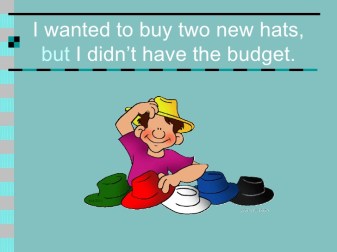 You’re probably sitting there wondering what in the world I am talking about. I know when I first read about loose sentences, I wondered what in the world the author was talking about. Well let me enlighten you. Loose sentences are sentences with the main concept at the beginning, followed by a string of related details.
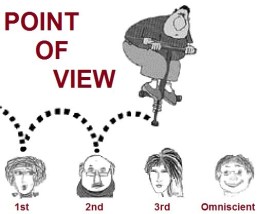 I had a segment of my book critiqued today and got dinged on the POV. I couldn’t believe it. The reviewer was correct. I was jumping into the head of several of my main characters throughout the segment.
 I do a lot of critiques for different writers during the week. Some of the writers are very polished; others, not so much.