 I opened up my novel in Word and began yet another revision at the start of the year. I tell myself this is it, and I certainly hope so, however, I have made some pretty significant changes. So I may have to go back and look at it one or two more times, to make sure I followed all of the rules 🙂
Why the changes, and especially this late in the game? I went through my manuscript and cut about 20% the previous year. The sections cut were combersome and full of backstory at times. They were weighing the story down and bringing it to a stand still. At least that’s what I thought at the time.
Well we all know writing that brings your reader to a screeching halt is a no-no, so I decided to get rid of those scenes/chapters rather than fix them. From my perspective, they were uneccessary and I didn’t want to mess with them anymore. I was done.
Following those changes, I found myself less enthusiastic and lacking the drive to complete my work. The passion was gone. The last months of 2018 were a struggle for me. I just couldn’t make myself pick up the manuscript.
I’m all for rules and understand they are important. I have read extensively on how to write a novel, took online courses, and talked to people who have published work. I listened carefully and took notes when I heard the same thing over and over. If everyone was saying it, it had to have merit.
One rule that I followed caused my standstill, and to be honest, it may not have been the rule, but my over zealous attempt to follow the rule. Let’s go back to the 20% I cut. I actually chopped the first two chapters of the novel. Why? They were filled with backstory. Something I felt my reader needed at the time to be able to follow a pretty complicated plot.
The rule that caused my dilemma was don’t load the front end of the story with unecessary narrative and exposition. While the information may be necessary, you don’t want to put your reader to sleep before they get to the good stuff, and if that isn’t enough of a reason, literary agents only ask for the first five pages in most cases. You don’t want to send them five pages of narrative and exposition. You want some action. You want the good parts on display from the beginning.
I got to the good stuff right away, but at what cost. I lost my enthusiasm and I made it harder for my readers to follow what was actually going on. They were missing some key information.
I talked to a friend a couple weeks ago who had proofread the manuscript for me prior to the cuts. She isn’t an editor, but she is a professional who enjoys reading and a very bright lady. I asked her specifically about those first two chapters.
I told her about the cuts, and my concerns with those chapters weighing the story down. Her response, “I loved those chapters. They developed the connection between myself and the characters before they were thrown into the conflict. They grounded me and made it easier to follow the story.”
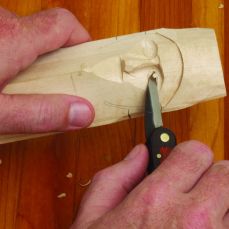 She confirmed what was missing, and why I was having a hard time connecting with a novel that I once loved. Instead of cleaning up the first few chapters by making them more clear and concise, instead of adding a minor conflict or looking at a way to make those chapters more interesting, I totally wiped them out, leaving the novel lacking.
My focus today and the previous week has been reworking those first few chapters and whittling instead of cutting. I still need to get to the heart of the story as soon as possible, but I can’t short change the set-up to get there.
Something to think about. Comments are always welcome. I love hearing other perspectives.
-Jan R
 Are you writing what you mean? Is your prose concise, and easy to understand? You may have one thing in mind when you write that sentence, only to discover it’s ambiguous, misleading, and sometimes quite humorous.
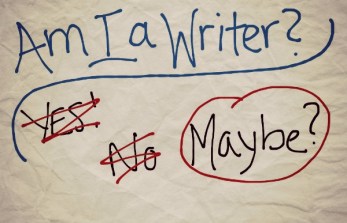 Am I a writer? You ever ask yourself that question? I do, and am still hesitant to tell people I write. I’ve never published a book. I’ve never been paid to write anything. As a matter of fact, my work was rejected because it wasn’t good enough. Side note-it really wasn’t good enough-I just didn’t know it at the time. I was too new to the game. I lacked experience and knowledge.
 Yesterday I was proofreading a novel I’ve been working on for the last six years. Needless to say, it’s seen many revisions and read-throughs. To my dismay, I ran into a paragraph with one of my favorite words, ‘had’. I’m joking, ‘had’ is not my favorite word, but it is my favorite overused word. I couldn’t believe it. I’d been around this block before and thought the ‘hads’ were under control.
 I was looking at some of my older blog posts this past week when something jumped out at me.
 The last few blogs I wrote discussed a radical cutting job I performed about six months ago. I’m not planning on repeating those blogs, but did want to share with new writers the importance of saving deleted work, at least until you know, that you know, that you know, you want need it ever again, and I probably still wouldn’t delete it.
 One of my resolutions this year is to get Always and Forever published. It’s a beautiful story with a great premise, but it wasn’t quite ready for prime time 🙂 At least that’s what I was told by one of the agents I queried.
 I can’t believe another year has come and gone. I have to admit, I didn’t meet my New Year’s resolutions from the previous year.
 I wasn’t an English major, but I never had a problem with stringing words together and making coherent, easy to read sentences. I know most of the rules, but I also know those rules are meant to be broken, especially if you are writing fiction.
 Writing fiction can be fun. You get to create your own world with your own characters and you can take your story anywhere you want to go. Right?
