
-Jan R
-Jan R
Something to think about.
-Jan R
 Just recently I received a ‘like’ on this blog and I reread it. I needed a reminder myself to keep writing.
You would think with the coronavirus and shelter in place order, I would have plenty of time to write. Fact is, as many of you probably know, the news and everything else going on is consuming my waking hours. I need to recalibrate.
Maybe all those tips about writing every day and setting quotas was right. Not to say that you can’t take time off to enjoy a special evening or life, but you have to stay motivated or you will lose the desire, momentum, will to write.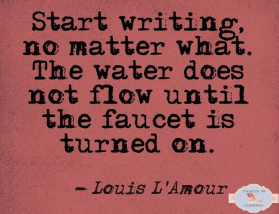
Something to think about
-Jan R

Don’t bore them with the mundane. Give them what they need to know and move on. It’s okay to leave a little to the imagination.
Something to think about.
-Jan R

Stay safe!
-Jan R
 When you hear the word setting, you think of a time period and place, but settings do so much more than that.
With sci-fi and historical novels, the setting becomes an important part of the story. The setting doesn’t have to be real but it does have to be believable.
Writing historical novels, do your research and throw in some things that you would expect to see during the time period.
Writing Sci-Fi, you’re creating a world. Your setting needs to be detailed. Help your reader to visualize it. Draw them in.
Settings should be visceral and vivid and allow us to experience the world the author is building as if we are one of the characters within the narrative.
Settings evoke a mood. In horror stories, your description of a haunted house should evoke fear in your readers. In a mystery, your setting should evoke suspense and curiosity. In a comedy, your setting should evoke laughter or an anticipated thrill.
Settings provide information about your characters. How does their home look? Is it messy, neat, compulsively organized? Do they surround themselves with darkness or light?
Settings can also be used to evoke the passage of time and movement. The saplings we had planted in our youth towered above the two-story house. This was home, at least the house that I remembered.
Who knew there was so much to writing. I hope this evoked thought and helped you better understand the use of settings in your novel.
Something to think about.
-Jan R

Something to think about.
-Jan R
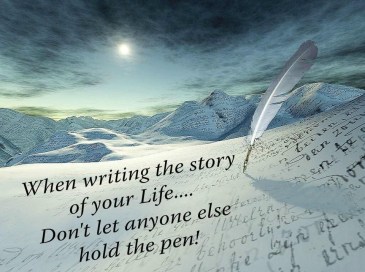 I’ve shared this blog before, but it’s been a while, and a message I think needs to be heard. As new writers, we sometimes listen to everybody but ourselves. Friends and critique partners mean well, but if you let them, some will try to take over your novel and mold it into what they think it should be.
I was sitting on my couch reworking a scene in the novel I’m writing and stopped right in the middle of it. What am I doing? I asked myself. The purpose of the rewrite was to make some changes based on a critique I received from a critique partner.
The person that critiqued my book is very good at the craft, and I respect her opinion. There were others who critiqued the piece and loved it, offering a few comments here and there to correct grammar or replace a word. So who was right? The three people who loved it, or the one who thought I needed to go back and make some significant changes.
The more I looked at the changes this person suggested, the more I realized she had her own idea of the way the story needed to go, and I had mine.
With this being said, she’s made some great suggestions. Because of her, my story is more believable, my dialogue more natural, and my POV more consistent. Her critiques have been invaluable.
However, I had to remind myself that this is my story. Nobody has a better understanding of the dynamics than I do. Nobody knows it from beginning to end but me. Nobody can tell it better than me.
Weigh comments and suggestions you receive from others and ask this question. Is it making my story better or changing it into something it is not?
Remember: It’s your story.
-Jan R

Something to think about 🙂
-Jan R
 If you’re new to the process, you’re going to make mistakes. I’ve made them all. Well, I haven’t tried to self-publish so maybe that was an over-exaggeration, but not by much:-)
Everybody wants to get published. Once my story was written, I didn’t hesitate to send it out. I knew it had a few grammatical errors. There’s no way you can catch them all. That’s what an editor is for – right? My story was so good, or so I thought, an agent would jump on it and make sure mistakes were corrected and it was ready for publication.
Well, that wasn’t exactly what happened. I’ve written numerous posts outlining the errors I made in that first very rough draft. When you begin your writing career, odds are you don’t know what you don’t know.
I received a rejection letter from every agent I submitted to with the exception of one, who I like to think saw a promising new author in that mess somewhere. She rejected my work as well, but praised what was right and pointed out what was wrong.
Her list was long and I was more than a little shocked once I realized how rough that first draft was. She used words like head-hopping, writtenese, and dragging dialogue. That didn’t even count the grammatical and structural errors. You know, the ones the editor was going to correct 🙂
Do your homework and remember, that the first draft is the first draft. Get it done, then get it good.
Something to think about.
-Jan R
 Writing your first novel-Things you should know