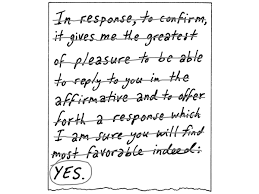
I think you get the picture 🙂
-Jan R
I think you get the picture 🙂
-Jan R

Your main characters may need some work, but for this particular blog I would like to focus on those ‘fly by’ characters that step into your novel, do what you want them to do, and then disappear never to be heard of again.
I received a critique a while back in regards to four minor characters in my novel. “A lot of new characters have been introduced, and they all run together in my mind. I think more time needs to be spent developing these characters as individuals rather than some generic group of friends.”
The lady that provided the critique was right. I didn’t provide any description of these characters. Except for the fact that they had names, you would have had no idea which one I was using in the scene. I didn’t think descriptions were necessary. They served one purpose and one purpose only. They did their job and disappeared.
Well shortly after receiving the critique, I bumped into an article on Minor Characters in the Writers Digest I was reading. Maybe somebody was trying to tell me something.
According to Elizabeth Sims, who wrote the article, if the person is important enough to exist in the world of your story, let your readers picture that existence.
When you introduce minor characters, you should have one or better two details. He was as wide as he was tall, and talked with a lisp.
Even characters who exist in passing should exist in the readers eye. For a literally glancing description, make it visual. The freckle faced boy stuck his tongue out at us, then turned to go inside.
If you have a group-Pan the crowd and then zoom in. Give one or two details describing them all, and then move in to one person as the representative. The demonstrators walked down Main street waving their signs and shouting obscenities. “Where is Mayor Blackman? ” shouted a tall, gray haired man at the front of the line.
-Jan R

Something to think about 🙂
-Jan R
 One of my favorite posts deals with ‘ing’ words. They’re there. Sometimes they take over your story without you even realizing it, and other times they get lost in the background. Take a closer look at your prose. Especially in those areas that aren’t reading as smoothly as you would like. Maybe you will discover you are having a love affair with ‘ing’. These ‘ing’ words are all over the place.
Once I discovered my love affair with ‘ing’, I stopped the revision process and did some research on ‘ing’. I remembered reading somewhere, that the overuse of ‘ing’ words was not a good thing.
Opportunities to overuse the ‘ing’ word are boundless. There are nouns, adjectives, verbs, and even verbs masquerading as nouns called gerunds, all ending in ‘ing’.
So what’s the big deal? What’s wrong with ‘ing’ words?
The overuse of ‘ing’ words mark you as an amateur – Don’t be alarmed if you see more than a handful on one page. Do take a closer look if you see more than a handful in a single paragraph.
While wrapping a soothing sling around the fledgling’s broken wing, Diana was humming, dreaming of her prince charming. Yet troubling thoughts about his depressing friend Starling kept intruding, interrupting her very entertaining daydreams. There was something intriguing and alarming about him.
‘ing’ verbs weaken your writing and make it clumsy and hard to read . Abigail was walking along the bike trail. There was a boy riding his bike. He was smiling up at her as she passed. She started wondering what the boy was so happy about.
Abigail walked along the bike trail. A boy smiled at her as he rode passed. She wondered what he was so happy about.
Starting a sentence with an ‘ing’ word is the weakest way to begin a sentence.
Hitting the thug in the face with her purse, Josie reached for her phone.
Josie hit the thug in the face with her purse and reached for her phone.
To identify overuse of ‘ing’ words in your writing, try this:
Once you identify ‘ing’ words, replace weak or common ones with specific, stronger word choices. Your writing will become more concise, clear, and engaging.
Remember, not all ‘ing’ words are bad. The issue is whether or not you have made the best word choice.
So much info on the internet. You get the cliff notes. Hope they help, or at least get you thinking 🙂
-Jan R

Jan R

Need I say more 🙂
Something to think about.
-Jan R
What’s the draw? What makes you pick up a book and proceed to the next step? Most likely the first thing that catches your attention is the cover. At least that’s the first thing I notice. I do look at the title, but unless it’s something totally overboard, it doesn’t stop me from taking the next step.

I was at a discount store this past week looking at books. An employee had put the price tag over the face of the heroine on a book that I was interested in purchasing. I couldn’t believe it. I wanted so bad to yank that tag off.
The cover matters, and yes, that tag could have been a deal breaker. I did see enough of the cover to know that it was an inspirational romance set in the civil war era. That was a plus and enough to encourage me to read the back cover to determine the premise of the story.
I know some people read the first couple of pages, but I have to admit that is not something I do when determining my selection. Maybe I’m shallow. I have no doubt I have missed out on a lot of great books because the cover failed to get my attention.
I can tell you this, the process of determination I use to choose a book appears to be the norm based on my observations of others in book stores. The author’s name may catch a customer’s attention, but when they pull that book off the shelf, they look at the cover and then read the summary on the back before deciding to purchase.
Just something to think about as you prepare to publish your work. What’s important to you. What compels you to choose one book over another?
-Jan R
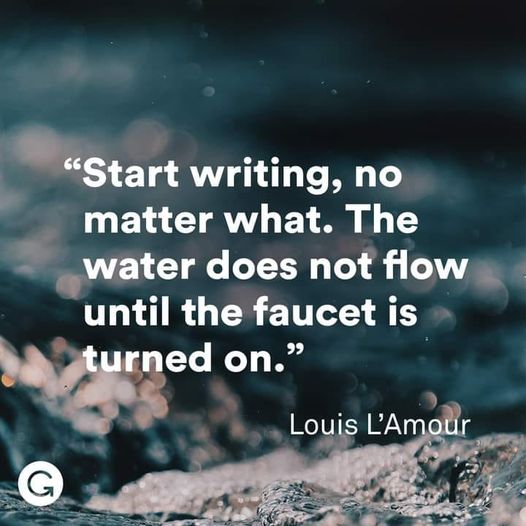

Any one that follows me, knows I write blogs on the issues I am having. I figured that if I was having problems with a certain aspect of writing, my readers probably were too. Especially the newbies like myself.
Well one of the areas I experienced problems with was dialogue. I had an agent to return my work and tell me my dialogue was dragging. What was that suppose to mean? My people were having conversations and I thought they were pertinent to the story.
At any rate, after doing some research, and reading novels with my attention focused on the dialogue, I think I cracked the code 🙂
Dialogue should be seamlessly integrated into the story. It should flow. If you can feel yourself reading, stopping for a brief conversation, and then reading again, something isn’t quite right.
Conversation works best when combined with thoughts, actions, and settings. Don’t separate them but interweave them. People don’t stop to talk, they keep doing what they are doing unless it’s something really important that demands their full attention.
You can integrate by using setting, thought, and action in combination with dialogue.
Example:
The day had been crazy but it wasn’t over yet. Walking into the conference room, Mark found Ellen sitting at the head of the table preparing packets for their upcoming meeting.
“Sorry I’m late,” he said walking over to offer assistance.
Handing him a few, she looked him in the eye, anger and disappointment written all over her face, “Isn’t that your norm?”
Mark grasped for something to say that would ease the tension between them and get him through this day. Staring at the packets he was at a loss. What she said was true and he couldn’t explain why. At least not now.
Easing herself up, she walked by him without saying another word.
“Well that didn’t go well at all,” he said quietly to himself as he continued to prepare for the meeting. He would attempt to smooth things over with his secretary later, but for now he had a business to save.
By interweaving thought, action, setting and dialogue, the scene moves forward seamlessly. I hope 🙂
If you just use dialogue you are witnessing a conversation. When you begin to interweave thoughts, actions, settings and dialogue you are pulling your reader in and making them a participant.
A really good exercise to help understand and follow this concept would be to write a simple conversation with no tags or anything. Read it. Now go back and add tags. Read it again. Now go back and add more tags or actions. What was the person doing during the conversation? What about setting. Where were they during the conversation? You can even add thoughts. These aren’t conveyed through the conversation but because we are on the outside looking in, we can get a better idea of where the character is coming from.
Hope this series on writing dialogue helps you in your endeavors. Would love for you to join me on this journey. Please consider pushing the follow button and you will receive a notice any time I write a new blog. Also if you have any comments or questions I would love to hear from you.
Something to think about.
-Jan R

Thank you for joining me on this journey!
-Jan R
 Writing your first novel-Things you should know