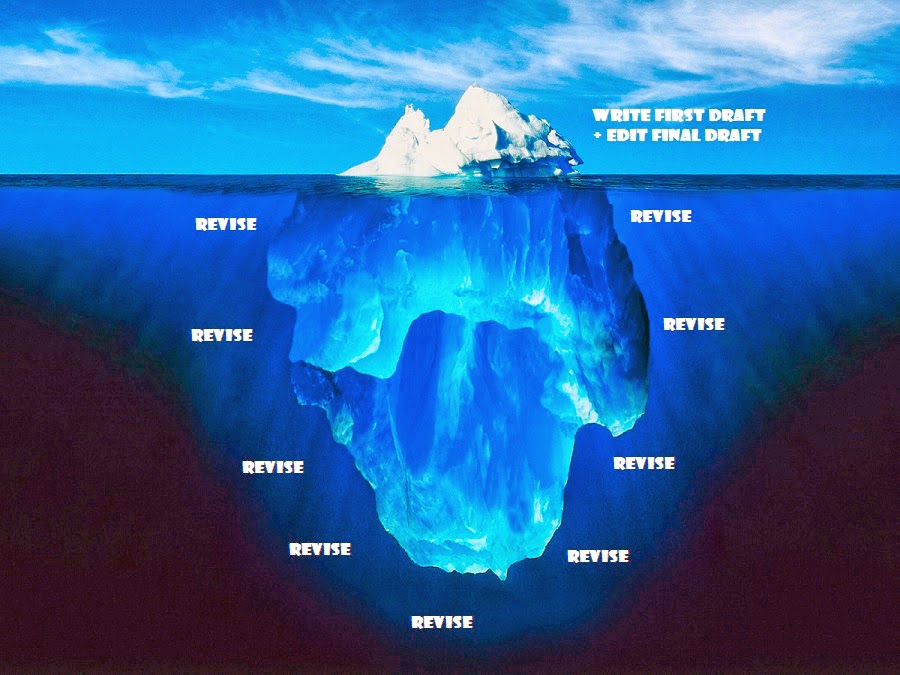
If you’ve been writing for a while, this photo is self-explanatory.
Something to think about!
-Jan R
If you’ve been writing for a while, this photo is self-explanatory.
Something to think about!
-Jan R
Yes, I’m bringing it up again. If you don’t have that elevator speech, you need to start thinking about it. Just because your plans don’t include a writer’s conference in the near future, doesn’t mean you don’t need one. I definitely don’t want you to fall into the same trap I did. Very embarrassing 🙂
I attended a work conference with my husband several years ago. It was a great getaway for me and a chance to focus on my novel without the distractions of home. Needless to say, I was enjoying myself and making some significant progress.

The last day of the conference, I was asked to join my husband and some of his colleagues for supper. I was surrounded by men talking shop, so all I had to do was smile and display exemplary dining skills, or so I thought.
About halfway through the meal, one of the men looked over at me and said, “Your husband told us what you do during the day while he is at the conference. We would love to hear a little more about your book. What’s it about?”
Well, I froze. My mind went totally blank. It was all I could do to control my suddenly out-of-whack emotions, as I turned to face this man who had the audacity to ask me such a question.
I wasn’t prepared. I didn’t have an Elevator Speech. I didn’t think I needed one. My novel was complete, but it wasn’t ready for prime time. I was totally incoherent and presented a jumbled mess.
I have that Elevator Speech now. I felt foolish and was totally caught off guard by men who were only trying to include me in the conversation. You never know when you’ll come across someone who’ll ask you what your book is about.
I’ll be prepared the next time. Plus, it will give me practice for when I do attend that writing conference, or get the opportunity to speak to an agent/author I just happen to run into at the airport.
Some things to keep in mind :
If you haven’t prepared your speech, you need to start working on it. It’s just a matter of time. Somebody is going to ask.
-Jan R

Something to think about 🙂
Jan R

This is by far one of my favorite posts. I have revisited it several times over the years. With new subscribers and writers joining my blog, I thought this would be a good time to bring it back. Humor me 🙂
I wasn’t an English major, but I never had an issue with stringing words together and making a coherent, easy to read sentence. I know most of the rules, but I also know those rules are meant to be broken, especially if you are writing fiction.
The purpose of English Teacher grammar is to understand how to create sanitized, standardized, easy to understand, impersonal, inoffensive writing. If you’re looking for a job writing pamphlets for the government, instructional manuals, or news reports, then that’s the way to go.
These rules aren’t meant for fiction. That does not mean your story shouldn’t be grammatically and structurally sound. We are talking about styles here, not mechanics.
Fiction writing is nonstandardized, complex, personal, and occasionally offensive. It is the best way to reach into your readers head and show him your words. In order to bring your voice to life and get your world on the page, you need to say goodbye to English Teacher writing.
Fiction Writing Vs. English Teacher Writing
Fiction Writing fits the world of the book, the mouths of the characters, and the writer who wrote it.
English Teacher Writing incorporates a specific, caricatured, extreme form of writing without regard to the story’s world, characters, or even the writer and what he or she is like.
Fiction Writing changes with the situation.
English Teacher Writing is unchanged.
Fiction Writing does not look to impress, its sole purpose is to present the story.
English Teacher Writing is self-conscious, self-important, and looks and feels forced and out right silly at times.
Fiction Writing is not always pretty, but it always fits the circumstances, characters, and story.
English Teacher Writing is always pretty and always smooth, but rarely fits anything.
Example:
Fiction Writing
“Get away! Don’t touch me! Leave me alone!” The girl in the alley curled into a tighter ball, her scarred, skinny arms pulling her knees up against her chest, her eyes white-rimmed, her hair wild.
English Teacher Writing
“Get away from me! Don’t lay a hand on me! Leave me alone!” The girl in the alley, already in a fetal position, pulled her knees tighter to her chest. She wore an expression of dazed panic and radiated the signs of post-traumatic stress disorder.
Something to think about 🙂
-Jan R
Something to think about!
-Jan R
When you write, you should relax and enjoy the process. Don’t become obsessed with perfection. Nobody’s perfect. Most published novels aren’t perfect.
Since I’ve started writing, I’ve developed a keen eye for errors. They just jump off the page. If you’ve been writing for a while, you probably experience the same thing.
I love historical novels and read them every chance I get. I run into at least 2-3 errors in every novel. It usually is something as simple as using ‘the’ for ‘they’ or leaving off an ‘s’ on a word that should be plural, but because I have a trained eye, I see it, and am pulled out of the story.
Does it ruin the experience for me? Not at all. As a matter of fact, I feel better about my own writing. Nobody’s perfect, and that’s okay. With that being said, note I only see 2-3 in a 350 page novel, and not one on every other page.
The quest for perfection leads to writer’s block. It can paralyze an author. It’s great that you aim for perfection. That is what you want, but don’t allow your fear of making a mess keep you from moving forward.
Truth is, your first draft is going to be raw, awkward, and full of errors. That’s why we go back and edit, edit, edit.
Another question to ask yourself, is what is perfection? I’m not talking about grammatically and structurally sound sentences, I’m talking about every little component that goes into making a great novel.
Did you know that your idea of perfection changes as you gain more and more experience in writing?
When I finished my novel, I went back and corrected all of the grammatical and structural errors. Well, all that I could see, and it was pretty darn near perfect.
I didn’t know the rules for Point Of View. I was head-hopping all over the place. So, my work wasn’t perfect, and I was breaking a cardinal rule, which allowed the agent to pick up on the fact that I was an amateur.
I also didn’t know the rules for writing dialogue. Nobody told me your dialogue had to move the story forward. Most people don’t want to stop and smell the roses. They want the meat, and they want to get to the action. So, my work wasn’t perfect.
Keep writing! Your work won’t be perfect on the first go round or the second. Accept that and get over it. It’s okay, you’re not alone. No writer, published or unpublished, writes a perfect first draft. Give yourself permission to make mistakes.
I use to say get it done, then get it good. What I mean by that, is write that first draft knowing it’s full of errors. Get your ideas on paper before they fade away. Then go back and begin the refining process. You want it as near to perfect as possible before querying an agent or self-publishing.
-Jan R
Something to think about!
-Jan R

While I’ve been around for a little while now, I certainly don’t consider myself an expert. I consult the experts, and research everything I write to ensure I don’t spread inaccurate information.
As a new writer, we don’t always know if what we are reading is fact, fiction, or opinion. We are hungry for information that is going to help us become better writers, and more importantly, that is going to help us become successful and published.
When I began this journey, I was literally starting from scratch. I assumed like many of you, that anybody could write a novel. I had a great idea and put pen to paper, or I guess I should say fingers to keys.
It wasn’t until I submitted it to agents, that I discovered there were rules on POV, writing dialogue, plotting, use of description, setting scenes… I needed information. I needed accurate, easy-to-understand information from someone who knew what they were talking about.
I opened my computer and began typing. If it’s on the internet, it has to be correct, right? That’s what most of us think, at least that’s what I thought. If I was having problems with dialogue, one of my weaknesses, I would type in dialogue and go for it. There were so many articles and blog posts to read. While most offered invaluable information, I would occasionally run into one that lead me astray, or left me more confused than I was before I started my research.
I feel like I’m rambling today, but my aim for this particular blog is to caution new writers. Just because something is written on-line, doesn’t mean it’s correct. Choose your sources wisely. Do your research. There is a lot of useful information out there, but you will occasionally run into something that is inaccurate, or so ambiguous you are left more confused than you were when you started your research.
My husband is always saying technology is wonderful. You have the world at your fingertips, but you can’t check your brain in at the door.
Something to think about.
-Jan R

Something to think about!
-Jan R
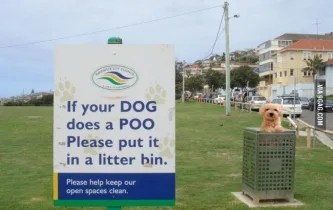
I needed a laugh today and reread one of my old posts. I thought I would share it with you, as many of my followers are new and may have never read it 🙂
Have you ever read a sentence and stopped? You go back and read it again and again. Sometimes you probably laugh out loud, because it’s funny and definitely not what the author had in mind.
You want see those sentences in published work. By the time your manuscript hits the publishers desk, the sentences have been cleaned up.
So if you haven’t figured it out, I’m talking about sentences with dangling modifiers. A modifier describes, clarifies, or gives more detail about a concept.
A dangling modifier is misplaced because it doesn’t have anything to modify. The word or words a dangling modifier should modify have been omitted from the sentence. I know you hear professionals say cut, cut, cut, but some words should not be cut.
“Always suspect an -ing word of dangling if it’s near the front of a sentence; consider it guilty until proven innocent.” –Patricia O’Connor.
Incorrect: Reading the regulations, the dog did not enter the park.
Correct: After reading the regulations, I did not enter the park with my dog.
And then there’s…
The kind mother, handed out bologna sandwiches to all the children in Ziploc bags. (What were they doing in Ziploc bags?)
The robber was in his late thirties and about 6’2″, with long curly hair weighing about 160 lbs. (I think I would cut a little bit of that hair.)
The homeowner chased the intruder wearing nothing but his underwear. (Who was wearing nothing but underwear?)
Just for laughs…..
I know most of you have dangling modifiers down, but they are so much fun.
-Jan R
 Writing your first novel-Things you should know