 I’ve been reading literary agent biographies and blogs over the last few days in an attempt to narrow my search and find a few I think would be a good fit for my novel.
While researching, I found myself going on-line and doing searches for words and abbreviations that were totally foreign to me: MG, Dystopian, MS, Upmarket and so on- I guess I still have a lot to learn.
At any rate, I thought I could save you some time by sharing a list of not so common words and abbreviations that I found during my research.
- MS: Abbreviation for manuscript (the plural being MSS).
- MG: Middle grade-ages 8-12.
- YA: Young adult-ages 12-18.
- NA: New adult: features a protagonist 18-25 and focuses on first struggles of adulthood.
- Speculative Fiction: Fiction that encompasses supernatural, fantastical, or futuristic elements.
- Upmarket: Fiction with commercial appeal (book clubs) particularly women’s fiction.
- Dystopian: A futuristic, imagined universe, in which oppressive societal control and the illusion of a perfect society are maintained through corporate, bureaucratic, technical, moral, or totalitarian control.
- Literary Fiction: Serious fiction, the style and technique are often as important as the subject matter.
- Commercial Fiction: Written with the purpose of attracting as wide an audience as possible. It includes westerns, romance, mysteries and horror genres.
I’m sure I missed a few, but these are the ones I saw during my research. Who knew there were so many different categories.
I guess I’m old school. In my day it was westerns, romance, mysteries, comedies, and horror. Oh yeah, you can throw children books and youth in there as well.
-Jan R
 I’m a member of Scribophile. If you don’t know what that is, and you are really interested in writing and getting feedback, Scribophile is the place to be. It’s like Facebook for writers. You do critiques and in turn others critique your work. I wish I had found it years ago. You get some so so critiques, but you also get a lot of good ones from people who know what they are doing. At any rate this blog wasn’t suppose to be an infomercial for Scribophile.
 I started out with a 90,000+ word manuscript and cut it down to a little over 80,000 words. While this is still an acceptable size for a novel, it’s short in length. My initial thought was, I need to go back and add some of the stuff I cut, but then I remembered, there is a reason that I cut that stuff.
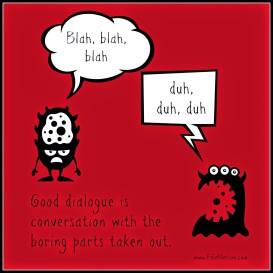 Writing dialogue isn’t as straight forward as it would seem. It was one of the areas I was dinged on when I first submitted my manuscript. According to a literary agent, my dialogue dragged. Basically I wrote out conversations just like real people talk. After taking a few classes and looking at published authors’ work, I did get a grasp of what the literary agent was saying. My dialogue was weighing the story down and offering unnecessary detail. It caused everything to come to a stop.
 I’ve just completed the God knows what number revision of my novel(I lost count a long time ago). While I have to admit it is one-hundred times better than the first draft, it is still not where it needs to be.
 So how do you do it? It’s so easy to write blogs on finding time to write, or finding motivation to write. All of the tips and recommendations sound great, until you’re in the same boat as those people you are trying to help.
 I’ve spent the last few days finalizing the list of agents I have chosen to submit my work to. If you are looking for an agent, I would recommend checking out the Association of Author’s Representatives(AAR). It’s a free database on line that provides a list of literary agents, the genres they represent, and if they are open for submission.
 I love reading Jerry Jenkins blogs. I always take something away from what he has to say. I don’t know that he offers anything different or new, it’s just the way he says it. I read what he’s written, and a light bulb goes off.
 I was reading How to Write Best-Selling Fiction a little while back, when a chapter jumped out at me, and I couldn’t help but smile. It was totally me. I’m ashamed to admit my naivety, but it was like I was reading my story.
 I’m preparing to send my manuscript out to literary agents again. This is the second time it is going out, the first time resulted in rejections, so I have to admit I’m a little apprehensive.
 Writing your first novel-Things you should know