 Enough already! At least that’s how I feel sometimes. I’ve been through my book more times than I can count. In my own defense, no one taught me how to write. I had a great story idea and decided to give it a whirl.
I thought it was ready, and then real life happened. My wonderful work was rejected by the five agents I sent it to. One of the them must of seen something promising, she took it upon herself to provide me feedback about what I was doing wrong (there was a long list), and what I needed to do to improve my work.
I was totally humiliated. Grammatical and Structural errors are kindergarten stuff and completely unacceptable. Even I should have gotten those right. I could understand my issues with head hopping and on-the-nose-writing. Those terms were totally foreign to me. I wasn’t a professional novelist. I thought all you had to do was put words on paper and create a wonderful story that everyone wanted to read. How was I to know there were rules?
And what was the deal with dragging dialogue? My people were talking. How was I suppose to know dialogue moved the story forward, or had to have some significance? I couldn’t believe I sent an agent such inferior work!
When you’re a newby, you don’t know how bad your work is, because you lack the knowledge and skills necessary to produce publishable work. While there may be a few prodigies out there, chances are, you aren’t one of them. Sorry!
Like myself and many others, you’re going to have to pay your dues and learn the craft. Then you will be ready to write that New York Times best seller.
One of my favorite saying is, you don’t know what you don’t know. I’m not sure were I picked that up from, but it’s true. I wasn’t intentionally sending out bad work. I just didn’t know.
-Jan R
 At this point in the game, you probably know what a dialogue tag is. It is a phrase placed at the beginning, middle, or end of a quote, to identify the speaker.
 I wasn’t an English major, but I never had an issue with stringing words together and making a coherent, easy to read sentence. I know most of the rules, but I also know those rules are meant to be broken, especially if you are writing fiction.
 Am I a writer? I ask myself that question often and am unsure how to answer others when they ask. I haven’t published any of my work and don’t get paid to do this. I do have a passion for writing and have spent countless hours taking classes, researching, and learning to write publishable work.



 It’s the beginning and more specifically the first sentence, then paragraph, then page, then chapter. You have to grab your reader the minute they pick up your novel.
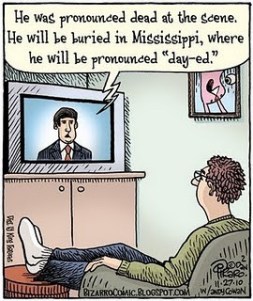 Do your characters have their own voice or do they sound the same? I had a critique partner tell me that she couldn’t distinguish characters in my manuscript based on dialogue. They all sounded the same. If I hadn’t provided a dialogue tag, she would have had no idea which character was speaking. She was right.
 What is on-the-nose writing? It’s prose that mirrors real life without advancing your story. No one chooses to write this way. It has nothing to do with your ability to put together a sentence, paragraph, or scene. Even pros have a hard time with it.
 Writing your first novel-Things you should know