That First Sentence: It Matters!

imagesYou want to write a novel, and you have a great idea, but you’re not sure how to start. Everybody knows that first line, that first sentence, is extremely important. It has to be right.

If you’re stuck because of the pressure of crafting the perfect opening line, you’re not alone. And neither is your angst misplaced.

I was reading the blog of one of my favorite authors, Jerry Jenkins, this morning when I ran across this post. I have read it before, but sometimes I think we all just need a refresher. If you’re like me, you have so much information being thrown at you, you can’t possibly retain it all.

Most great opening lines fall into one of four categories.

  • Surprising

Fiction: “It was a bright cold day in April, and the clocks were striking thirteen.”-                George Orwell, Nineteen Eighty-four

Nonfiction: “By the time Eustace Conway was seven years old, he could throw a knife       accurately enough to nail a chipmunk to a tree.”-Elizabeth Gilbert, The Last American       Man

  • Dramatic Statement

Fiction: “They shoot the white girl first.” – Toni Morrison, Paradise

Nonfiction: “I was five years old the first time I ever set foot in prison.” – Jimmy                  Santiago Baca, A Place to Stand

  • Philosophical

Fiction: “Happy families are all alike; every unhappy family is unhappy in its own              way.” – Leo Tolstoy, Anna Karenina

Nonfiction: “It’s not about you.” – Rick Warren, The Purpose Driven Life

  • Poetic

Fiction: “When I finally caught up with Abraham Trahearne, he was drinking beer            with an alcoholic bulldog named Fireball Roberts in a ramshackle joint just outside of      Sonoma, California, drinking the heart right out of a fine spring afternoon. -James              Crumley, The Last Good Kiss

Nonfiction: “The village of Holcomb stands on the high wheat plains of western                Kansas, a lonesome area that other Kansans call ‘out there.'” -Truman Capote, In Cold        Blood.

This link will take you to some more great opening lines, and one of Jerry Jenkins’s blogs. Here’s a list of famous openers.

Hope this helped!

Jan R
That First Sentence: It Matters!

Stay Active! (Repost)

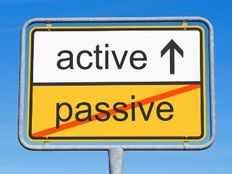
Active vs. PassiveI know I’m suppose to write in the active voice, but why? What is the difference between active voice and passive voice and why does it matter?
In a sentence written in the active voice, the subject of  the sentence performs the action. In a sentence written in the passive voice the subject receives the action.

Jan loves Danny. Jan is the subject and she is performing the action of loving Danny.

Jan is loved by Danny. Jan is the subject, but she’s doing nothing. She is the recipient of Danny’s love.

Sentences in active voice are  more concise than those in passive voice, because fewer words are required to express action in active voice than in passive voice, making the sentence stronger.

Many a Tame sentence of description or exposition can be made lively and emphatic by substituting a transitive in the active voice for some such perfunctory expression as there is or could be heard.

There was a great number of dead leaves lying on the ground. Vs Dead leaves covered the ground.

At dawn, the crowing of a rooster could be heard. Vs The cock’s crow came with dawn.

After reading the previous sentences, what do you think? Active or Passive? I would definitely go with active 🙂

This is yet another area I am working on. And while the rule is to go with the active voice, it doesn’t mean you should entirely discard the passive voice. Sometimes it is necessary.

-Jan R

Stay Active! (Repost)

I Am Very, Very, Very, Very, Tired

imagesYNN7J1D0When writing, remember less is more. Stay away from qualifiers. They weaken your prose, and the result is the exact opposite of what your were trying to achieve. I know why you use them. I’m hooked on ‘very’. Other people are hooked on the word ‘too’. If you are resorting to qualifiers for emphasis, odds are, you are using the wrong word in the first place.

These qualifiers are the words your English teacher dreaded seeing, such as very, too, really, and sort of. When you overuse these words, your writing will seem lazy, as if you haven’t taken the time to look for the right word.

This pasta dish is very good.
This pasta dish is superb. (Better)
I’m feeling sort of sick.
I’m feeling nauseous. (Better)
You look really nice!
You look radiant. (Better)

Since ‘very’ is my nemesis, I thought I would provide a list of more powerful words to use to replace ‘very’ ___________.

  • very fast                    quick
  • very dry                    parched
  • very dirty                  squalid
  • very afraid               terrified
  • very angry                furious
  • very hot                    scolding
  • very hungry             ravenous
  • very large                 colossal
  • very clean                spotless
  • very clever              brilliant
  • very beautiful        exquisite
  • very ugly                 hideous
  • very pretty             beautiful
  • very thin                 gaunt
  • very tired               exhausted

I think you get the picture. Thanks for stopping by, and I hope this got you thinking.

-Jan R


I Am Very, Very, Very, Very, Tired

Practice Makes Perfect-Almost


2c53488dd148c675830484fc9157fa1cI occasionally review older blogs I have written for content and ideas. I have been blogging  for a year and a half now, and have to admit, there are days I’m at a loss as to what to write, or just don’t have the time to sit down and produce a blog I would want to read.

One thing that jumped out at me this morning, was the number of grammatical and structural errors in my past work. While there were only a few per blog, I couldn’t believe I missed them.

If I had been a stranger reading those blogs, I would have thought, why am I reading a blog on how to write a novel, that is filled with grammatical errors? The blogger doesn’t even know how to write a publishable piece of work.

But I have also noticed that the more blogs I write, the better I have gotten. Who was it that said practice makes perfect?

If you want to be a successful writer, read, read, read and write, write, write.

I would encourage you to pull out an old piece of work and a newer one that you are working on. I bet the new work is noticeably better than your previous work.

I wish I could say that I won’t ever publish another blog with errors in it. My intention is to produce an error-free, interesting, piece of work, but I am only human and will make an occasional mistake.

-Jan R

Practice Makes Perfect-Almost

It Was A Dark Stormy Night

4f7a9b905a1bc2d6c97e5c8f0157ee9d_fullWhen you hear the word setting, you think of a time period and place, but settings do so much more than that.

With sci-fi and historical novels, setting becomes an important part of the story. The setting doesn’t have to be real but it does have to be believable.

Writing historical novels, do your research and throw in some things that you would expect to see during the time period.

Writing Sci-Fi, you’re  creating a world. Your setting needs to be detailed. Help your reader to visualize it. Draw them in.

Settings should be visceral and vivid and allow us to experience the world the author is building as if we are one of the characters within the narrative.

Settings evoke mood. In horror stories, your description of a haunted house should evoke fear in your readers.  In a mystery your setting should evoke suspense and curiosity. In a comedy your setting should evoke laughter or an anticipated thrill.

Settings provide information about your characters. How does their home look? Is it messy, neat, compulsively organized? Do they surround themselves with darkness or light?

Settings can also be used to evoke the passage of time and movement

Who knew there was so much to writing. I hope this evoked thought and helped you better understand the use of settings in your novel

-Jan R

It Was A Dark Stormy Night

Sentences-The Long and Short

AAEAAQAAAAAAAAiMAAAAJDg5M2Q4NGJiLTBhMTQtNDA5Ni1hNGVmLTM2YWRiZjczMDhjNQHave you ever read a sentence and thought that is way too long? The author lost you two commas ago, and now you have to go back and read the whole thing again, to try and figure out what’s going on.
Or maybe you read a short sentence, followed by another short sentence, and another, and you’re thinking whoa, slow down.

There’s not a set rule for short or long. The sentence length you choose depends a lot on what you are trying to accomplish. There are good reasons for those long, lost me a long time ago sentences, and short, what just happened sentences. It’s up to you to decide when to use them, given the context of your writing.

What do short sentences do?

  • Create tension-When an author starts using short sentences, it’s usually a sign that something is about to happen.—-The dog growled. His teeth flashed. Jake turned. It was too late.
  • Call the attention of a reader to a significant detail—She walked past central park in Manhattan, with her head held high. Gorgeous woman. Long blond hair. Blue eyes. Impeccable taste.
  • Present sudden events-Out-of-the-blue actions that no one was expecting.—-We sat quietly enjoying our meal at the local fast food restaurant. Boom! “What was that?” I turned to see people rushing toward the gas station up the street.
  • To summarize the ideas presented in the long paragraph or sentence.

What do long sentences do?

  • Develop tension-While the short sentence is imminent, culminating with the actual event being acted out, the long sentence adds to the suspense, hinting at a situation in the process of developing.
  • Give vivid description-depicting a setting, love scene, or someone’s appearance.—Autumn came without special invitation, coloring the trees in orange, yellow and red, whispering the cold in our ears and hiding the warm sun rays from our eyes.
  • Investigates arguments, ideas, or facts thoroughly.

Although long sentences have the smell of the old-fashioned 19 century romantic prose, the usage of the long sentence in modern creative writing has it’s place.

When it comes to writing artistic literature, fairy tales, ghost stories, or mysteries, don’t underestimate the effects of short sentences.

Hope this didn’t confuse you too much. To sum it up, there’s a time and place for everything 🙂

-Jan R

Sentences-The Long and Short

Antagonist-Friend or Foe?

1-darth-vadar-skull

My main focus for this particular blog is antagonists. I have two in my novel. One is amnesia, and the other is a young woman determined to marry the man of her dreams, even if he belongs to someone else. She uses his amnesia to her advantage, manipulating and deceiving him.

When you are creating antagonists, you must remember they are people too. Help your reader to empathize with them and understand why they act the way they do. Even bad people have weaknesses and can show love towards others. They are more than just a device to move your plot in a certain direction. Flesh them out!

Get into your antagonists head. Help people to see things from his/her point of view if possible. I write in third person omniscient, which allows me to get into the head of any character I choose, as long as I limit myself to one per scene. If this doesn’t work for you, have your point of view characters mull over and try to understand the antagonist’s point of view. You don’t want him/her to be seen as pure evil.

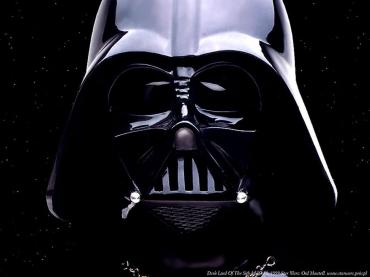
I have to admit, I’m a ‘Star Wars’ geek. If you’re a follower, you know who Darth Vader is. From my perspective, he is the perfect antagonist. The creator of this series, put a lot of thought into this bad guy. He is pure evil, but as Luke stated, “There is good in you, I can feel it.” Luke was right. Vader wasn’t all evil, as a matter of fact, he started out as a good guy. His motivation for turning to the dark side, was to save his wife.


You want your antagonists to be strong, smart, and capable. At least as much so as your protagonist. This serves to give the story balance and maintain interest.  It also helps to increase tension and suspense. You know the antagonist is capable of defeating the protagonist. The story could go in many different directions.

Back to the ‘Star Wars saga, Darth Vader was  the most powerful of all the Jedi, even though he turned to the dark side and fell under the control of the Sith Lord. His downfall in the end wasn’t his lack of strength, but his return to the light.  He sacrifices himself to save his son. In a split second decision, he destroys the empire and brings balance to the universe.

Many professionals recommended that you not use abstractions, such as corporations, disease, or war as your antagonists. They are unrelatable, but that’s a blog for another day.

If you do feel the need to use an abstraction, put a human face to it.  Instead of organized religion, you may consider a resentful pastor seeking revenge. Instead of corporate greed, you may consider a Bernie Madoff type. One of my antagonists is a medical condition that a second antagonist exploits to get what she wants.

Hope this post provided a couple nuggets and got you thinking 🙂

-Jan R

Antagonist-Friend or Foe?

Fact or Fiction?(Revised)

_shannon-wheeler-stop-fact-checking-my-story-new-yorker-cartoon-2If your hero is drinking sake in Tokyo, you better know which hand he should use to hold the cup; and when he is sunning on the beach at Cape Cod, remember that there won’t be any palm trees-Dean R. Koontz
You can’t get away with faking background information. If you fabricate a lot of facts on a wide variety of subjects, your readers will catch on.  I know it’s your story, and it’s fiction, but unless you are writing science fiction that involves creating your own world, you better stick to the facts when it comes to background.

Every time a reader knows that you are faking a bit of background information, your credibility slips a notch. When your credibility slips two, three, or four notches, you will lose that reader.

No one is saying that you have to limit your story to places/things that you know, but if you are going to step into unfamiliar territory, you had better do your homework.
There is so much information available, that there is no reason why you can’t write about any country you never visited, canoe making, basket weaving, or the floor plan for Biltmore house. I think you get the gist of where I’m going with this, but keep in mind that very few reference books are perfect.

If you do have to research certain topics, cross-check every piece of information, using two and preferably three sources.

Firsthand knowledge of background information is always more desirable than second hand. There is no better way to learn the sound, texture, smell, and look of  a place or thing, than when you experience it firsthand, but if you are diligent in your research, you can make your background come alive.
-Jan R

Fact or Fiction?(Revised)

Avoid Speed Bumps

Some content on this page was disabled on June 13, 2025 as a result of a DMCA takedown notice from Jerry Jenkins. You can learn more about the DMCA here:

https://wordpress.com/support/copyright-and-the-dmca/

Avoid Speed Bumps

Am I A Writer? (Repost)


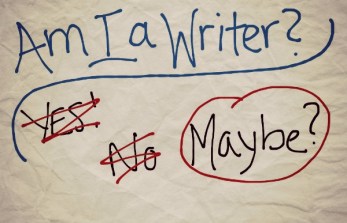
writerAm I a writer? You ever ask yourself that question? I do, and am still hesitant to tell people I write. I’ve never published a book. I’ve never been paid to write anything. As a matter of fact, my work was rejected because it wasn’t good enough. Side note-it really wasn’t good enough-I just didn’t know it at the time. I was too new to the game to know any better.

Becoming a writer is a process. You may have the desire and a great idea, but if you’re just starting out, you lack the skills and knowledge necessary to produce a successful piece of work.

Think of it like anything else you try for the first time.  Did you start out knowing how to tie your shoes, ride a bike, or read a book? No! You had to learn. They were skills you developed.

Being bad at something you really want to succeed at is part of the process. If you’re not willing to fail, stink, make mistakes, accept corrections and criticism, or seek counsel from experts, then you’re not likely to progress.–Jerry Jenkins

So when can you call yourself a writer? As soon as you’re willing to jump in and put yourself, or maybe I should say your ego, on the line.

If you’ve failed and are still writing, if you’re scared and are still writing, if you’ve stood up to a stinging critique and made your piece better by applying what you learned, if you’ve stayed at it despite that pervasive fear of failure, you are a writer.–Jerry Jenkins.

I hope this cleared up some questions in your mind. I, as mentioned above,  still struggle with the concept-I AM A WRITER 🙂

-Jan R

Am I A Writer? (Repost)