Find A Good Critique Partner

imagesFHQ2HXNTI’ve talked about critiques and critique partners in the past. If you are a new writer or want to be an author, it is important to have others review your work. Not just for the feel-good effect, but for honesty and constructive criticism.

We don’t always see our mistakes, and as a new writer, you probably don’t know a lot of things that a been around the block a few times writer knows. You are going to make the common mistakes that most newbies make.

One of the issues I ran into was finding critique partners. I have great friends but none of them are writers. Sure they could and were willing to read my work, and I had a few do just that. What they were able to do was comment on my premise and point out plot holes and areas of confusion.

What they weren’t able to do, was say hey, you have POV inconsistencies, dragging dialogue, pacing issues, info dumps…… They knew something wasn’t quite right, but they couldn’t identify the problems.

Another issue you run into is friends and family who want to encourage you and not hurt your feelings. They will tell you your work is great, even when it is lacking and you have broken every rule in the book.

So where do you go to find a true critique partner who isn’t afraid to hurt your feelings and knows what they’re looking for? I use scribophile.com. I enjoy the site. They have many published and unpublished authors working together to help each other prepare their work for publication. You do critiques for others and they critique your work. While it’s a large community, you will more than likely develop a following of two or three people who show an interest in what you are doing and follow you through to completion.

There are other sites out there, but I can’t speak for them as I have not joined their groups. You may also find critique partners in your area through organizations like Romance Writers of America, or Christian Romance Writers of America. Have you checked at your local library? Have you tried googling critique groups in your area, or online?

One caution I would offer. Remember it’s your story, a critique partner should help you catch mistakes, improve your writing,  and may occasionally make suggestions, but they should not be writing your story for you. If they are trying to change your work into something it wasn’t meant to be, you are probably working with the wrong person.

Something else to think about.

-Jan R


Find A Good Critique Partner

Keep Them Guessing

suspense-headerIf you want your reader to continue reading, you have to give them a reason why. Draw them in and keep them guessing. The number one weapon in your arsenal to accomplish this feat is the use of suspense.

If you’ve done a good job of developing a character your reader cares about, they are going to hang on to make sure things work out in the end.

There are four main ways to create suspense.

  1. Put the outcome in doubt. Keep your reader guessing. It could end one way, but it could end another. This works best if your reader has a strong connection with the main character.
  2. Make them wait. Don’t show your hand up front. Don’t resolve issues right away. Present the conflict and then take your time presenting a resolution.
  3. Foreshadowing. Hint at what’s to come without sharing the details. Twilight used this technique by opening with the end minus all the details of how and why.
  4. Use a clock. The main character has a limited amount of time to accomplish a task. Will he/she find succeed or fail.

You can mix and match these techniques. You are not limited in your choice. An example would be opening with foreshadowing in the first paragraph and then adding the use of a clock at the end.

Something to think about.

-Jan R

Keep Them Guessing

Empathy Is A Must

582dab8d5a4e7If you want to draw your reader in, you have to figure out a way to get them to empathize with the main character in your novel. They have to connect. Help them to see and feel what your character is going through.

In order to do this, you need to change the focus from the us/them mentality. People don’t listen to facts because of their own personal bias. They accept or reject them depending on whether they line up with their beliefs/agenda or not. Think about the USA today and the divide between the Democrat and Republican parties. Ouch! Maybe not!

You have to change your methodology and come in a little sneaky. Instead of lining your prose up from the us/them point of view, you want to look at things from your main character’s point of view. Your reader will be pulled in immediately, not because of the facts of the situation, but because they empathize with the feelings of the character. They are seeing things through his/her eyes.

I’m not a Malcolm X fan, but if you pick up the book entitled Malcolm X you will be pulled into his story immediately. It was an autobiography that followed his life and the events that brought him to the beliefs that he strongly supported and fought for.  The story allowed you to look into his head. You could see what he saw and feel what he felt. You may not have agreed with his point of view, but you understood where he was coming from and empathized with him.

That’s the same technique you would use in a novel to draw your reader into the story. You have to present things from your character’s point of view. You reader has to see what they see, feel what they feel, and experience situations as they would.

Something else to think about.

-Jan R

Empathy Is A Must

Inner Conflict

write-character-edgeYour novel is made up of outer conflict and inner conflict. The outer conflict is what we observe. It’s the plot, the incidents inciting action and moving our story forward.
An outer conflict could be war, divorce, medical issues,  political instability… The sky is the limit. All you need is a good imagination and the ability to pull it all together.

In order for the outer conflict to work, the protagonist has to engage. The outer conflict usually starts out at one level, and the stakes are raised, making a bad situation worse until it’s almost impossible to overcome.

You want action and excitement, but remember, the inner conflict is what will connect your reader to the protagonist and pull them into the story. By showing the protagonist’s inner conflict, you are allowing your reader to see things through his/her eyes and to empathize with him/her.  You are creating that emotional bond. You’re building a relationship between your protagonist and your reader.

Inner conflicts could be the desire to be loved, the need to be understood, stress due to financial issues, guilt, jealousy, fear of failure, pride…

Something else to think about.

-Jan R


Inner Conflict

Point Of View?

1404775735Have you thought about the point of view you will be using when you write your novel? Whose head will you be in?
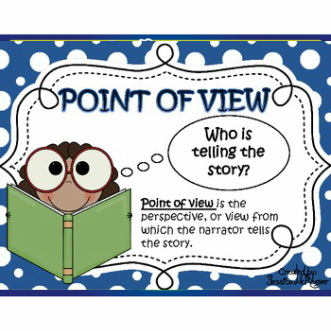
You may be wondering what I’m talking about. What is the point of view? To put it simply, it’s the voice with which you tell your story.

There are three commonly used points of view in novels. They all have their pros and cons, but if you’re a newbie, omniscient isn’t the way to go. Even accomplished writers struggle with transitions.

Omniscient/ 3rd person omniscient-

  • He/She
  • God-like. You are all knowing and all seeing. You have the ability to look into everybody’s head at once.
  • This can and usually does result in head-hopping.  If you’re not skillful enough to create a smooth transition from one person’s thoughts to another’s, and odds are you are not, don’t use it.
  • Editors and agents will guess you’re new right away because you don’t know what you’re doing.

3rd person limited

  • He/She
  • Places you in one person’s head at a time.
  • You can transition into other character’s heads, but you should limit viewpoints to one per scene, preferably chapter, ideally novel.
  • If you can limit the point of view to the protagonist, you’ll have a stronger story. Harry Potter and the Hunger Games have one viewpoint, the protagonist.
  • If you’re writing a romance, consider writing it from the female point of view.

1st person-

  • I/Me
  • You’re in one person’s head for the entirety of the novel.
  • It’s how we narrate stories we are sharing with our friends.
  •  Your reader becomes the character and believes everything is real.
  • The reader is drawn into the story much quicker than with other points of view.
  • 1st person forces you to stay in one point of view, which makes it a great choice for new writers.

I didn’t mention 2nd person point of view because it is rarely used in novels. 2nd person is you/your and is commonly used in instructional writing.

Something to think about.

-Jan R

Point Of View?

It’s Your Story (Revisited)

3aefcc38a20542bd3ee999eca594de5eI’ve shared this blog before, but it’s been a while, and a message I think needs to be heard. As new writers, we sometimes listen to everybody but ourselves. Our friends and critique partners mean well, but if you let them, some will try to take over your novel and mold it into what they think it should be.
I was sitting on my couch reworking a scene in the novel I’m writing and stopped right in the middle of it. What am I doing? I asked myself. The purpose of the rewrite was to make some changes based on a critique I received from a critique partner.

The person that critiqued my book is very good at the craft, and I respect her opinion. There were others who critiqued the piece and loved it, offering a few comments here and there to correct grammar or replace a word. So who was right? The three people who loved it, or the one who thought I needed to go back and make some significant changes.

The more I looked at the changes this person suggested, the more I realized she had her own idea of the way the story needed to go, and I had mine.

With this being said, she’s made some great suggestions. Because of her, my story is more believable, my dialogue more natural, and my POV more consistent. Her critiques have been invaluable.

However, I had to remind myself that this is my story. Nobody has a better understanding of the dynamics than I do. Nobody knows it from beginning to end but me. Nobody can tell it better than me.

Weigh comments and suggestions you receive from others and ask this question. Is it making my story better or changing it into something it is not?

Remember: It’s your story.

-Jan R

It’s Your Story (Revisited)

Your Protagonist

protagonist-versus-antagonistYour protagonist is the most important character in the novel. He/she will be in every moment, even if not in every scene.

It’s recommended that you have only one main character in your novel. However, some do have more. Romances, for example, usually have two main characters and are for all intents and purposes, two stories running simultaneously.

Things to keep in mind when developing your main character…

  • Introduce them in the beginning. You want your reader to bond with them more than any other character.
  • Make them active. Nobody wants to read about someone sitting on the couch doing nothing all day.
  • Give them a cause greater than themselves. Dream big.
  • Create conflict around them that battles against their flaws.
  • Make your protagonist complex. Nobody wants a goody-goody two shoes that skips through life with no adversity.
  • Keep your protagonist in character. Be consistent. If you show a change in what one would expect the character to do, you must show a reason.
  • Draw on yourself, friends, people you look up to, to build your character.
  • Create sympathy for your character. You want your reader to care about them and what they are going through.
  • Make them virtuous, clever, and generous. You want your reader to like them.
  • Make your character attractive. I know this isn’t politically correct, but it’s what works.

Something to think about.

-Jan R

Your Protagonist

Underlying Elements

flawopportunityThere are four main dramatic elements to your novel. You probably never thought about it, but if you did it right, they are there. If they’re missing, you need to revisit your work and make some adjustments.

That’s one of the nice things about writing. Nothing is set in stone, and when equipped with time and knowledge, you can change anything.

So back to the blog and the elements that I was referring to.

  1. Passion – yours not the Novels. Write something that you are passionate about. If you’re not passionate, it will come through. What’s important to you?  What are you trying to get across? What do you want to be the takeaway?
  2. Theme – what your reader takes away from reading your story.  Yes, the theme and passion can be the same thing and probably are in a great many cases. Examples of theme would be, belief in yourself or all things work for the good of those who serve the Lord. 
  3. Flaws – your character must have flaws. They don’t have to be exaggerated or grotesque but face it, nobody is perfect. Talk about a boring read.                                  The flaw could be as simple as a lack of confidence or the inability to put the past behind them.  The character doesn’t have confidence,  so the theme would probably be, believe in yourself. Note how they can work hand in hand and build on each other.
  4.  Premise – What if a (flawed character)(encounters some problem) and had to (overcome the flaw) to (solve the problem). You know your story. Fill in the blanks. Does it make sense? Is it enthralling or boring?

One of the things that the agent wrote to me after rejecting my work, was I had a great premise. It was a silver lining to a dark cloud that sprung up after the initial shock of being rejected. And while I thought the passion and theme were there, my characters were not flawed, which means that my passion and theme were probably weak.

Something to think about.

-Jan R


Underlying Elements

Plot Vs Story

James_Bond_(Pierce_Brosnan)_-_ProfilePlot versus story? I have to be honest, I thought they were the same thing. I was listening to an instructor this week who set me straight. They are not, and both components are necessary for a successful novel.
The Plot is the physical journey your character takes. It’s the action, the conflict, the spine of the novel. You can restate the plot by asking yourself what happened. It has a beginning, a middle, and an end.

The Story is the emotional journey. It’s everything the character experiences and how they experience it. Its what’s going on in the character’s head in reaction to what’s happening around them.

If you want a great novel, you have to have both. If the story (emotional journey) is missing, the reader will not be able to connect with the characters and understand their motivations. They will simply be placed in one thrilling scene after another.

If the plot is missing, there will be too much emotion and not enough action. Your characters will get bogged down in the muck and your reader will become frustrated.

A great example of plot vs. story was shared by an instructor of a course I have been taking. He was quick to point out that books are more story oriented than movies because you can get into your characters’ heads. He chose to use movies for his example because more people would be familiar with what he presented.

James Bond films, especially the older ones, are long on action/plot with only a touch of emotion.

The Twilight Trilogy is steeped in atmosphere and internal battles. The trilogy is story/emotion heavy with less plot.

Harry Potter is a great representation of balance. There is a lot of action combined with an emotional journey that transforms Harry into the Wizard he is destined to become.

Plot and Story work together. Plot causes a reaction in the character (story), and this reaction leads to further action (plot).

Hope I didn’t confuse you. My intention as always is to give you something to think about and hopefully help you along the way to becoming published.

-Jan R


Plot Vs Story

Are Your Sentences Running Loose? (Revisited)

compound-sentences-7-728You’re probably sitting there wondering what in the world I am talking about. I know when I first read about loose sentences, I wondered what in the world the author was talking about. Well, let me enlighten you. Loose sentences are sentences with the main concept at the beginning, followed by a string of related details.

For this blog, I am focusing on loose sentences that are composed of two clauses connected by a conjunctive or relative  (better known as the compound sentence). I use them all the time, and you probably do too. ( Yes, I just used one.) There’s nothing wrong with sentences of this type every now and then. The problem is when you string a whole bunch of them together. A mistake many new writers make.

 ‘The Phantom of the Opera’ was performed at the downtown theater last evening, and a large audience was in attendance. The actors were right on cue, and the orchestra was spectacular. The props seemed to float through the air, as the scenes were set flawlessly. The play was a tremendous success, and I’m sure it will continue it’s run. The tickets are pretty expensive, but you won’t be disappointed.

There are probably a lot of things wrong with this example, but what I hope you focused on, was the string of loose sentences. They are trite, monotonous and annoying. I know this is an extreme example, but I wanted to make sure you understood what I was getting at.

Loose sentences are easy to correct. All you have to do is rearrange some of the sentences in the paragraph to take away the monotony.  Make them simple, short, single phrases, or drop the conjunction and add a semicolon.

It’s okay to have loose sentences but be mindful of the frequency and placement of them.

Most of the information for this blog came from ‘The Elements of Style’ by Strunk and White. If you don’t have a copy of the book, I would highly recommend it. It is short and concise. They don’t waste a single word.

Something else to think about 🙂

-Jan R

Are Your Sentences Running Loose? (Revisited)