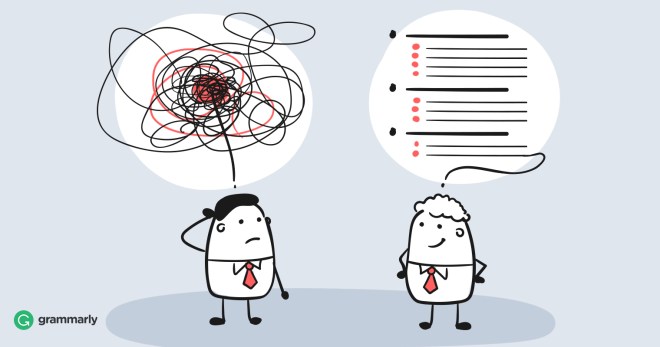
If you find yourself reading a sentence more than once, or adding information for clarification, that’s a red flag.
Your reader has less information than you. If you are confused by your work, you can only imagine what your reader is going through. I love a great mystery, but my writing shouldn’t be one.
It’s not the reader’s job to interpret your work. You should be clear and concise. If your writing causes a pause something isn’t working.
I have to admit I love dangling modifiers though. They are some of my favorite mess-ups. I even wrote a blog entitled ‘just for laughs’. They are funny, but not in the middle of a serious scene. You don’t have to try to hard to imagine how quickly they can pull your reader out of their suspension of disbelief.
Dangling modifiers occur when the modifier has no clear referent and twist the meaning of your sentence in an unintended fashion.
- I saw a tree walking down the street. Who knew a tree could walk? 🙂
- I fed the children sandwiches in Ziplock bags. How did those children get in the bags?:-)
Misplaced modifiers are similar but not nearly as fun to read. As with dangling modifiers, there is no clear referent, which can lead to a clumsy and confusing sentence.
- Lucy carefully studied the situation. Lucy studied the situation carefully.
Another mistake new writers make that isn’t always as obvious but makes for a clumsy sentence that will cause a pause is comma splicing.
Comma splicing is when two sentences are linked by a comma, but they don’t really work because they’re two separate ideas.
- John saw the rabid fox and ran to the house to get his gun, and he forgot to eat lunch and his tummy rumbled.
What about ambiguous sentences? The sentence is grammatically and structurally sound, but the reader has no idea what you are talking about.
- My older students know I’m extremely careful with my language. Is the teacher referring to age or length of time the students have been in his/her class?
Be clear and concise! Say What You Mean!
Something else to think about.
-Jan R
 If you find yourself reading a sentence more than once, or adding information for clarification, that’s a red flag.
 Have you ever read a sentence and stopped? You go back and read it again and again. Sometimes you probably laugh out loud, because it’s funny and definitely not what the author had in mind.
 Write with your reader in mind. You want to keep things simple: no over the top flowery sentences that belong in poetry not in a novel, no run on sentences that are a paragraph long, or clumsy writing that is hard to understand. When you write this way, you are making your reader aware.
 When you’re writing, you need to mix things up. You don’t want to be the one that puts your reader to sleep.
 Have you heard of the Hemingway Editor App? If you’ve been writing for a while, you know about grammarly and autocrit. Both of these Apps focus on grammar and spelling. Hemingway takes it a step further. The App highlights lengthy, complex sentences and common errors; if you see a
  Are you writing what you meant to write? Is your prose concise, and easy to understand? You may have one thing in mind when you write that sentence, only to discover it’s ambiguous, misleading, and sometimes quite humorous.
 Today as I revised my novel, I noticed something that should have leaped off the page during past reviews, but didn’t. I am having a love affair with ‘ing’. These ‘ing’ words are all over the place.
 Writing your first novel-Things you should know