 Whenever you write, you should aim for maximum simplicity. You want tight writing with no redundancies, flowery language, or longer than necessary words. Shun pretentious writing. It exposes your inexperience.
I borrowed the following example from a class I am taking through Udemy. It does a great job of showing what I am trying to explain. If you haven’t checked Udemy out, I would highly recommend their classes. They are informative, interesting, and very easy to follow, and are a fraction of the cost of most sites I’ve visited. Now back to my blog and the example 🙂
The specific point I am trying to make is that the colors red and gray go well together.
The point I am trying to make is that the colors red and gray go well together.
My point is that the colors red and gray go well together.
The colors red and gray go well together.
Red and gray go well together.
Red and gray match.
I’m sure if you take each of these sentences one at a time, you can follow the process of deletion. The first sentence is dull and tiresome, while the last one is a strong vivid statement.
Practice this technique by looking at your own sentences. Do you have any unnecessary fat? What words can you cut?
Redundancies? These are twin words written side by side. They mean the same thing and one of them needs to go.
- sum-total
- unexpected-surprise
- joint-collaboration
- future-plans
- new-record (as in sports)
Implied words? These are also unnecessary because they are implied.
- nodded-her head (what else would she nod?)
- shrugged-his shoulders (what else would he shrug?)
- ran-speedily (how else would you run?)
- yelled-loudly (how else would you yell?)
Long words versus short words
- utilize – use
- deployed – sent
- confiscated – took/seized
Remember, short words quicken the pace, they don’t weigh the sentence down, and are easier for your reader to process.
I would caution that there are times when those long flowery words are the best choice. Before you start cutting, make sure you haven’t compromised clarity or elegance. You don’t want a string of choppy sentences.
Hope this helped 🙂
-Jan R
 I received two rejections this week, and while they were nice well written form letters, that’s what they were. You know the ones that thank you for considering their agency, and assure you that they will give your work a thorough going over before they make a decision. And then they add, if you haven’t heard from us in two weeks, assume we are not interested, and your work isn’t a good fit for us…
 If your hero is drinking sake in Tokyo, you better know which hand he should use to hold the cup; and when he is sunning on the beach at Cape Cod, remember that there won’t be any palm trees-Dean R. Koontz
 People who love to read but have never written books are cognizant of the pacing. Pacing sets the tempo of your story. Is it a fast read or did it seem to drag on for days? Hopefully you’ve found a balance between the two and they perform like a fine tuned orchestra.
 On more than one occasion I have declared my love affair with the word ‘had’. When you use a word so many times it jumps off the page, you have a problem. It doesn’t matter if the word is used correctly or not. You need to find another way to write the sentence without using ‘the word’. In my case that word is ‘had’.
 Less is more. Five adjectives in one sentence is better than six; four adjectives are better than five; three are better than four; two are better than three…By using fewer words to obtain the effect you desire, you will force yourself to use more accurate and more powerful words-Dean Koontz, ‘How To Write Best Selling Fiction’
 I wish I could take credit for this blog but it was written by Jerry Jenkins. He is probably my favorite blogger and one of my favorite authors. You can find him at jerryjenkins.com
 I ran into this question while doing some research this past week, and it made me stop and think. Is my prose to beautiful? In my case, I would say no. I never grasped that concept. I have to admit I’ve tried.
 I’m a little over half way through the revision process of the book I’m working on and dreading the next few weeks.
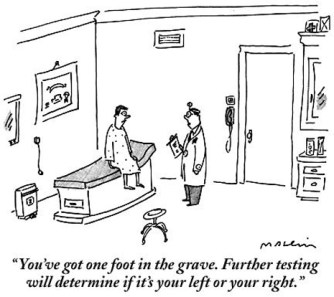 As a writer, you know one of the cardinal rules is to avoid clichés like the plague. Yes, I just used a cliché 🙂 See how easy it is. So what exactly is a cliché. It is a phrase or idea that is overused and portrays no original thought; a stereotype. There is nothing worse than being accused of lack of originality.
 Common phrases that you may not have realized were clichés are as follows:
 Writing your first novel-Things you should know