 I haven’t sent my work out to writing contests, but I know many unpublished authors have used them as a tool, and they can be an effective avenue for getting noticed.
If you have contemplated following this route, there are some things to keep in mind that will give you an advantage. Using contests the wrong way are a waste of time and money. Educate yourself on how to make them work for you.
Make sure only your best work leaves the house Edit and reedit you work before sending it out to a contest just as you would with a literary agent or editor. It has to be as close to perfect as you can get it.
Make sure you have a compelling hook One of the best ways of increasing your odds in a contest-hook your reader. Pull that contest judge into your manuscript and then leave him/her hanging with an even better hook that leaves them screaming for more.
Color inside the lines In other words, follow the rules. A writing contest is not the place to bend the rules and do cute things to make your work stand out. Bending the rules when it comes to point of view or passive voice will generally reduce your score significantly.
Judge the Judges If you are entering a contest with the hope of getting in front of an editor, make sure the editor judge reading your work, works for a publishing house that buys the type of manuscript you are writing.
Know what the judges are looking for Most RWA chapters post their score sheets showing how manuscripts are scored. Review the score sheets and make revisions as indicated to give yourself a better chance of making the finals.
Just some things to keep in mind. As I said, I have not entered any contests but have been mulling over the idea and doing some research.
Would love to hear recommendations from any of you who have entered contests.
-Jan R
 I read a quote a little while back and thought I would share it on my blog. I don’t know who wrote it. A name wasn’t provided. It reads as follows:
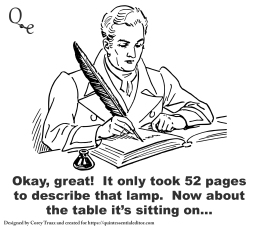 I love doing critiques. Sometimes I think I should have been an editor or professional proofreader.
 I recently started the revision process on my manuscript. One of many, but more importantly, the first after a year of leaving it on the shelf.

 I’ve been a little busy the last few months and have revisited some of my favorite posts. I hope you enjoy this one. Most of the concepts I write about are simple. I just never really gave them a lot of thought before I started writing my novel.
 Writing your first novel-Things you should know