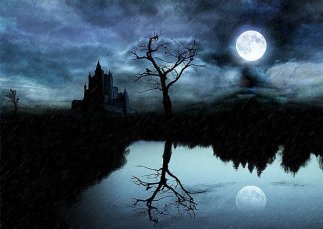
 When you hear the word setting, you think of a time period and place, but settings do so much more than that.
With sci-fi and historical novels, setting becomes an important part of the story. The setting doesn’t have to be real but it does have to be believable.
Writing historical novels, do your research and throw in some things that you would expect to see during the time period.
Writing Sci-Fi, you’re creating a world. Your setting needs to be detailed. Help your reader to visualize it. Draw them in.
Settings should be visceral and vivid and allow us to experience the world the author is building as if we are one of the characters within the narrative.
Settings evoke mood. In horror stories, your description of a haunted house should evoke fear in your readers. In a mystery your setting should evoke suspense and curiosity. In a comedy your setting should evoke laughter or an anticipated thrill.
Settings provide information about your characters. How does their home look? Is it messy, neat, compulsively organized? Do they surround themselves with darkness or light?
Settings can also be used to evoke the passage of time and movement. The saplings we had planted in our youth towered above the two story house. This was home, at least the house that I remembered.
Who knew there was so much to writing. I hope this evoked thought and helped you better understand the use of settings in your novel.
TIP
I posted this blog several months ago and for some reason it didn’t get many hits, so I’m republishing it under a different title. Titles are important. It’s the first thing the reader sees when they are determining what to read. If you aren’t getting hits, it could be something as simple as the title. You have to grab your readers attention and pique their curiosity.
-Jan R
 I personally like to read communications where I don’t notice the writing at all. You can achieve that by investing in great content and then stripping away anything that detracts from it.
 Am I the only person that has a hard time writing this time of the year? I’m not talking about my blog. I’m talking about my work in progress and new ideas that are sitting on my desk.
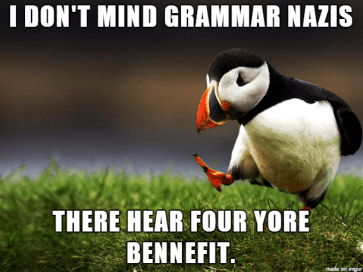 If you think grammar is just a small child’s mispronunciation of “grandmother,” and if you think syntax is a tax that the church levies on sin, maybe you should consider becoming a nuclear physicist or a neurosurgeon or just about anything at all except a novelist. Dean Koontz
 While I’ve been around for a little while now, I certainly don’t consider myself an expert. I consult the experts, and research everything I write to ensure I don’t spread inaccurate information.
 Have you ever read a sentence and stopped? You go back and read it again and again. Sometimes you probably laugh out loud, because it’s funny and definitely not what the author had in mind.
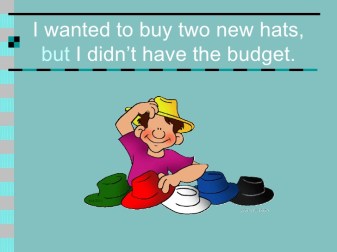 You’re probably sitting there wondering what in the world I am talking about. I know when I first read about loose sentences, I wondered what in the world the author was talking about. Well let me enlighten you. Loose sentences are sentences with the main concept at the beginning, followed by a string of related details.
 If your villain shoots down sixty people, blows up an airport terminal, hijacks a jet and then crashes it into the White House–all because his Social Security check arrived one day late, you’re going to have trouble selling your novel. Dean R. Koontz
 Writing your first novel-Things you should know